Shekhawat hails Narmada Award consensus among 4 states
Synopsis
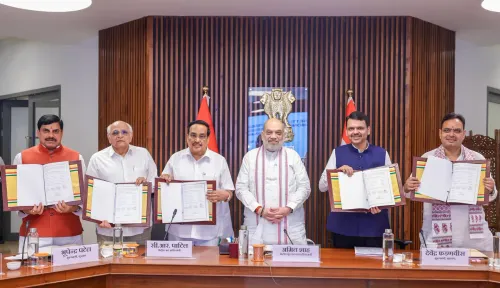
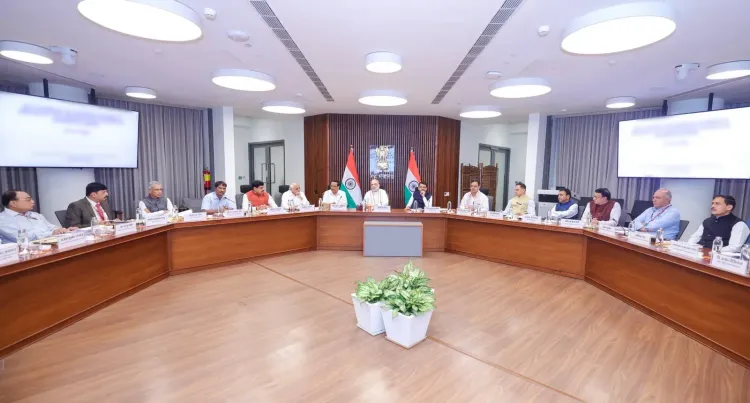
Union Minister Gajendra Singh Shekhawat has welcomed a historic consensus among Gujarat, Madhya Pradesh, Maharashtra and Rajasthan on decades-old pending issues under the Narmada Water Disputes Tribunal Award, saying it will benefit farmers in Rajasthan's Jalore and Barmer districts through the Sardar Sarovar Project.
Key Takeaways
A consensus has been reached among Gujarat, Madhya Pradesh, Maharashtra and Rajasthan on long-pending issues under the Narmada Water Disputes Tribunal Award of 1979 .
Union Minister Gajendra Singh Shekhawat called the agreement 'historic' from the perspectives of coordination, cooperative federalism and public interest.
The agreement is credited to the leadership of PM Narendra Modi , Home Minister Amit Shah , Jal Shakti Minister C.
Patil and Rajasthan CM Bhajan Lal Sharma .
Farmers in Jalore and Barmer districts of Rajasthan are among the key beneficiaries through the Sardar Sarovar Project canal network.
The Narmada Control Authority , set up in 1980 , is expected to operationalise the new consensus through revised water release schedules.
Union Culture and Tourism Minister Gajendra Singh Shekhawat on Wednesday, 8 July 2026 welcomed a landmark inter-state agreement that resolves decades-old pending issues under the Narmada Water Disputes Tribunal Award, calling the consensus among Gujarat, Madhya Pradesh, Maharashtra and Rajasthan historic from the standpoints of coordination, cooperative federalism and public interest.
In his post, Shekhawat described the agreement as 'samanvay, sahakari sanghvad aur janhit ke drishtikon se aitihasik' — 'historic from the perspectives of coordination, cooperative federalism and public interest' — and said the decision would prove highly beneficial for farmers in Jalore and Barmer districts of Rajasthan who stand to gain from the Sardar Sarovar Project.
Context
The Narmada Water Disputes Tribunal, constituted in 1969, delivered its final award in December 1979, apportioning the river's waters among the four riparian states. Despite the award, several implementation details remained contested for decades, stalling the full realisation of irrigation and drinking-water benefits for downstream beneficiaries including parts of Rajasthan.
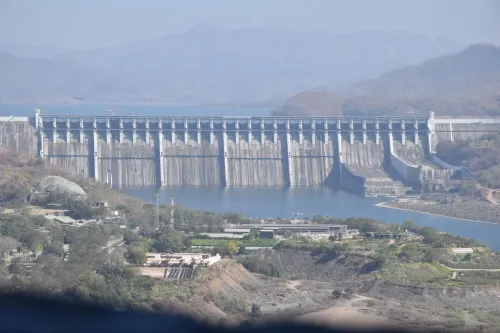
The Narmada Control Authority (NCA), established in 1980 to enforce the tribunal's decisions, has overseen progressive milestones including the raising of the Sardar Sarovar dam to 138.68 metres in 2017. The July 2026 consensus is seen as the next significant step in operationalising the award's full intent.
Policy Backdrop
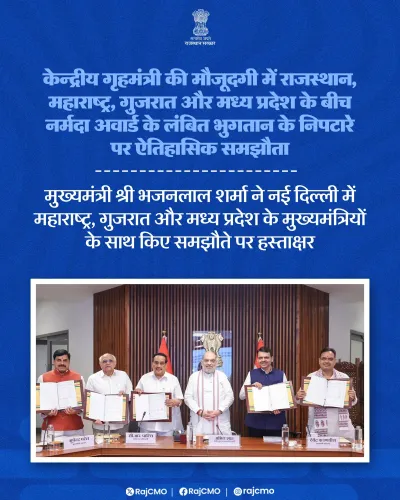
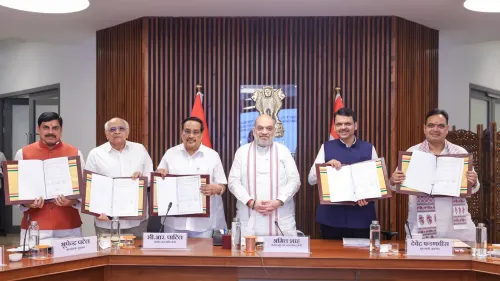
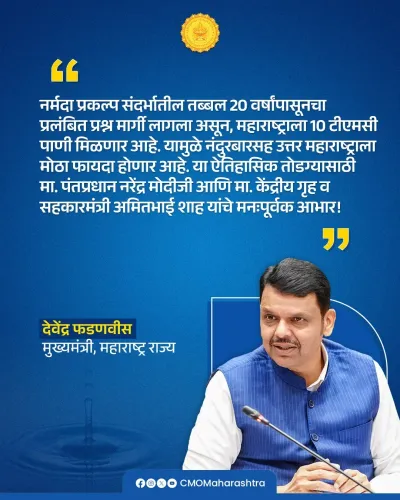
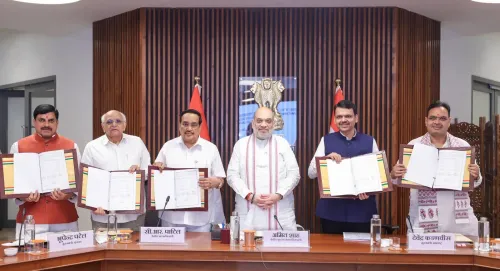
Shekhawat credited the agreement to the 'visionary leadership' of Prime Minister Narendra Modi, the guidance of Union Home and Cooperation Minister Amit Shah, and the 'decisive role' of Union Jal Shakti Minister C. R. Patil alongside Rajasthan Chief Minister Bhajan Lal Sharma. The post also tagged the chief ministers of Maharashtra and Madhya Pradesh — Devendra Fadnavis and Dr. Mohan Yadav — as well as Gujarat Chief Minister Bhupendra Patel, signalling broad political endorsement across all four states.
India has historically grappled with protracted inter-state river disputes whose tribunal awards leave implementation clauses open to prolonged negotiation. The central government's facilitation of this consensus fits a broader pattern of using cooperative federalism mechanisms to unlock water-use efficiencies in contested river basins.
Stakeholders and Impact
The most immediate beneficiaries identified in Shekhawat's post are farmers in Jalore and Barmer — two arid districts in southern Rajasthan that have long awaited fuller irrigation flows from the Sardar Sarovar Project's canal network. Resolution of the pending award clauses is expected to improve water release schedules and project clearances that directly affect agricultural livelihoods in these districts.
Riparian communities across all four states stand to benefit from greater clarity on water allocation, potentially easing recurring seasonal tensions over Narmada flows and enabling better planning for both irrigation and drinking-water supply.
What's Next
Attention will now turn to the Narmada Control Authority, which must operationalise the new consensus through revised water release schedules and any requisite project clearances. The pace of implementation will determine how quickly farmers in Rajasthan's Jalore and Barmer districts, as well as beneficiaries in the other three states, see tangible gains on the ground. A formal NCA resolution formalising the agreement is expected to be the next procedural milestone.
Point of View
Which has invested considerable ministerial capital — the Home Minister, the Jal Shakti Minister and three BJP chief ministers — in resolving a dispute that outlasted multiple governments since 1979. By framing the agreement as 'cooperative federalism,' the centre reinforces a governance narrative it has deployed consistently on inter-state resource questions. For Rajasthan, where Jalore and Barmer remain among the most water-stressed constituencies, the political dividend for CM Bhajan Lal Sharma and the state BJP could be substantial ahead of future electoral cycles. The real test, however, lies in the Narmada Control Authority's ability to translate political consensus into operational water deliveries.
NationPress
7 Oct 2026
Frequently Asked Questions
What is the Narmada Water Disputes Tribunal Award?
The Narmada Water Disputes Tribunal was set up in 1969 and delivered its final award in December 1979, allocating shares of the Narmada river's waters among Madhya Pradesh, Gujarat, Maharashtra and Rajasthan. Several implementation details remained pending for decades, which the July 2026 consensus aims to resolve.
How will the Narmada Award consensus benefit Rajasthan farmers?
Farmers in Jalore and Barmer districts of Rajasthan are expected to receive improved irrigation water flows through the Sardar Sarovar Project's canal network once the new consensus is operationalised by the Narmada Control Authority.
What is the Sardar Sarovar Project?
The Sardar Sarovar Project is a multipurpose dam on the Narmada river in Gujarat whose height was raised to 138.68 metres in 2017. It provides irrigation and drinking-water benefits to parts of Gujarat and downstream Rajasthan, including Jalore and Barmer.
Who was involved in reaching the Narmada inter-state agreement in 2026?
The agreement involved Prime Minister Narendra Modi, Union Home Minister Amit Shah, Union Jal Shakti Minister C. R. Patil, and the chief ministers of Rajasthan, Gujarat, Madhya Pradesh and Maharashtra — Bhajan Lal Sharma, Bhupendra Patel, Dr. Mohan Yadav and Devendra Fadnavis.
What is the Narmada Control Authority?
The Narmada Control Authority was established in 1980 to enforce the Narmada Water Disputes Tribunal Award and oversee project clearances. It is the body responsible for operationalising the July 2026 inter-state consensus on pending award issues.