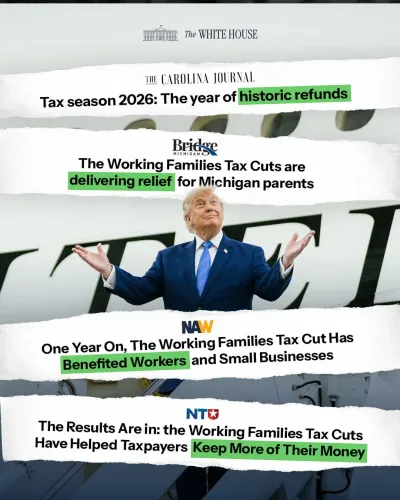
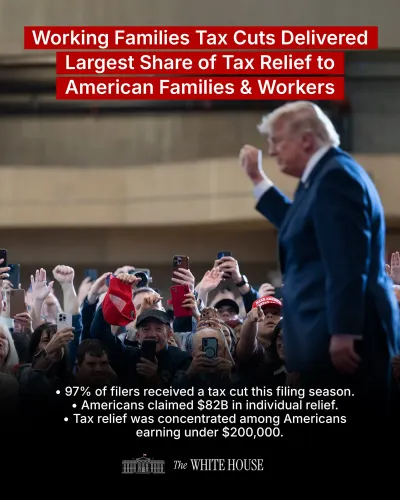
White House Amplifies Lawler's Case for Working Families Tax Cuts

Synopsis
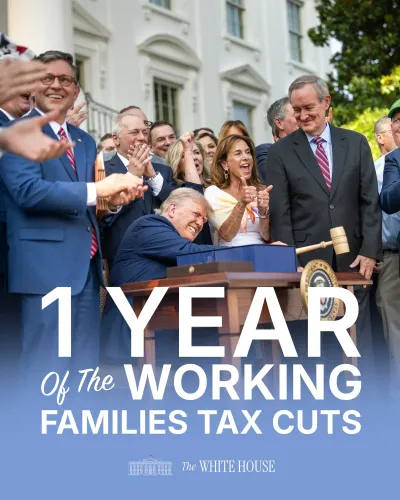
The White House amplified a post by Republican Rep. Mike Lawler of New York citing a one-year review of the Working Families Tax Cuts, claiming the legislation is delivering benefits for America's seniors and working households.
Key Takeaways
The White House reshared a post by Rep.
Mike Lawler (R-NY) on July 8, 2026 .
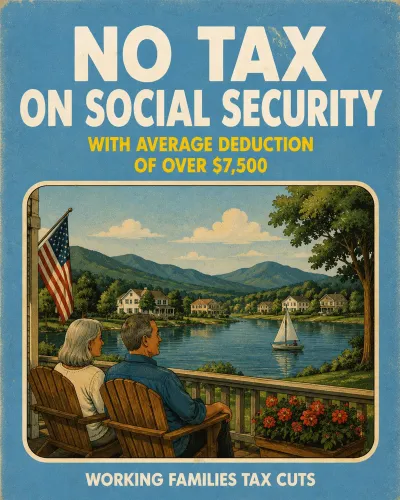
The shared article claims the Working Families Tax Cuts are benefiting seniors and working families one year after enactment.
Lawler represents New York's 17th congressional district , a competitive suburban area north of New York City .
The White House repost signals executive-branch endorsement of the legislation's claimed one-year record.
The move fits a recurring Republican pattern of amplifying district-level coverage to build narratives around tax relief for specific voter groups.
Congressional action on expiring tax provisions remains a key policy flashpoint to watch.
The White House on Wednesday, July 8, 2026, reshared a post from Republican Representative Mike Lawler of New York, highlighting an article that claims the Working Families Tax Cuts have delivered tangible benefits for America's seniors in their first year of implementation.
Context
Rep. Mike Lawler represents New York's 17th congressional district, a suburban area north of New York City that includes Rockland County. The article he shared, published in a local outlet, argues that the Working Families Tax Cuts are benefiting seniors and working households one year after their enactment. The White House's decision to amplify the post signals executive-branch alignment with this congressional messaging.
The repost fits a well-established pattern in which the White House and Republican members of Congress jointly promote coverage from district-level outlets to underscore the claimed impact of tax legislation on specific voter groups — particularly seniors and middle-income families.
Policy Backdrop
The Working Families Tax Cuts appear to build on a longer lineage of Republican tax relief efforts, including the landmark Tax Cuts and Jobs Act of 2017, which restructured individual income tax brackets, expanded standard deductions, and altered provisions relevant to retirees. Successive Congresses have debated whether to extend, modify, or allow various provisions of that law to expire.
Messaging around fiscal policy anniversaries — particularly those framed around relief for seniors and working families — is a recurring feature of Republican communications strategy, especially in election-adjacent cycles. The White House reshare lends institutional weight to what would otherwise be a district-level news story.
Stakeholders and Impact
Seniors and working families are the stated primary beneficiaries of the legislation as framed in the article. For seniors on fixed incomes, changes to standard deductions or income thresholds can meaningfully affect after-tax income and purchasing power. The suburban New York districts that Rep. Lawler represents — competitive swing areas — make this messaging politically significant beyond its policy content.
Broader constituencies watching this debate include fiscal conservatives seeking permanent tax relief, advocacy groups for retirees, and Democratic lawmakers who have questioned whether the benefits of such cuts accrue disproportionately to higher-income households rather than working families and seniors.
What's Next
Congressional attention is expected to remain focused on expiring provisions from earlier tax legislation, and any White House statements on further changes to the tax code will be closely watched. Rep. Lawler and allied Republicans are likely to continue amplifying local coverage that frames existing tax measures as successful in the run-up to future legislative debates. The White House's active resharing of such content suggests the administration intends to keep the Working Families Tax Cuts central to its economic messaging through the coming months.
Point of View
Particularly targeting seniors, a high-turnout demographic. For Rep. Lawler, whose suburban New York district is a perennial battleground, White House validation of his tax messaging carries significant electoral value. The coordination signals that the Working Families Tax Cuts will remain a central pillar of Republican economic communication heading into the next legislative cycle.
NationPress
8 Jul 2026
Frequently Asked Questions
What are the Working Families Tax Cuts?
The Working Families Tax Cuts are a US tax relief measure framed as benefiting middle-income households and seniors; the White House and Rep. Mike Lawler highlighted their one-year record on July 8, 2026.
Why did the White House repost Rep. Mike Lawler's tweet?
The White House reshared Rep. Lawler's post to amplify the claimed benefits of the Working Families Tax Cuts for seniors, lending executive-branch support to the congressman's messaging.
Who is Rep. Mike Lawler?
Rep. Mike Lawler is a Republican US Representative from New York's 17th congressional district, covering suburban areas north of New York City including Rockland County, elected in 2022.
How do US tax cuts affect seniors?
Tax cuts that raise standard deductions or adjust income thresholds can increase after-tax income for seniors on fixed incomes, though the specific impact depends on the provisions of each law.
What happens to US tax cuts that are set to expire?
Expiring tax provisions require Congressional action to extend or make permanent; without renewal, affected taxpayers revert to prior rates and deduction limits, making this a recurring legislative priority.