CM Majhi Reviews Godabarish Mishra Model School Plan
Synopsis
Chief Minister Mohan Charan Majhi has directed Odisha's district collectors to identify land for 2,200 Godabarish Mishra model primary schools by March 2027, with weekly district reports and monthly CM reviews mandated to keep the first-phase construction programme on track.
Key Takeaways
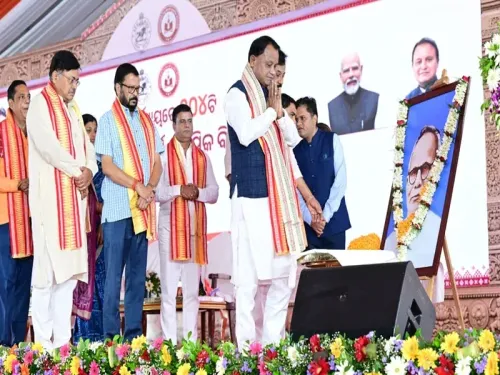
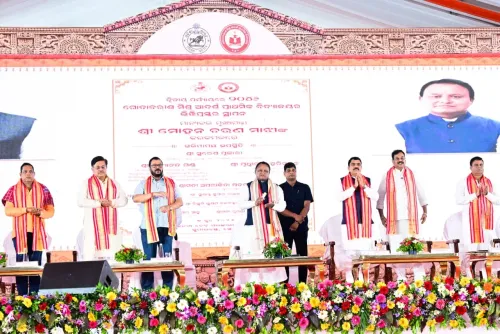
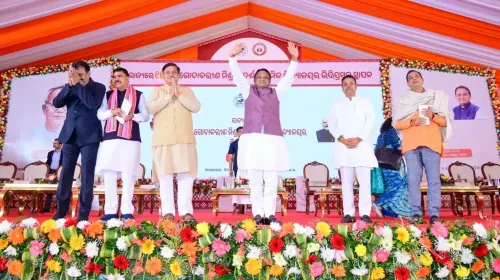
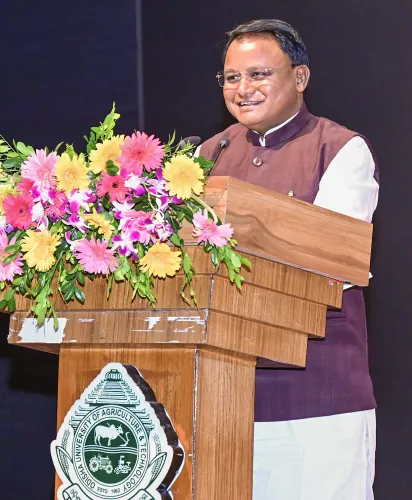
CM Mohan Charan Majhi chaired a review meeting on the Godabarish Mishra Adarsha Prathamika Vidyalaya programme on 8 July 2026 .
District collectors have been directed to identify and secure land for all 2,200 first-phase model primary schools by March 2027 .
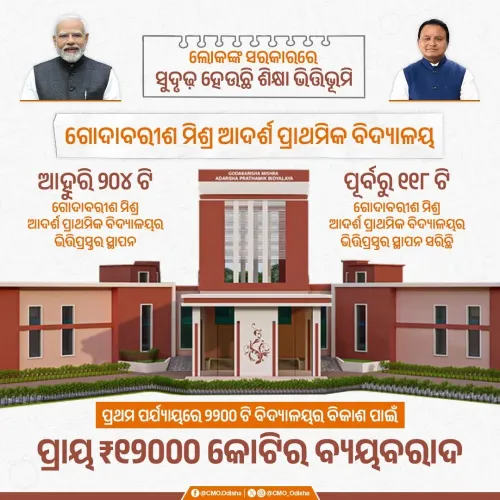
Foundation stones have been laid and work has begun at 322 schools so far.
Collectors must submit weekly progress reports to the Secretary of the School and Mass Education Department.
The Chief Minister will personally conduct a monthly review of the scheme's progress.
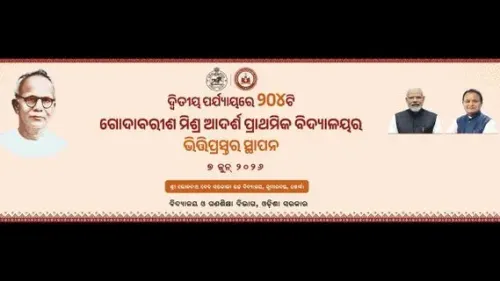
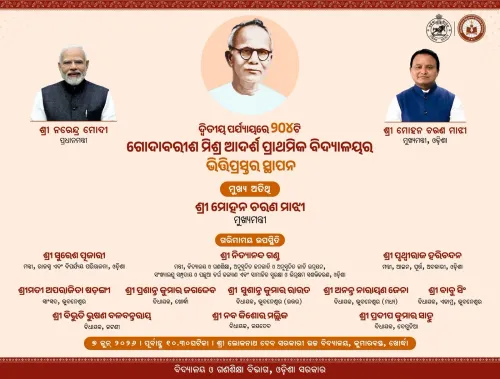
The programme is named after Odia freedom fighter and educationist Godabarish Mishra (1886–1956) .
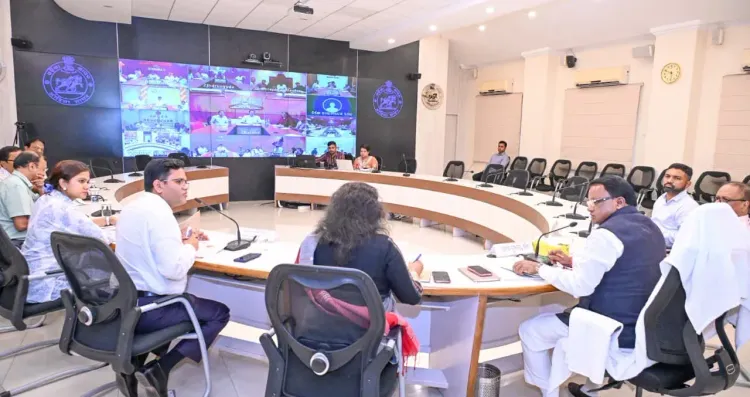
The Chief Minister's Office of Odisha announced on 8 July 2026 that Chief Minister Mohan Charan Majhi chaired a review meeting on the Godabarish Mishra Adarsha Prathamika Vidyalaya programme, directing district collectors to identify and secure land for 2,200 model primary schools by March 2027.
What the CM directed
The Chief Minister's Office stated that CM Majhi issued clear instructions for the first phase of the scheme: all 2,200 identified school sites must have land finalised before March 2027. District collectors have been asked to submit weekly progress reports to the Secretary of the School and Mass Education Department, while the Chief Minister himself will conduct a monthly review of the project's overall progress.
The post noted that foundation stones have already been laid and construction begun at 322 schools so far. The CM underlined that collectors must urgently prioritise land identification for the remaining sites to keep the programme on schedule.
Context: Who is Godabarish Mishra?
Godabarish Mishra (1886–1956) was a celebrated Odia freedom fighter, writer, and legislator who made enduring contributions to the Odia language movement and to primary education in the region. Naming the model school programme after him reflects the state government's intent to honour his educational legacy while addressing contemporary infrastructure gaps at the primary level.
The scheme is part of Odisha's broader commitment to expanding model school infrastructure — a tradition that previously focused on secondary schools and is now being extended to the primary tier under the BJP government that came to power in June 2024.
Policy backdrop
Odisha has pursued structured school infrastructure expansion since implementing the Right of Children to Free and Compulsory Education Act from 2010, which set minimum infrastructure norms for primary schools. The Godabarish Mishra Adarsha Prathamika Vidyalaya programme builds on that foundation by creating dedicated, purpose-built model schools rather than upgrading existing structures.
The post-2024 state government has consistently emphasised time-bound delivery of education infrastructure with direct oversight from the Chief Minister's office — a departure from earlier models where departmental secretaries were the primary accountability nodes.
Stakeholders and impact
The primary beneficiaries are rural primary school students across Odisha's districts, who stand to gain access to improved school infrastructure. District collectors are now the operational lynchpin of the scheme, bearing responsibility for both land acquisition and weekly reporting up the administrative chain.
The School and Mass Education Department will serve as the coordination hub, aggregating district-level reports before they reach the Chief Minister's monthly review desk. Timely land identification is the critical bottleneck: with 322 schools already under construction, the remaining sites must be locked in quickly for the March 2027 deadline to hold.
What's next
The immediate milestone is the identification of land parcels for all remaining schools in the first phase ahead of March 2027. District collectors will begin submitting weekly reports to the School and Mass Education Department Secretary, with the first CM-level monthly review expected to take place in the coming weeks.
How swiftly district administrations can clear land-acquisition bottlenecks will determine whether the programme stays on its ambitious timeline — and whether Odisha can demonstrate that large-scale primary school construction is achievable through tightly monitored, decentralised execution.
Point of View
200-school target, the programme is real but early-stage, and the March 2027 land-identification deadline will be the first credible test of whether this top-down pressure translates into ground-level delivery.
NationPress
7 Oct 2026
Frequently Asked Questions
What is the Godabarish Mishra Adarsha Prathamika Vidyalaya programme?
It is an Odisha state scheme to establish model primary schools with dedicated infrastructure across the state, named after Odia freedom fighter and educationist Godabarish Mishra (1886–1956). The first phase targets 2,200 such schools.
How many schools have started construction under this scheme?
Foundation stones have been laid and construction has begun at 322 schools so far under the first phase of the programme.
What is the deadline for land identification under the scheme?
Chief Minister Mohan Charan Majhi has directed district collectors to identify and secure land for all 2,200 first-phase schools by March 2027.
Who will monitor progress of the Godabarish Mishra school scheme?
District collectors will submit weekly progress reports to the Secretary of the School and Mass Education Department, and CM Majhi himself will conduct a monthly review of the project.
Who was Godabarish Mishra and why is the school scheme named after him?
Godabarish Mishra (1886–1956) was an Odia freedom fighter, writer, and legislator known for his contributions to the Odia language movement and primary education. The scheme honours his educational legacy.