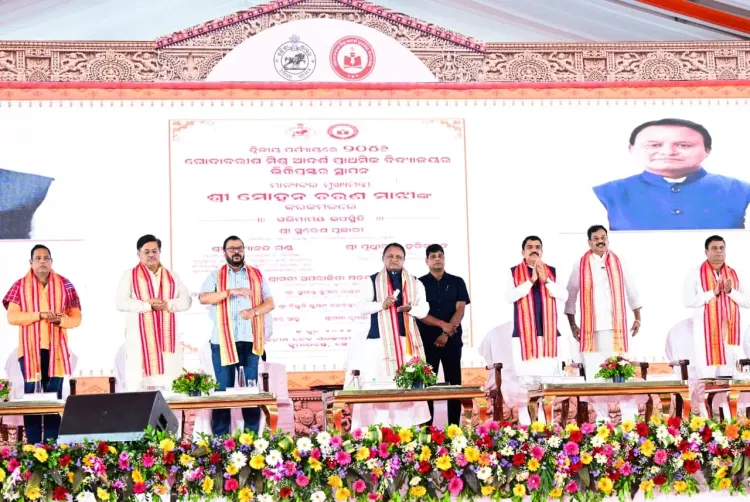
CM Majhi lays foundation for 204 model primary schools in Odisha
Synopsis
Odisha Chief Minister Mohan Charan Majhi laid foundation stones for 204 model primary schools from Kumarabasta on June 7, 2026, under the Godabarish Mishra Adarsha Prathamika Vidyalaya scheme. The first phase targets 2,200 schools statewide, with 118 already initiated at Banapur.
Key Takeaways
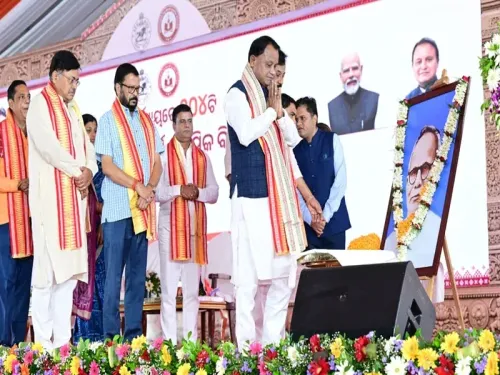
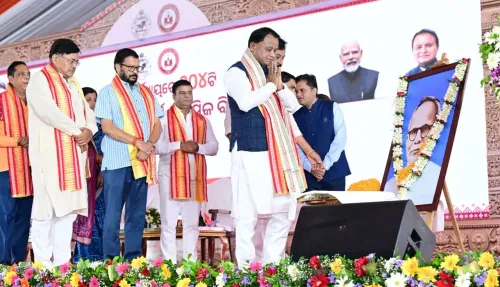
CM Mohan Charan Majhi laid foundation stones for 204 model primary schools from Kumarabasta on June 7, 2026 .
The schools fall under the Godabarish Mishra Adarsha Prathamika Vidyalaya scheme, named after the Odia freedom fighter and educationist ( 1886–1956 ).
The first phase of the scheme targets development of 2,200 schools across Odisha with extensive financial allocations.
An earlier event at Banapur had already seen 118 schools inaugurated under the same scheme, bringing the total initiated to 322 .
The initiative aligns with the National Education Policy 2020 and the Samagra Shiksha Abhiyan framework for primary school infrastructure.
Odisha Chief Minister Mohan Charan Majhi on Sunday, June 7, 2026, laid the foundation stones for 204 model primary schools across the state, launching them from Kumarabasta under the government's flagship Godabarish Mishra Adarsha Prathamika Vidyalaya scheme. The initiative is part of a broader first-phase plan to develop 2,200 schools statewide, aimed at bringing world-class educational infrastructure to every child in Odisha.
Context
Posting in Odia on X, CM Majhi stated that his government is 'sankalpabaddha' (committed) to bringing 'revolutionary change' in the primary education system and providing a world-class learning environment to every child. He noted that today's foundation-laying at Kumarabasta covered 204 schools, while an earlier inauguration at Banapur had already covered 118 schools under the same scheme. Together, the two events account for 322 schools initiated so far under the first phase.
The scheme is named after Godabarish Mishra, a celebrated Odia freedom fighter, writer, and educationist who lived from 1886 to 1956. His legacy as a champion of education in the region lends symbolic weight to the programme's stated ambition of transforming grassroots schooling in Odisha.
Policy Backdrop
The scheme aligns with the National Education Policy 2020, which made foundational literacy and numeracy — and the infrastructure to support them — a national priority for primary schooling. Central support through the Samagra Shiksha Abhiyan, consolidated in 2018, has provided states including Odisha with a framework for upgrading school infrastructure and teacher training.
BJP-led state governments have broadly accelerated government primary school upgrades in recent years, framing them as a response to persistent gaps between rural and urban education quality. The Godabarish Mishra scheme fits this pattern, with the Majhi administration presenting it as a structural, not incremental, overhaul of the state's primary education delivery.
Stakeholders and Impact
The most direct beneficiaries are primary school students and rural families across Odisha, particularly in areas where government schools have historically lacked adequate physical infrastructure. Model schools under such schemes typically feature improved classrooms, sanitation, and learning materials, though outcomes depend heavily on implementation quality and teacher deployment.
With 2,200 schools targeted in the first phase alone, the programme — if fully executed — would represent one of the largest single-phase primary school infrastructure drives in the state's recent history. The government has committed 'extensive financial allocations' for this phase, though specific fund figures were not detailed in the post.
What's Next
The remaining schools in the 2,200-school first phase are yet to see foundation-laying events, and the pace of construction and commissioning will be closely watched by education stakeholders. Independent assessments of whether the new infrastructure translates into measurable improvements in learning outcomes will be a key test of the scheme's long-term value.
As Odisha moves deeper into this education overhaul, the Majhi government's ability to sustain momentum — from foundation stone to functional classroom — will define the political and policy legacy of the Godabarish Mishra scheme.
Point of View
The administration seeks to build regional ownership around a centrally aligned policy. The scale — 2,200 schools in phase one — signals ambition, but the gap between foundation-laying ceremonies and functional, quality institutions remains the critical variable. How quickly the remaining schools move from stone to classroom will determine whether this is transformative policy or durable optics.
NationPress
23 Oct 2026
Frequently Asked Questions
What is the Godabarish Mishra Adarsha Prathamika Vidyalaya scheme?
It is an Odisha government scheme to develop model primary schools across the state, named after Odia freedom fighter and educationist Godabarish Mishra (1886–1956). The first phase targets 2,200 schools with substantial financial allocations.
How many schools were inaugurated at Kumarabasta on June 7, 2026?
Foundation stones for 204 Godabarish Mishra model primary schools were laid at Kumarabasta on June 7, 2026, by Chief Minister Mohan Charan Majhi.
What happened at Banapur under this scheme?
Banapur was the site of the earlier launch of the Godabarish Mishra scheme, where foundation stones for 118 model primary schools were laid, preceding the Kumarabasta event.
Who was Godabarish Mishra?
Godabarish Mishra (1886–1956) was an Odia freedom fighter, writer, and educationist. The Odisha government named its model primary school scheme after him in recognition of his contributions to education in the region.
How does this scheme connect to national education policy?
The scheme aligns with the National Education Policy 2020, which prioritised foundational literacy and quality infrastructure in primary schools, and draws on the Samagra Shiksha Abhiyan framework that provides central support for school infrastructure upgrades across states.