CM Mohan Majhi lays foundation for 204 model primary schools in Odisha
Synopsis
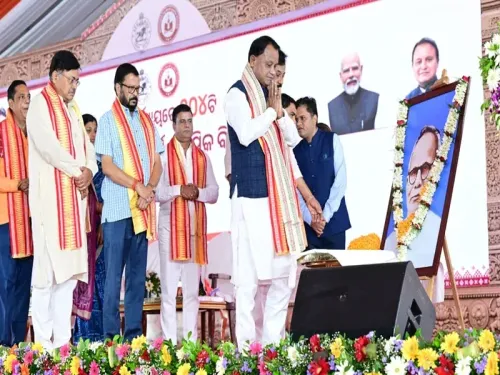
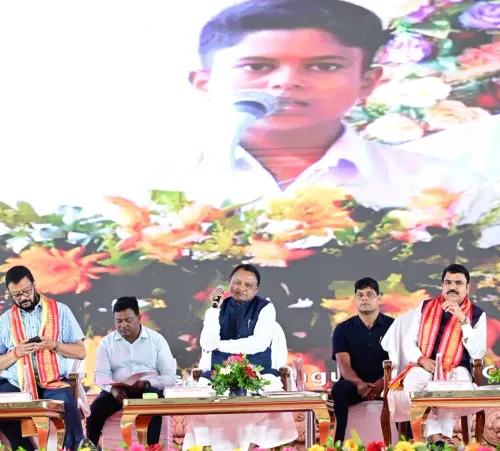
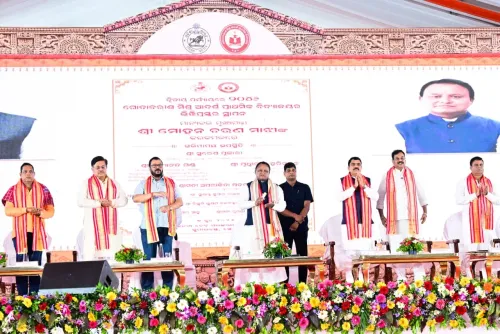
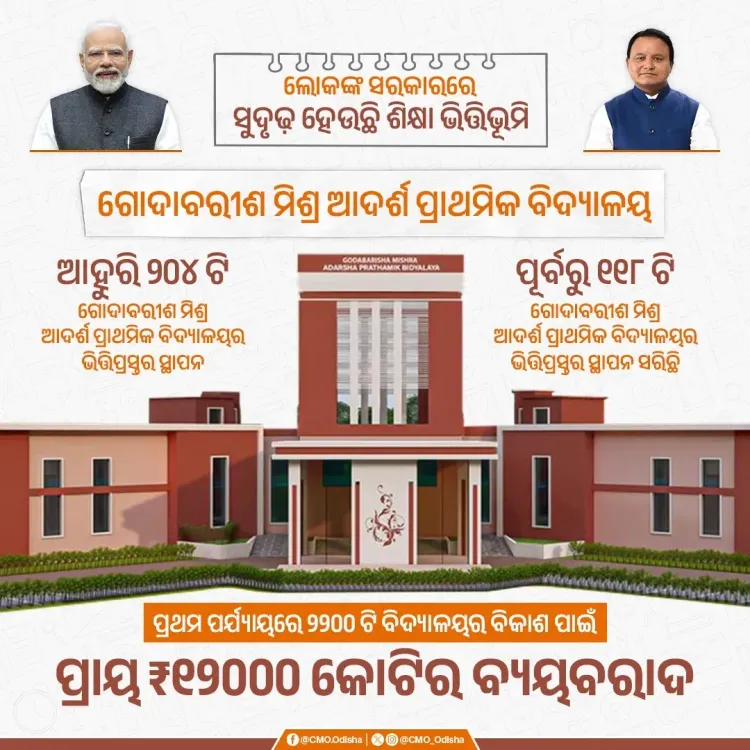
Chief Minister Mohan Majhi laid foundation stones for 204 model primary schools across Odisha at Khordha on 7 June 2026 under the Godabarish Mishra Adarsha Prathamik Vidyalaya Yojana, aiming to deliver smart classrooms and quality primary education statewide by 2036.
Key Takeaways
204 schools received foundation stones in a single ceremony held at Khordha on 7 June 2026 .
The scheme is named after freedom fighter and educationist Godabarish Mishra (1896–1986) , a revered figure in Odia public life.
Key features include modern infrastructure and smart classrooms designed to bring government primary schools to world-class standards.
The programme is explicitly tied to the state's 2036 target for a prosperous and developed Odisha.
The initiative aligns with the National Education Policy 2020 and may draw central funding under Samagra Shiksha Abhiyan .
This is one of the first major flagship schemes of the BJP government that took power in Odisha in June 2024 .
The Chief Minister's Office of Odisha announced on Sunday, 7 June 2026 that Chief Minister Mohan Majhi laid the foundation stones for 204 schools across the state under the Godabarish Mishra Adarsha Prathamik Vidyalaya Yojana at an event held in Khordha, marking what the government describes as a revolutionary shift in Odisha's primary education system.
Context
The post, published by the official CMO Odisha handle, states in Odia: 'ଓଡ଼ିଶାର ପ୍ରାଥମିକ ଶିକ୍ଷା ବ୍ୟବସ୍ଥାରେ ଏକ ବୈପ୍ଳବିକ ପରିବର୍ତ୍ତନ' — 'a revolutionary change in Odisha's primary education system.' The scheme aims to provide state-of-the-art infrastructure, smart classrooms, and quality education to the next generation. The government has set an explicit horizon of 2036 for a 'prosperous and developed Odisha,' directly linking school-building to a long-term state development vision.
The scheme is named after Godabarish Mishra (1896–1986), a prominent Odia freedom fighter, legislator, and educationist whose legacy carries deep resonance in the state's public memory. Naming a flagship school programme after him signals the government's intent to anchor modern infrastructure delivery in a recognised cultural and historical identity.
Policy Backdrop
The initiative sits within a wider national policy framework. The National Education Policy 2020 places foundational literacy and numeracy at the centre of school reform and calls on states to upgrade primary school infrastructure substantially. The Samagra Shiksha Abhiyan, running since 2018, provides central funding specifically for primary school strengthening and the creation of model schools — a potential funding channel for this scheme.
CM Mohan Majhi took office in June 2024 after the BJP's victory in the Odisha state elections, ending a long period of Biju Janata Dal rule. The early emphasis on a visible, large-scale school-infrastructure programme fits the new administration's broader pattern of signalling delivery-oriented governance. Across BJP-governed states, named model-school schemes have become a recognisable instrument for demonstrating tangible development outcomes.
Stakeholders and Impact
The most direct beneficiaries are primary school students and rural households across Odisha, particularly in areas where government school infrastructure has historically lagged. With 204 schools receiving foundation stones in a single event, the programme has an immediate symbolic scale that is intended to communicate statewide reach rather than urban concentration.
Smart classrooms — a key feature cited by the government — represent a meaningful upgrade in districts where digital learning tools remain scarce. If fully executed, the scheme could alter the competitive baseline for government primary schooling in the state, reducing the gap with private institutions that have driven urban enrolment shifts over the past decade.
What's Next
The foundation-stone ceremony marks the start, not the completion, of the programme. Key milestones to watch include phased construction timelines, teacher recruitment to staff the new schools, and the inauguration of the first completed batch of buildings. State budget allocations for 2026–27 and any formal tie-ups with central funding under Samagra Shiksha Abhiyan will determine the financial credibility and pace of rollout.
The government's stated 2036 target provides a decade-long window — and a decade-long accountability benchmark. How many of the 204 schools become fully operational, and how quickly, will be the measure against which this announcement is ultimately judged.
Point of View
Anchoring a state-level programme within a broader ideological arc. The real test, however, lies in construction timelines and teacher deployment — areas where ambitious school-building announcements in India have historically struggled to match their initial scale.
NationPress
15 Sept 2026
Frequently Asked Questions
What is the Godabarish Mishra Adarsha Prathamik Vidyalaya Yojana?
It is an Odisha state government scheme to build model primary schools equipped with modern infrastructure and smart classrooms across the state, named after Odia freedom fighter and educationist Godabarish Mishra (1896–1986).
How many schools were announced under the scheme?
Chief Minister Mohan Majhi laid foundation stones for 204 schools statewide at a ceremony held in Khordha on 7 June 2026.
Who is Godabarish Mishra?
Godabarish Mishra (1896–1986) was a prominent Odia freedom fighter, legislator, and educationist whose contributions to Odisha's public and intellectual life make him a widely respected historical figure in the state.
What features will the new model primary schools have?
According to the government announcement, the schools will have state-of-the-art infrastructure and smart classrooms aimed at delivering quality, world-class education to primary-level students.
How does this scheme connect to national education policy?
The scheme aligns with the National Education Policy 2020's emphasis on foundational learning and school infrastructure upgrades, and may access central funding through the Samagra Shiksha Abhiyan which supports model school creation across India.