CM Majhi to lay foundation for 204 model primary schools in Odisha
Synopsis
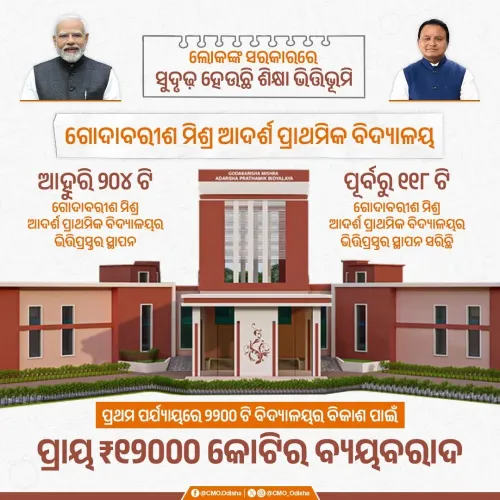
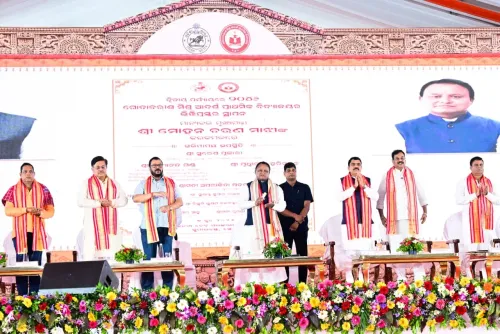
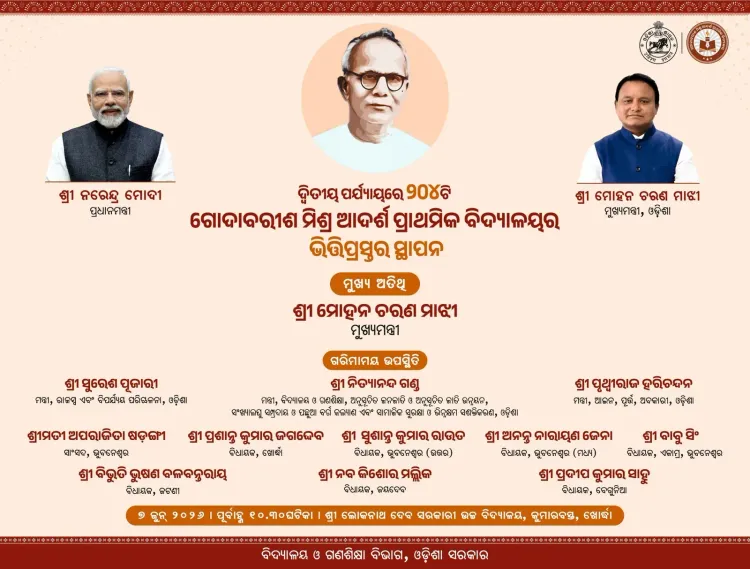
Chief Minister Mohan Majhi will lay the foundation stone for 204 Godabarish Mishra Adarsha Primary Schools in Odisha's second phase, expanding the BJP government's flagship model school programme to strengthen rural primary education infrastructure.
Key Takeaways
204 Godabarish Mishra Adarsha Primary Schools will have their foundation stones laid in the second phase of the programme.
Chief Minister Mohan Charan Majhi will personally attend the ceremony, underscoring the political priority given to the scheme.
The scheme is named after Godabarish Mishra (1896–1965) , a prominent Odia educationist and former legislator.
The first phase of the programme was launched in 2025 ; the second phase represents a significant scale-up.
The initiative targets rural and underserved communities, with primary school students and rural households as direct beneficiaries.
The programme aligns with the BJP-led Odisha government's post-2024 development agenda centred on foundational literacy and school infrastructure.
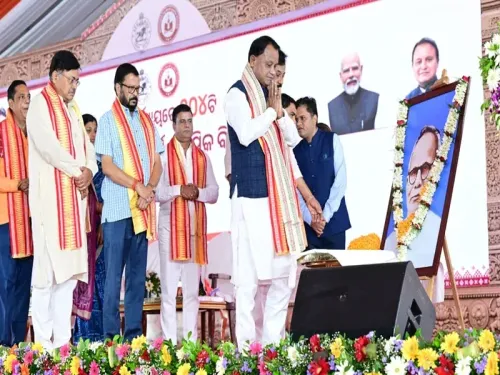
Bhubaneswar, June 7, 2026 — The Chief Minister's Office of Odisha announced on Sunday that Chief Minister Mohan Charan Majhi will attend the foundation-stone laying ceremony for 204 Godabarish Mishra Adarsha Primary Schools under the second phase of the state's model school programme, marking a significant expansion of quality primary education infrastructure across the state.
The CMO posted in Odia: 'ଗୁଣାତ୍ମକ ଶିକ୍ଷା ଜରିଆରେ ଛାତ୍ରଛାତ୍ରୀଙ୍କ ଉଜ୍ଜ୍ୱଳ ଭବିଷ୍ୟତ ଗଠନ ପାଇଁ ଭିତ୍ତିଭୂମି ହେଉଛି ସୁଦୃଢ଼' ['The foundation is being strengthened to build a bright future for students through quality education']. CM Majhi's participation signals the state government's continued push to make the model school scheme a flagship of its development agenda.
Context
The Godabarish Mishra Adarsha Primary School scheme is named after Godabarish Mishra (1896–1965), a celebrated Odia educationist, writer, and former legislator. Honouring his legacy, the programme aims to create standardised, high-quality primary school facilities — particularly in rural and underserved areas of Odisha. The first phase of the scheme was launched in 2025, and the second phase now adds 204 more schools to that foundation.
Policy Backdrop
Since coming to power in June 2024, the BJP-led government under CM Majhi has placed foundational literacy and school infrastructure at the centre of its social development priorities. The model school programme mirrors efforts in other Indian states to close the rural-urban gap in schooling quality, standardising facilities and learning environments from the primary level upward.
The broader national push for improved foundational learning — reflected in the National Education Policy 2020 — has given state governments a policy mandate to invest in early schooling infrastructure. Odisha's adarsha school model fits squarely within that framework, targeting districts where government primary schools have historically lacked adequate facilities.
Stakeholders and Impact
The immediate beneficiaries are primary school students and rural households in the districts where the 204 new schools will be constructed. Improved infrastructure is expected to support better enrolment and retention rates, particularly for girls and children from economically weaker sections.
Teachers, local panchayat bodies, and district education administrations will also be key stakeholders in the rollout. The scale of the second phase — 204 schools in a single tranche — signals an acceleration of the programme beyond its initial pilot footprint.
What's Next
Attention will now turn to construction timelines, teacher recruitment linked to the new campuses, and budget allocations in the next Odisha state assembly session. Whether the government announces a third phase — and at what scale — will indicate the programme's long-term ambition. The quality of learning outcomes at completed first-phase schools is also expected to shape public and legislative scrutiny of the scheme going forward.
Point of View
Tangible delivery on education promises ahead of future electoral cycles in Odisha. Naming the scheme after Godabarish Mishra, a revered Odia cultural figure, also reflects a calculated effort to root a new BJP-era programme in indigenous Odia identity rather than projecting it as an import from the national party playbook. The scale of the second phase — 204 schools in one tranche — suggests the government is moving from pilot to mainstreaming, which will invite scrutiny on implementation quality and budget adequacy. How swiftly these schools become functional, rather than merely inaugurated, will ultimately determine the programme's legacy.
NationPress
23 Oct 2026
Frequently Asked Questions
What is the Godabarish Mishra Adarsha Primary School scheme in Odisha?
It is a state government programme to build standardised, high-quality model primary schools across Odisha, named after Odia educationist and former legislator Godabarish Mishra (1896–1965). The first phase was launched in 2025, and the second phase adds 204 more schools.
Who is Godabarish Mishra and why is the school scheme named after him?
Godabarish Mishra (1896–1965) was a celebrated Odia writer, educationist, and former legislator. The Odisha government named its model primary school programme after him to honour his contributions to education and Odia cultural life.
How many schools are being built in the second phase of the Odisha model school programme?
The second phase covers 204 Godabarish Mishra Adarsha Primary Schools, whose foundation stones are being laid with CM Mohan Majhi in attendance.
Who is the Chief Minister of Odisha in 2026?
Mohan Charan Majhi is the Chief Minister of Odisha, having taken office in June 2024 after the BJP's victory in the state assembly elections.
What is the BJP Odisha government's education policy focus?
Since 2024, the BJP-led Odisha government has prioritised foundational literacy and school infrastructure, with the Godabarish Mishra Adarsha Primary School programme as a flagship initiative aimed at reducing rural-urban gaps in primary schooling.