India-UN Fund 2026: Development cooperation is central to India's foreign policy
Synopsis
At the India-UN Development Partnership Fund's 2026 annual gathering, nations from Tuvalu to Cuba and Moldova to Sri Lanka lined up to credit a $150 million Indian fund with building dams, health networks, and statistical systems in 64 countries — while India's parliamentary delegation reaffirmed that its model of demand-driven, sovereignty-respecting cooperation is a deliberate foreign-policy choice, not charity.
Key Takeaways
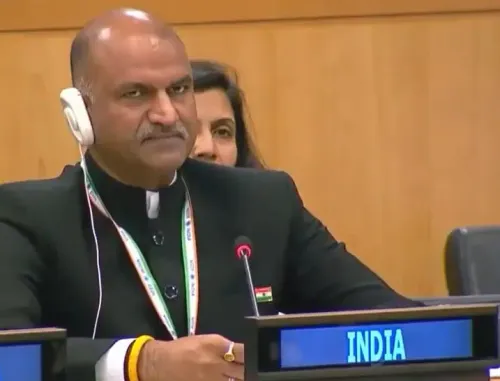
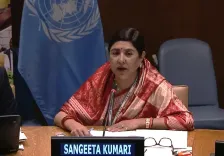
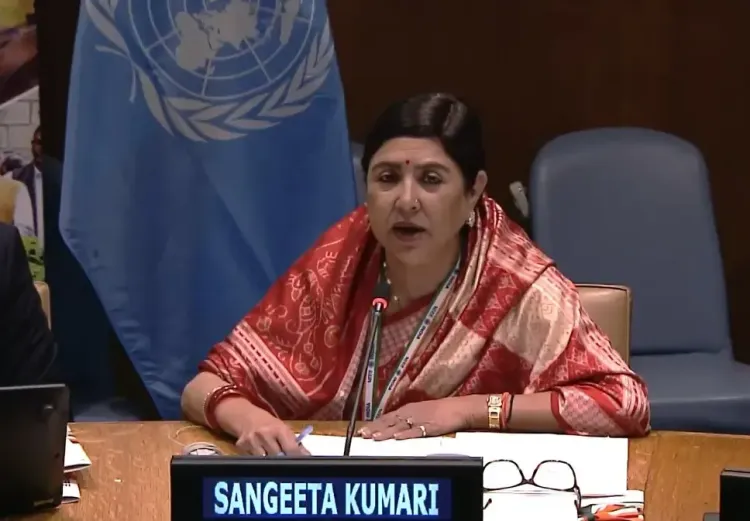
India's parliamentary delegation, led by BJP MP Sangeeta Kumari Singh Deo of Bolangir, Odisha , represented India at the India-UN Fund Annual Event 2026 on 23 October 2026 at the United Nations .
The India-UN Development Partnership Fund, established in 2017 with a $150 million pledge, has backed 94 projects in 64 countries , per UN Under-Secretary-General Hao Liang Xu .
India's approach is described as 'demand-driven' — partner nations set their own priorities, with India providing finance and technical cooperation.
Representatives from Sri Lanka, Tuvalu, Moldova, Tanzania, Cuba , and Paraguay cited specific Fund projects, including the Nyando Dam in Burkina Faso (benefiting 50,000+ people ), solar energy in Tuvalu, and maternal health in Cuba.
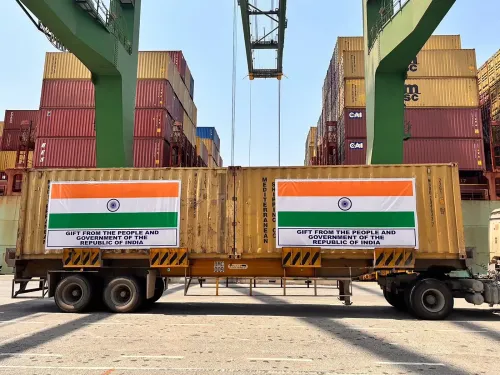
India extended a $1 billion line of credit to Sri Lanka during its 2022 economic crisis and deployed rescue teams under Operation Sagar Bandhu within 24 hours of Cyclone Dita .
India's Permanent Representative P.
Harish framed the cooperation within the principle of Vasudhaiva Kutumbakam — the world as one family.
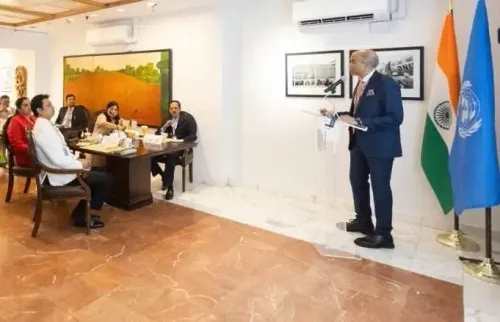
India's commitment to development cooperation as a core pillar of its foreign policy took centre stage at the India-UN Development Partnership Fund Annual Event 2026 at the United Nations on 23 October 2026, as representatives from across the Pacific, Southeast Asia, Europe, Africa, and Latin America gathered to acknowledge India's wide-ranging assistance to the Global South.
'For India, development cooperation is a central pillar of our foreign policy,' said Sangeeta Kumari Singh Deo, Bharatiya Janata Party (BJP) Member of Parliament from Bolangir, Odisha, who led the Indian parliamentary delegation to the event. Her remarks drew applause from partner nations that have directly benefited from India-backed projects spanning infrastructure, health, climate resilience, and digital cooperation.
The Fund's Reach and Record
Established in 2017 with an initial pledge of $150 million, the India-UN Development Partnership Fund has since supported 94 projects across 64 countries, according to UN Under-Secretary-General Hao Liang Xu. 'The fund exemplifies the principles of effective South-South cooperation,' he said, adding that 'India's support touched the people's lives.'
Xu recounted a recent visit to Burkina Faso, where India's assistance funded the construction of the Nyando Dam and supported irrigation networks, women's cooperatives, community fisheries, and school improvements, together benefiting more than 50,000 people.
Singh Deo described the fund as encompassing 'concessional finance, infrastructure, humanitarian assistance, capacity building, digital cooperation, and cultural heritage conservation' — managed within a multilateral framework and designed to 'demonstrate how South-South cooperation can advance nationally owned solutions and accelerate progress towards the Sustainable Development Goals.'
India's Demand-Driven Approach
A recurring theme at the event was India's emphasis on sovereignty and mutual respect. 'Our approach is demand-driven, consultative, and guided by mutual respect, mutual benefit, and respect for sovereignty,' Singh Deo said, stressing that 'partner countries identify their priorities' and India works to 'translate those priorities into tangible outcomes.'
India's Permanent Representative to the UN, P. Harish, grounded this philosophy in India's civilisational outlook. 'Our approach to development cooperation is rooted in our civilisational ethos of Vasudhaiva Kutumbakam — that the whole world is one family,' he said. 'We believe that progress becomes more enduring when we share our experiences among friends and partners in the Global South.'
Voices from Partner Nations
Sri Lanka's Permanent Representative to the UN, Jayantha Jayasuriya, highlighted India's responsiveness during crises, citing the $1 billion line of credit extended during Sri Lanka's 2022 economic crisis. When Cyclone Dita struck last November, he noted, India responded within 24 hours, dispatching rescue teams under Operation Sagar Bandhu.
Tapugao Falefou, Permanent Representative of Tuvalu, praised the fund as 'a practical demonstration of international solidarity,' citing a solar home standalone energy system installed for the community of Funaota as a concrete example of its impact.
Moldova's Permanent Representative, Gheorghe Leuca, spoke of two successive Fund projects that helped his country's National Bureau of Statistics produce more reliable data on population and migration, and subsequently build a statistical system capable of responding to humanitarian emergencies.
Cuba's Permanent Representative, Ernesto Soberon Guzman, welcomed a Fund project targeting maternal and neonatal mortality, saying: 'India's leadership in the Global South demonstrates the power of partnerships built on equality, mutual respect, and shared aspirations for sustainable development.'
Jarbaz Barbosa, Director of the Pan American Health Organisation, quoted a mother from the indigenous Nivacle group in Paraguay, where the Fund established a health network: 'They understood our culture and our mother's heart.'
Why This Matters Now
Sri Lanka's Jayasuriya underscored the broader significance of South-South finance 'at a time when development financing is under growing pressure.' Tanzania's Permanent Representative, Togolani Edris Mawora, welcomed the Fund's Climate Change and Resilience Programme as 'a very timely and strategic intervention' as drought, floods, and extreme weather events increasingly threaten agriculture, water resources, and livelihoods across the continent.
This comes amid a global shift in how emerging economies are engaging with multilateral development — with India positioning itself not as an aid recipient but as a co-architect of South-led solutions. The Annual Event's theme, 'South-Led Solutions: Shared Results', as noted by Moldova's Leuca, captures the Fund's founding premise: that solutions are most durable when they are locally identified, regionally endorsed, and multilaterally supported.
With the Fund's portfolio now spanning 64 countries and nine years of disbursements, attention turns to whether India will announce an enhanced pledge or an expanded sectoral mandate at the next review cycle.
Point of View
And the 'demand-driven' framing is a deliberate rebuke to conditionality-heavy lending. Yet the $150 million corpus, spread across 94 projects in 64 countries, averages less than $1.6 million per project — enough for community infrastructure and statistical systems, but thin for systemic transformation. The real question is whether India will scale the fund meaningfully, or whether it remains a well-crafted signal rather than a structural shift in South-South financing.
NationPress
23 Oct 2026
Frequently Asked Questions
What is the India-UN Development Partnership Fund?
The India-UN Development Partnership Fund is a multilateral development fund established in 2017 with an initial Indian pledge of $150 million, managed under the UN framework. It supports demand-driven projects in Global South nations spanning infrastructure, health, climate resilience, digital cooperation, and capacity building, and has so far funded 94 projects across 64 countries.
What was the India-UN Fund Annual Event 2026?
Held on 23 October 2026 at the United Nations, the Annual Event 2026 brought together representatives from partner countries across the Pacific, Southeast Asia, Europe, Africa, and Latin America to review the Fund's impact. India was represented by a parliamentary delegation led by BJP MP Sangeeta Kumari Singh Deo of Bolangir, Odisha.
How many countries has the India-UN Fund supported?
According to UN Under-Secretary-General Hao Liang Xu, the fund has supported 94 projects in 64 countries. Projects range from the Nyando Dam in Burkina Faso — benefiting over 50,000 people — to solar energy systems in Tuvalu and maternal health initiatives in Cuba and Paraguay.
What is India's approach to development cooperation?
India describes its approach as 'demand-driven, consultative, and guided by mutual respect, mutual benefit, and respect for sovereignty,' meaning partner countries identify their own priorities and India works to finance and implement them — without imposing conditionalities. This is grounded in the philosophy of Vasudhaiva Kutumbakam, or the world as one family.
How did India support Sri Lanka through the Fund?
India provided Sri Lanka with a $1 billion line of credit during its 2022 economic crisis. More recently, when Cyclone Dita struck, India responded within 24 hours by dispatching rescue teams under Operation Sagar Bandhu — actions that Sri Lanka's Permanent Representative to the UN cited as proof of the partnership's value.