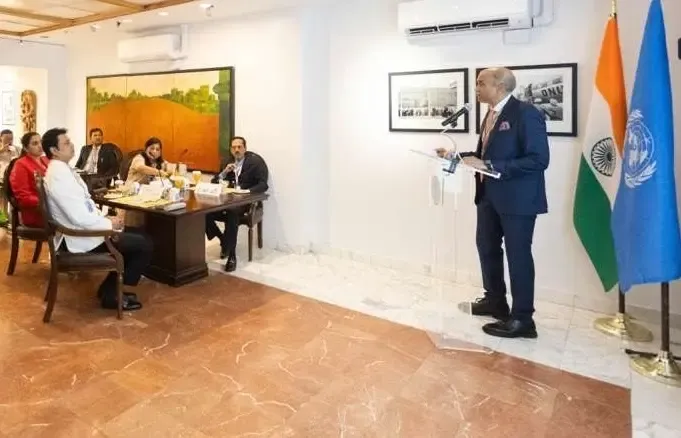
15 Indian MPs at UN General Assembly, reflecting political and regional diversity
Synopsis
India sent 15 MPs — drawn from nine parties and over a dozen states — to the UN General Assembly, where several took the floor in Hindi and English at key committees. The delegation's breadth, from BJP to regional outfits, is a deliberate signal: India's multilateral voice is as pluralist as its democracy.
Key Takeaways
15 Indian MPs from nine parties and multiple states joined India's UN General Assembly delegation on 6 October 2025 .
The delegation paid homage to Mahatma Gandhi at his statue on the UN campus before beginning committee work.
Banshilal Gurjar (BJP, Madhya Pradesh) and C P Joshi (BJP, Rajasthan) addressed UNGA committees in Hindi with simultaneous translation.
The MPs met Assistant Secretary-General Kanni Wignaraja to discuss UNDP work in India and parliamentarians' role in advancing Sustainable Development Goals .
India's Permanent Representative P Harish briefed the delegation on India's broader UN engagement priorities.
Parliamentary participation in UNGA is a longstanding Indian tradition, typically intensifying in the months after the General Assembly's September session opens.
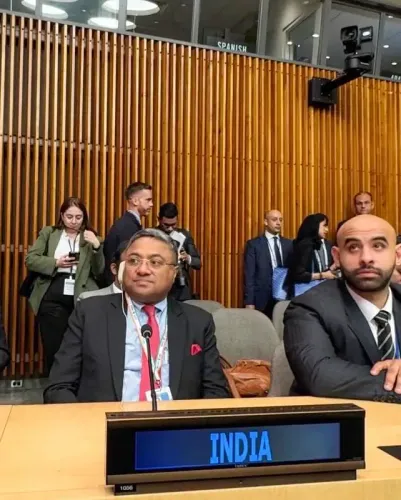
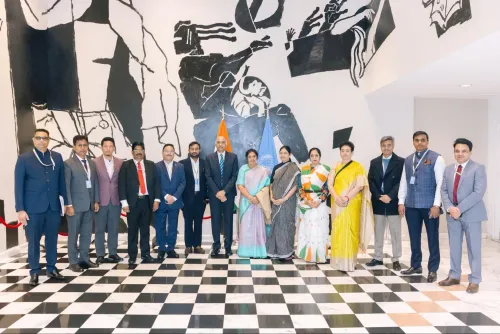
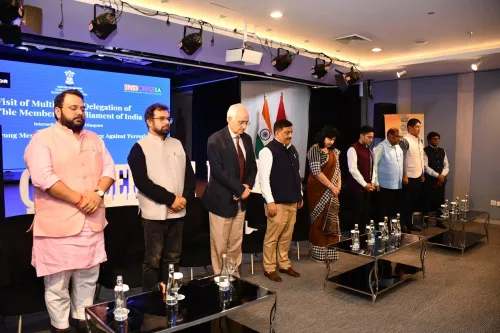
Fifteen members of Parliament from across India's political spectrum and geographic spread have joined the country's official delegation to the United Nations General Assembly, underscoring the democratic breadth of the world's most populous nation. The MPs, representing parties ranging from the Bharatiya Janata Party (BJP) to regional outfits, arrived in New York to participate in UNGA proceedings and engage with senior UN officials.
Gandhi Tribute and High-Level Briefings
On Monday, 6 October 2025, the delegation paid homage to Mahatma Gandhi at his statue on the UN campus before proceeding to their respective General Assembly assignments. P Harish, India's Permanent Representative and the senior diplomat heading India's UN Mission, briefed the MPs on India's engagement with the United Nations and the priorities guiding New Delhi's multilateral diplomacy.
The group also met with Kanni Wignaraja, the UN's Assistant Secretary-General and regional director for Asia and the Pacific, to discuss the work of the UN Development Programme (UNDP) in India. Central to that conversation was how parliamentarians can serve as domestic champions for the UN's Sustainable Development Goals (SDGs).
MPs Take the Floor at Key Committees
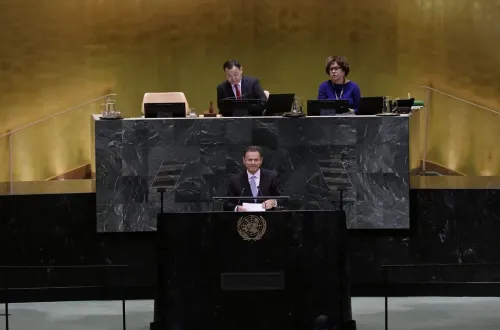
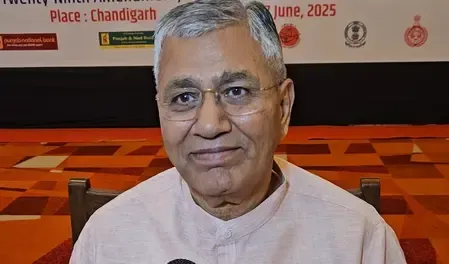
Several MPs moved swiftly into committee work. Banshilal Gurjar, BJP MP from Madhya Pradesh, addressed the Fifth Committee — which handles budgetary and administrative matters — speaking in Hindi with simultaneous translation on the scale of assessments for apportioning UN expenses. C P Joshi, BJP MP from Rajasthan and head of the Parliament Committee on Petitions, also addressed the chamber in Hindi, speaking before the Second Committee that deals with economic and financial matters. Gumma Thanuja Rani, a YSR Congress Party MP from Andhra Pradesh, spoke in English on the organisation of work at the Fifth Committee.
Delegation Composition: Parties and States
The 15-member delegation draws from nine parties and at least eleven states, reflecting the Centre's effort to present a genuinely pluralist face at the UN. The six BJP MPs are C P Joshi and Mahima Kumari Mewar from Rajasthan, Banshilal Gurjar from Madhya Pradesh, Biplab Kumar Deb (BJP national general secretary) from Tripura, Vishweshwar Hegde Kageri from Karnataka, and Sikander Kumar from Himachal Pradesh.
The two Indian National Congress (INC) MPs are Rahul Kaswan from Rajasthan and Anil Kumar Yadav from Telangana. The remaining seven MPs represent a cross-section of regional parties: LK Sudhish of the Desiya Murpokku Dravida Kazhagam from Tamil Nadu; Asit Mal of the All India Trinamool Congress (TMC) from West Bengal; Priya Saroj of the Samajwadi Party from Uttar Pradesh; Lovely Anand of the Janata Dal (United) from Bihar; Sanjay Yadav of the Rashtriya Janata Dal also from Bihar; Gumma Thanuja Rani of the YSR Congress Party from Andhra Pradesh; and Rajabhau Waje of the Shiv Sena (Uddhav Balasaheb Thackeray) from Maharashtra.
A Tradition of Parliamentary Engagement
India traditionally reinforces its presence at the General Assembly during the months following the opening of its new session in September, deploying MPs to committee work as a show of democratic engagement. Notably, the use of Hindi on the UN floor by multiple MPs signals a deliberate push for greater visibility of India's languages in international institutions — consistent with a broader policy emphasis on linguistic representation in global diplomacy. All eyes will be on whether this delegation's committee contributions translate into tangible outcomes on SDG targets and the UN budget process.
Point of View
Parliamentary participation in UN committees rarely moves beyond symbolism unless MPs follow through with domestic legislative action on SDG commitments, where India's progress remains uneven. The Hindi speeches at UNGA are worth watching: they are consistent with a growing institutional push to elevate Indian languages in multilateral forums, but they also risk being purely performative without follow-up capacity for sustained Hindi-language multilateral engagement. The real measure of this delegation's impact will be whether their UNDP conversations influence the next national SDG review.
NationPress
6 Oct 2026
Frequently Asked Questions
Why did India send 15 MPs to the UN General Assembly?
India sent a 15-member parliamentary delegation to the UN General Assembly to reinforce the country's presence and participate in key committee proceedings. It is a longstanding Indian tradition to deploy MPs to UNGA in the months following the Assembly's September opening, using their participation to demonstrate democratic breadth and multilateral engagement.
Which Indian MPs addressed the UN General Assembly?
BJP MPs Banshilal Gurjar and C P Joshi addressed the Fifth and Second Committees respectively, both speaking in Hindi with simultaneous translation. YSR Congress Party MP Gumma Thanuja Rani spoke in English at the Fifth Committee on the organisation of work.
What did the Indian MPs discuss with the UN's Assistant Secretary-General?
The MPs met Assistant Secretary-General Kanni Wignaraja, regional director for Asia and the Pacific, to discuss the UN Development Programme's work in India and how parliamentarians can help advance the UN's Sustainable Development Goals at the national level.
Which parties are represented in India's UNGA delegation?
The 15-member delegation includes MPs from nine parties: BJP, Indian National Congress, YSR Congress Party, Desiya Murpokku Dravida Kazhagam, All India Trinamool Congress, Samajwadi Party, Janata Dal (United), Rashtriya Janata Dal, and Shiv Sena (Uddhav Balasaheb Thackeray). States represented range from Rajasthan and Madhya Pradesh to Tamil Nadu, West Bengal, and Maharashtra.
What is the significance of Indian MPs speaking Hindi at the UN?
MPs Banshilal Gurjar and C P Joshi addressed UNGA committees in Hindi, with simultaneous translation provided. The move aligns with India's broader policy push to elevate its national languages in international institutions, signalling linguistic confidence on the global stage.