India reaffirms Two-State solution support at UNGA 81 side meeting
Synopsis
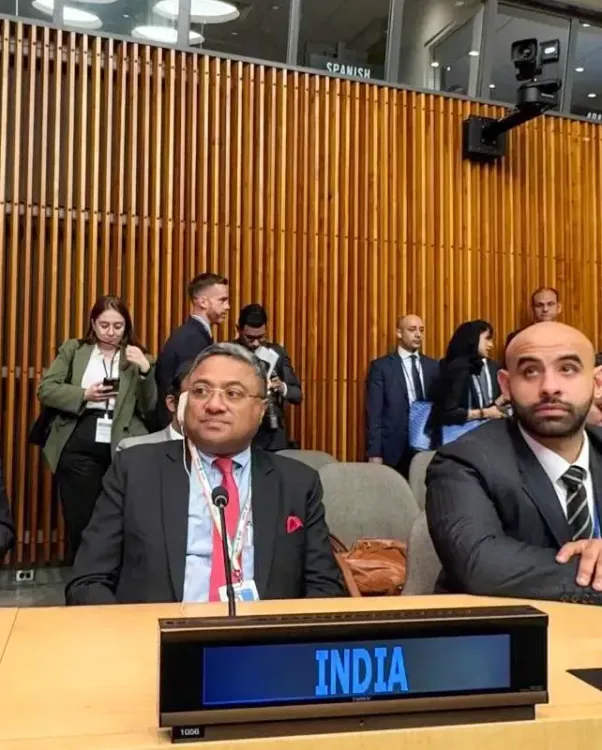
India's MEA Secretary (West) Sibi George packed three high-profile UNGA 81 engagements into a single New York day — reaffirming the Two-State solution, championing a Sarvodaya-rooted development model at a G7 forum, and backing a new binding global covenant on the Right to Development. The triple appearance captures India's signature approach: maximum multilateral presence, minimum hard alignment.
Key Takeaways
Secretary (West) Sibi George of the MEA represented India at three multilateral engagements on the sidelines of UNGA 81 in New York on 24 September 2026 .
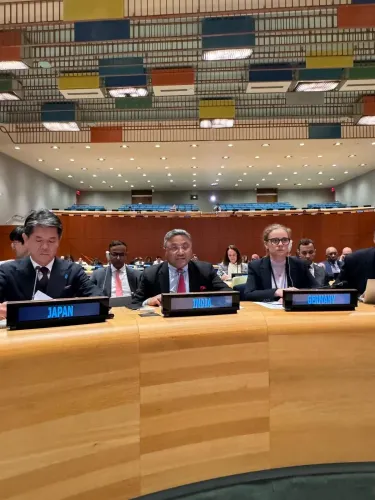
India reaffirmed 'clear and consistent support' for the Two-State solution at the High-level Ministerial Meeting of the Global Alliance for the Implementation of the Two-State Solution .
At the 2nd G7 Development Ministers Meeting , Secretary George emphasised India's human-centric, Sarvodaya -anchored development approach — noting that development must build domestic capability, not just provide financing.
India supported early adoption of the Covenant on the Right to Development , a proposed binding international instrument, at the 40th Anniversary commemoration of the Declaration on the Right to Development.
All three engagements were confirmed through official MEA posts on X .
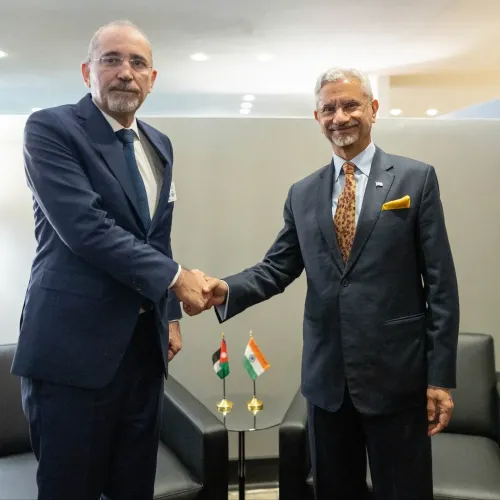
India has reaffirmed its firm and consistent support for the Two-State solution to the Israeli-Palestinian conflict, with Secretary (West) in the Ministry of External Affairs (MEA) Sibi George representing the country at a high-level ministerial gathering in New York on 24 September 2026, on the sidelines of the 81st session of the UN General Assembly (UNGA 81). The engagement underscored New Delhi's dual emphasis on political commitment and practical support for Palestinian statehood.
India at the Two-State Solution Alliance Meeting
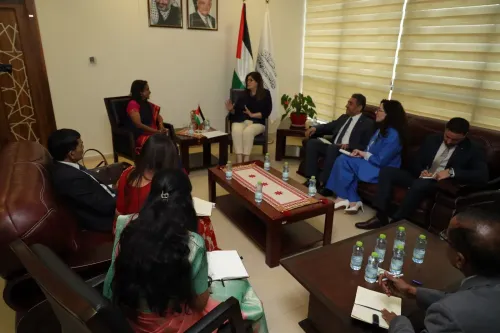
Secretary (West) Sibi George attended the High-level Ministerial Meeting of the Global Alliance for the Implementation of the Two-State Solution on the margins of UNGA 81. The MEA, in a post on X, stated: 'India reaffirmed its clear and consistent support for the Two-State solution. India's approach combines political commitment with practical support.' This participation signals New Delhi's continued diplomatic engagement on the Israel-Palestine issue at a time when international pressure for a negotiated settlement has intensified following the prolonged Gaza conflict.
India's Remarks at the G7 Development Ministers Meeting
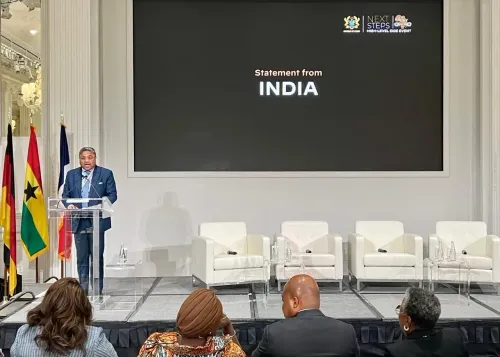
Earlier on the same day, Secretary George participated in the second G7 Development Ministers meeting, organised by G7 Chair France, also on the sidelines of UNGA 81. In his remarks, he emphasised India's 'human-centric and inclusive development path, anchored in the principles of Sarvodaya.' He further articulated India's position that development transcends mere financing and must focus on building domestic capabilities and strengthening resilience, citing India's development partnership initiatives as a model. Notably, India is not a G7 member, making its inclusion in the forum a reflection of New Delhi's growing multilateral standing.
40th Anniversary of the Right to Development Declaration
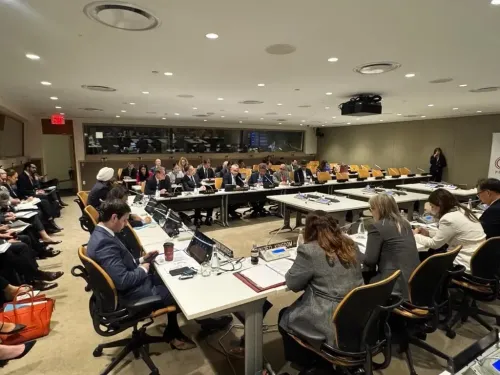
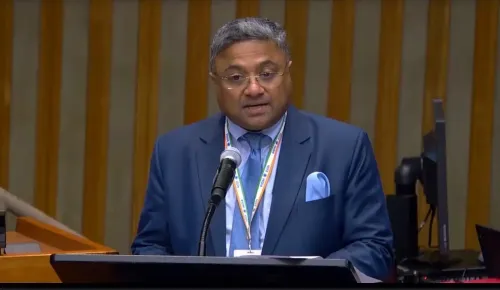
Secretary George also delivered India's National Statement at the high-level segment of the UN General Assembly, commemorating the 40th Anniversary of the Declaration on the Right to Development. He reaffirmed India's commitment to inclusive development, international cooperation, and multilateral reform. He also expressed support for the early adoption of the Covenant on the Right to Development, a proposed legally binding instrument that would enshrine development as a human right under international law.
What This Signals for India's Foreign Policy
The flurry of engagements by Secretary (West) Sibi George at UNGA 81 reflects India's broader foreign policy posture — active multilateral participation without formal alignment on contentious geopolitical fault lines. New Delhi's reiteration of the Two-State solution comes even as it maintains robust defence and trade ties with Israel, a balancing act that critics and analysts have long observed. India's invocation of Sarvodaya — a Gandhian principle meaning the welfare of all — at a G7 platform also reflects its effort to distinguish its development philosophy from Western aid models.
All three engagements were confirmed by the MEA through official posts on X. Further diplomatic activity at UNGA 81 is expected through the remainder of the General Debate week.
Point of View
Not a supplicant to Western aid frameworks. The push to fast-track the Covenant on the Right to Development is also significant — it is a project championed by the Global South, and India's vocal endorsement ahead of any binding vote matters. Whether these positions translate into sustained diplomatic capital or remain well-crafted statements will depend on how New Delhi votes when resolutions actually land on the UNGA floor.
NationPress
25 Sept 2026
Frequently Asked Questions
What did India say about the Two-State solution at UNGA 81?
India reaffirmed its 'clear and consistent support' for the Two-State solution at the High-level Ministerial Meeting of the Global Alliance for the Implementation of the Two-State Solution in New York on 24 September 2026. The MEA stated that India's approach 'combines political commitment with practical support.'
Who represented India at these UNGA 81 side meetings?
Secretary (West) in the Ministry of External Affairs, Sibi George, represented India at all three engagements — the Two-State solution ministerial, the G7 Development Ministers meeting, and the high-level segment on the Right to Development.
Why was India at the G7 Development Ministers meeting?
India was invited to participate in the second G7 Development Ministers meeting, organised by G7 Chair France, on the sidelines of UNGA 81. India is not a G7 member, and its inclusion reflects its growing multilateral influence. Secretary George used the platform to articulate India's Sarvodaya-rooted, capability-building model of development.
What is the Covenant on the Right to Development that India supported?
The Covenant on the Right to Development is a proposed legally binding international instrument that would codify development as a fundamental human right under international law. India, at the 40th Anniversary commemoration of the Declaration on the Right to Development, called for its early adoption.
What is the significance of India's position on the Two-State solution given its ties with Israel?
India maintains strong defence and trade ties with Israel while simultaneously reaffirming support for Palestinian statehood through the Two-State framework. This balancing act is a consistent feature of Indian foreign policy, reflecting New Delhi's traditional Non-Alignment-rooted approach of engaging all parties without formal bloc alignment.