India's Sibi George Pushes UN Reform, Global South Agenda at New York
Synopsis
India's MEA Secretary Sibi George made a sweeping diplomatic push at the UN in New York, pressing for Security Council reform, backing Africa's permanent seat bid, and flagging a $4 trillion SDG financing gap — positioning India as the loudest voice for Global South interests at a pivotal moment for multilateralism.
Key Takeaways
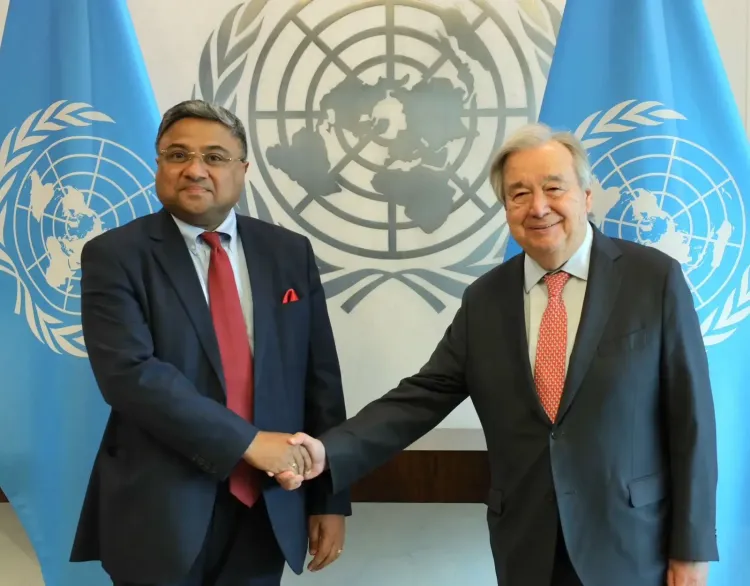
MEA Secretary Sibi George met UN Secretary-General Antonio Guterres in New York on April 24, 2025 , focusing on UN reform and Global South development.
India reaffirmed its support for the India-UN Development Partnership Fund as a key instrument of South-South cooperation.
George backed Africa's demand for permanent seats in the UN Security Council , citing the continent's historical exclusion when the UN was founded in 1945 .
A $4 trillion annual financing gap for achieving UN Sustainable Development Goals was flagged at the ECOSOC Forum on Financing for Development .
George questioned UN Secretary-General candidate Michelle Bachelet on her approach to Global South development priorities at a candidates' forum.
The UN's financial crisis and peacekeeping financing were discussed with UN Finance Controller Chandramouli Ramanathan .
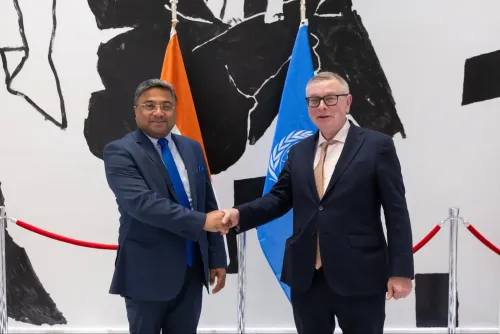
New York, April 24: India's Ministry of External Affairs Secretary Sibi George held a key meeting with United Nations Secretary-General Antonio Guterres in New York on Thursday, April 24, centering discussions on structural reforms within the global body and amplifying the voice of the Global South in international decision-making. The meeting signals India's continued diplomatic push to reshape multilateral institutions to better reflect 21st-century geopolitical realities.
George Reaffirms India's Commitment to Multilateralism
During the meeting, George reiterated India's unwavering commitment to multilateralism — a principle that Guterres himself has championed even as it faces mounting pressure from rising nationalism and geopolitical fragmentation. India's Permanent Mission to the UN confirmed the details of the meeting in a post on X (formerly Twitter).
The two leaders also reviewed New Delhi's flagship development initiatives for the Global South, particularly the India-UN Development Partnership Fund, which has financed projects across developing nations in Asia, Africa, and the Pacific. This fund has become a concrete symbol of India's South-South cooperation philosophy.
UN Financial Crisis and Peacekeeping on the Agenda
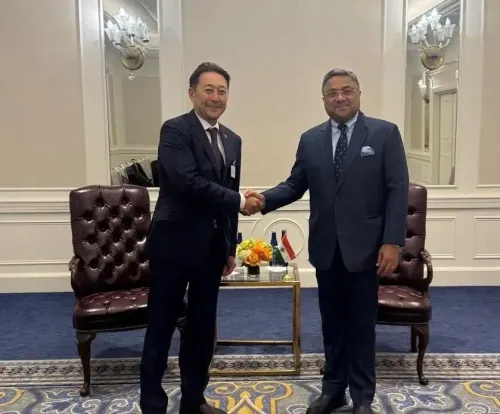
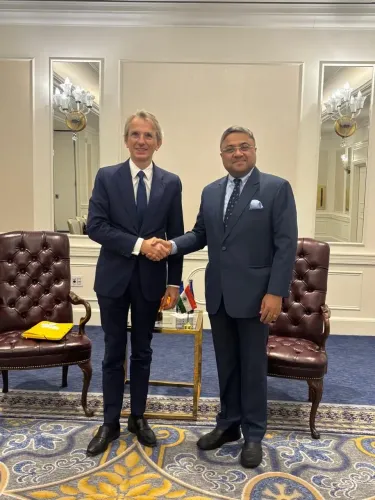
During his packed schedule in New York this week — which began with a tribute to the statue of Mahatma Gandhi at the UN complex — George engaged with a wide array of senior UN officials. He met Atul Khare, Under-Secretary-General for Operational Support, and Khaled Khiari, Assistant Secretary-General for Political and Peacebuilding Affairs and Peace Operations, reaffirming India's steadfast commitment to UN peacekeeping.
India is historically the largest contributor to UN peacekeeping operations, having deployed hundreds of thousands of troops across decades of missions in conflict zones worldwide. This legacy gives New Delhi significant moral authority in peacekeeping-related negotiations.
The UN's deepening financial crisis also featured prominently in discussions. George met Chandramouli Ramanathan, the UN Controller and Assistant Secretary-General for Finance, to assess the overall fiscal health of the organisation and explore sustainable financing mechanisms for peacekeeping operations.
UN80 Initiative and Structural Reform Discussions
In a separate meeting with Guy Ryder, Under-Secretary-General for Policy, George engaged on the broader reform agenda for the United Nations, including the UN80 Initiative — a forward-looking effort to make the organisation more agile, inclusive, and responsive to contemporary global challenges as it approaches its 80th anniversary.
This comes amid growing criticism from developing nations that the current UN architecture — designed in 1945 — no longer reflects the economic or political weight of the Global South, which now accounts for the majority of the world's population and a rapidly growing share of global GDP.
Security Council Reform: India Champions Africa's Permanent Seat Bid
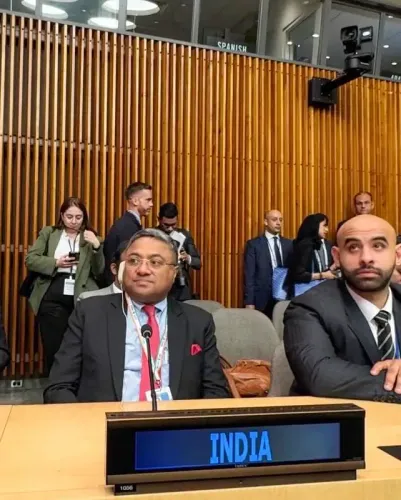
At the Intergovernmental Negotiations (IGN) on Security Council reform, George made a forceful case for greater representation of the Global South, especially in the permanent member category. With the session focused on Africa — a continent subjected to colonial exploitation and deliberately sidelined when the UN Charter was drafted in 1945 — George voiced India's strong support for Africa's demand for permanent seats in the UN Security Council.
He drew parallels between India's and Africa's positions on Council reform, underscoring a natural strategic alignment between the two in pushing for a more equitable global governance structure. Both have long argued that the current P5 configuration perpetuates a post-World War II power order that is increasingly anachronistic.
Global South Financing Gap and ECOSOC Forum
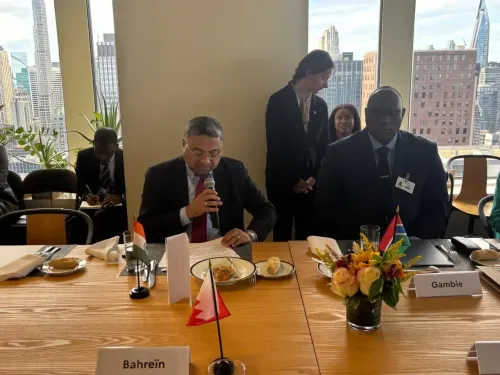
At the Economic and Social Council (ECOSOC) Forum on Financing for Development, George called for sweeping reforms to the international financial architecture, demanding that global finance mechanisms become more development-oriented, fair, and inclusive. He highlighted the staggering $4 trillion annual financing gap that developing nations face in achieving the UN Sustainable Development Goals (SDGs).
George also participated in a candidates' forum for aspirants seeking to succeed Guterres as UN Secretary-General. He questioned Michelle Bachelet, former UN High Commissioner for Human Rights, on her approach to delivering developmental outcomes for the Global South. Bachelet responded that member states must treat development goals as a top political priority and ensure dedicated financial commitments.
As the UN navigates its 80th year amid financial strain, geopolitical rivalry, and demands for structural overhaul, India's active diplomatic engagement in New York this week positions New Delhi as a pivotal broker in shaping the next chapter of global multilateralism. Upcoming sessions of the IGN and the UN General Assembly's high-level week later in 2025 will be critical milestones to watch.
Point of View
New Delhi is positioning itself as the indispensable bridge between the Global South and the world's power centres. What the mainstream narrative misses is the subtext: India is not just advocating for reform — it is building the coalition that will determine who sits at the high table when the UN eventually restructures. The question is whether this diplomatic capital translates into India's own permanent Security Council seat before the next decade is out.
NationPress
23 Oct 2026
Frequently Asked Questions
What did Sibi George discuss with Antonio Guterres at the UN?
MEA Secretary Sibi George met UN Secretary-General Antonio Guterres on April 24, 2025, to discuss UN structural reforms and development initiatives for the Global South. They also reviewed the India-UN Development Partnership Fund and India's commitment to multilateralism.
What is India's position on UN Security Council reform?
India strongly supports expanding the UN Security Council's permanent membership to include greater representation of the Global South, particularly Africa. India argues the current P5 structure reflects a 1945 power order that no longer mirrors today's geopolitical realities.
What is the $4 trillion financing gap mentioned at the ECOSOC forum?
The $4 trillion figure refers to the annual shortfall in funds that developing nations need to achieve the UN's Sustainable Development Goals (SDGs). India's Sibi George raised this at the ECOSOC Forum on Financing for Development, calling for reform of the global financial architecture.
What is the UN80 Initiative?
The UN80 Initiative is a reform effort aimed at making the United Nations more relevant, agile, and inclusive as it approaches its 80th anniversary in 2025. It focuses on adapting the organisation's structure and functions to address contemporary global challenges.
Why is India considered the largest contributor to UN peacekeeping?
India has historically deployed the highest number of troops to UN peacekeeping missions across conflict zones in Africa, Asia, and beyond over several decades. This contribution gives India significant diplomatic standing in discussions about peacekeeping policy and financing at the UN.