India pushes for UNSC reforms at France-Mexico initiative meet in New York
Synopsis
India sent a pointed double signal on UNSC reform within a fortnight — first through PM Modi's meeting with UN chief Guterres at the BRICS Summit, and now through MEA Secretary Sibi George's attendance at the France-Mexico initiative in New York. With India holding the BRICS chair and France — a veto-wielding permanent member — co-hosting the event, New Delhi's campaign for a permanent Security Council seat is gaining visible multilateral traction.
Key Takeaways
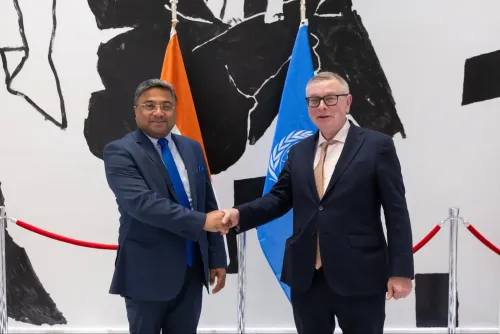
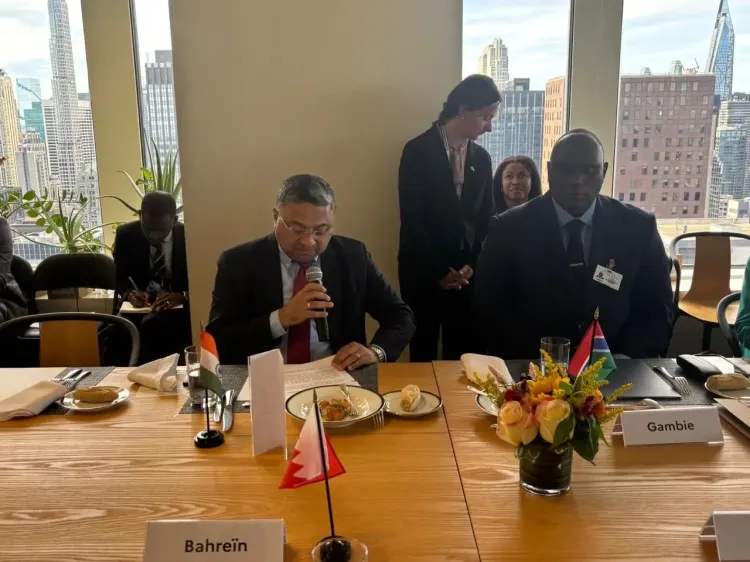
Sibi George , MEA Secretary (West), represented India at the Franco-Mexican Initiative event in New York on 22 September 2026 .
India reiterated its 'urgent' call for comprehensive UNSC reforms , including its consistent position on veto rights .
The event was co-organised by the Foreign Ministers of France and Mexico .
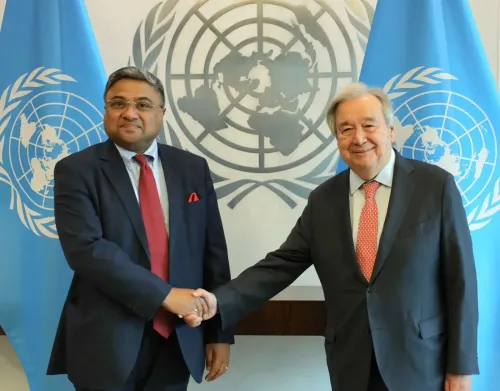
On 11 September 2026 , PM Modi and UN Secretary-General Guterres also called for UNSC reform at their BRICS Summit bilateral in New Delhi .
The Modi-Guterres meeting covered conflicts in Ukraine and the Middle East , freedom of navigation, lethal autonomous weapons, and global food security.
Guterres congratulated India on chairing the BRICS for the fourth time .
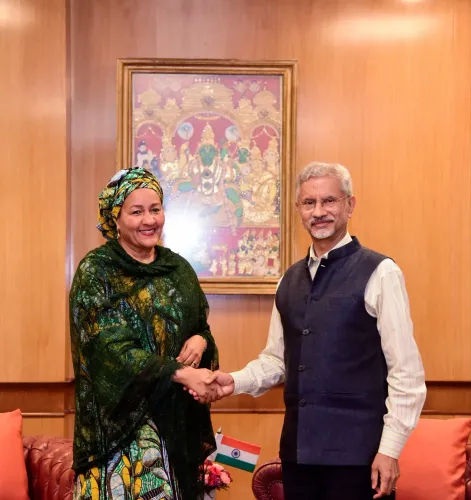
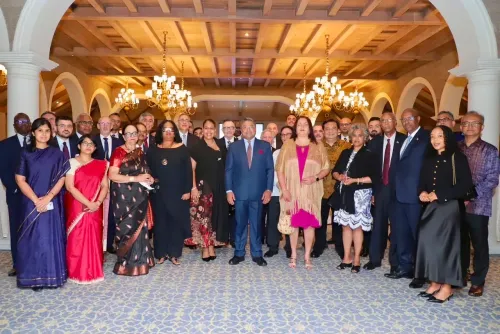
Sibi George, Secretary (West) at India's Ministry of External Affairs (MEA), attended an event on the Franco-Mexican Initiative in New York on 22 September 2026, reiterating India's long-standing call for comprehensive reforms of the United Nations Security Council (UNSC). The event was convened by the Foreign Ministers of France and Mexico, bringing together countries aligned on the need to restructure global governance architecture.
India's Position on UNSC Reforms
At the event, Sibi George emphasised India's 'well-established and consistent position on veto,' signalling that New Delhi's push extends beyond expanding permanent membership to addressing the contentious issue of veto rights. The MEA characterised the need for UNSC reform as 'urgent,' a sharper framing than the diplomatic language typically used in multilateral settings. India has been a sustained advocate for expanding the Security Council's permanent membership, a campaign that has gained renewed momentum alongside the country's rising geopolitical standing.
Modi-Guterres Meeting Sets the Context
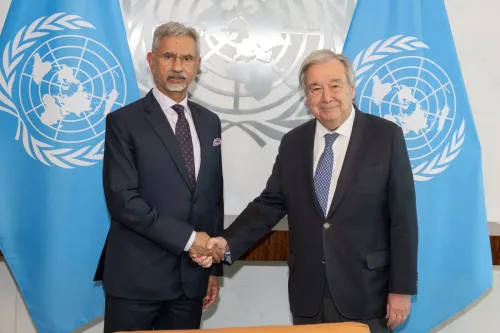
The New York event follows closely on the heels of a high-level bilateral meeting between Prime Minister Narendra Modi and UN Secretary-General António Guterres on 11 September 2026, held on the sidelines of the BRICS Summit in New Delhi. Both leaders underscored the significance of multipolarity and the imperative to reform multilateral institutions to reflect contemporary realities. Guterres congratulated Modi on India's chairship of the BRICS for the fourth time, according to the MEA.
In an X post following that meeting, PM Modi wrote: 'Had a wonderful meeting with UN Secretary-General Mr. Antonio Guterres. Discussed multiple subjects including the ground covered in India's BRICS Presidency, India's commitment to strengthening multilateralism and the urgent need for UN reforms.'
Broader Agenda: Conflicts, AI and Food Security
The Modi-Guterres discussions ranged well beyond institutional reform. The two leaders reviewed ongoing conflicts in the Middle East and Ukraine and their cascading impact on the global economy, including disruptions to food and fertiliser supply chains. Guterres reaffirmed the principle of freedom of navigation — a point of particular relevance given current maritime tensions. The leaders also exchanged views on the 'growing danger of lethal autonomous weapons,' according to a readout released by the UN Secretary-General's office. Additional topics included sustainable development, human-centric artificial intelligence, renewable energy progress, and global food security.
Why This Matters for India
India's participation in the Franco-Mexican Initiative is consistent with a broader diplomatic strategy of engaging across geopolitical blocs to build support for a permanent seat on the UNSC. Notably, this is the second significant UNSC-reform signal India has sent within a fortnight, following the Modi-Guterres summit. France is already a permanent UNSC member and has historically supported India's bid for a permanent seat, making its co-hosting of the initiative diplomatically significant. With India currently holding the BRICS chair and positioning itself as a bridge between the Global South and established powers, the momentum behind its UNSC campaign appears to be intensifying ahead of the UN General Assembly session.
What Comes Next
The Franco-Mexican Initiative is one of several parallel tracks — including the G4 grouping and the African Union's Ezulwini Consensus — seeking to reframe the UNSC reform debate. Whether these initiatives converge into a concrete proposal at the current UN General Assembly session will be closely watched. India's consistent messaging across bilateral and multilateral forums suggests that UNSC reform will remain a centrepiece of its foreign policy agenda for the foreseeable future.
Point of View
Including from France, which already wields a veto and has signalled sympathy for India's permanent-seat ambitions. Yet the UNSC reform debate has been stuck for decades, and the same arguments for expansion have circulated since the 1990s without producing a binding resolution. What is different now is the convergence of India's BRICS presidency, a sympathetic UN Secretary-General, and a global order visibly straining under multipolarity. Whether this moment translates into structural change or another round of diplomatic signalling will depend on whether the P5 — especially the US, Russia, and China — are willing to dilute their own dominance, a proposition that remains deeply uncertain.
NationPress
22 Sept 2026
Frequently Asked Questions
What is the Franco-Mexican Initiative on UNSC reform?
The Franco-Mexican Initiative is a diplomatic effort co-led by France and Mexico to advance discussions on reforming the United Nations Security Council, including its composition and the use of the veto. It brings together countries that support updating the UNSC's structure to better reflect 21st-century geopolitical realities.
Why is India pushing for UNSC reforms?
India has long sought a permanent seat on the UN Security Council, arguing that the current five-permanent-member structure does not reflect the contemporary balance of power or the interests of the Global South. New Delhi's position also includes reform of veto rights, which it considers a structural inequity.
What did PM Modi and UN Secretary-General Guterres discuss on 11 September 2026?
PM Modi and Guterres met on the sidelines of the BRICS Summit in New Delhi on 11 September 2026 and discussed UNSC reform, India's BRICS presidency, conflicts in Ukraine and the Middle East, freedom of navigation, lethal autonomous weapons, sustainable development, human-centric AI, renewable energy, and global food security.
Who represented India at the Franco-Mexican Initiative event in New York?
India was represented by Sibi George, Secretary (West) at the Ministry of External Affairs, who attended the event on 22 September 2026 and underscored India's position on veto reform and the urgent need for comprehensive UNSC restructuring.
What is India's position on the UNSC veto?
India has a 'well-established and consistent position on veto,' according to the MEA, which broadly refers to New Delhi's support for either reforming or restricting veto use, particularly in cases involving humanitarian crises — a stance it has articulated in multiple multilateral forums over the years.