CM Fadnavis Pledges Housing for Mumbai Sanitation Workers
Synopsis
Maharashtra CM Devendra Fadnavis on 6 November 2026 pledged rightful homes to Mumbai's sanitation workers under the 'Dr. Babasaheb Ambedkar Shram Safalya Awas Yojana', presiding over a BMC residence key-distribution ceremony and committing to further beneficiary rollout in the coming period.
Key Takeaways
Maharashtra CM Devendra Fadnavis announced housing for Mumbai sanitation workers under the 'Dr.
Babasaheb Ambedkar Shram Safalya Awas Yojana' on 6 November 2026 .
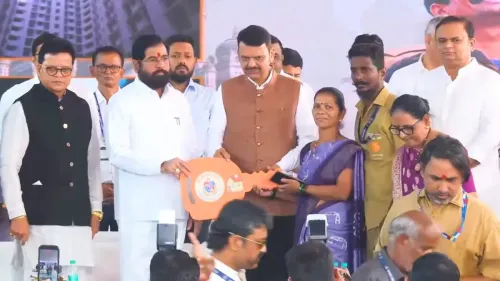
A key-distribution ceremony for BMC employee residences was held in Mumbai, with more homes promised in the coming period.
The scheme is named after Dr.
Ambedkar , signalling a social-justice framing for occupational welfare targeted at sanitation workers.
The initiative aligns with Maharashtra's broader history of periodic housing commitments for municipal sanitation staff and parallels the central Pradhan Mantri Awas Yojana (Urban) framework.
The Brihanmumbai Municipal Corporation (BMC) is the implementing civic body for the housing distribution in Mumbai.
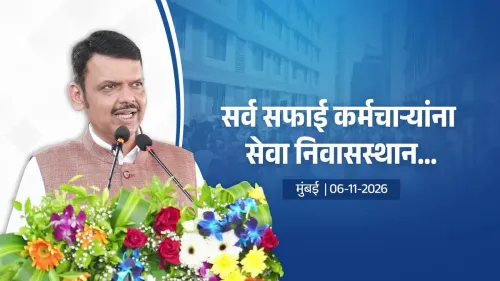
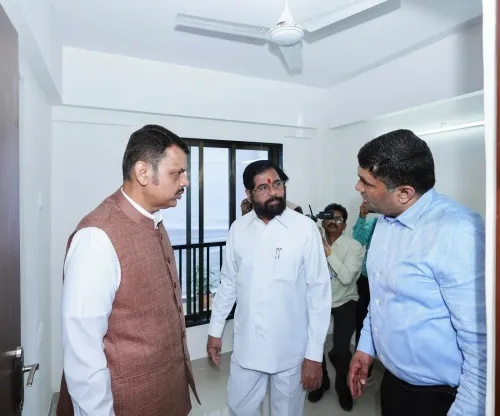
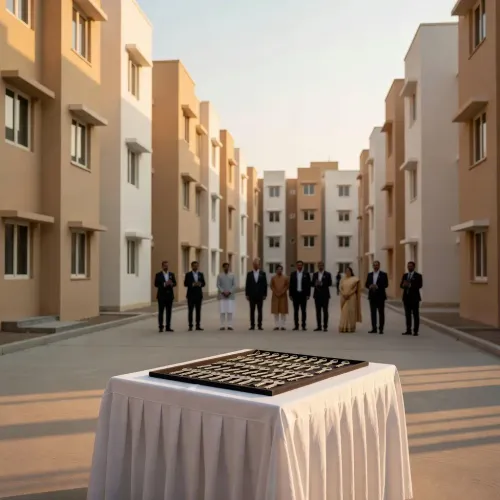
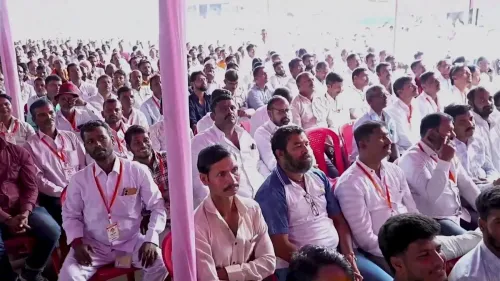
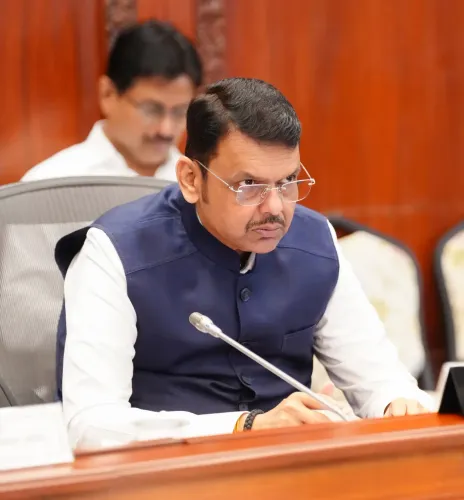
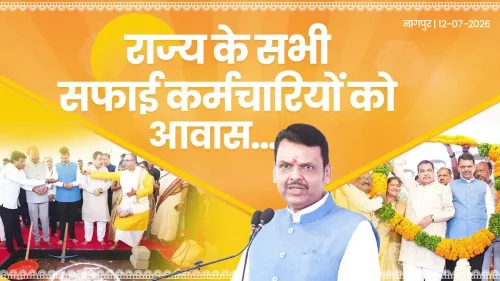
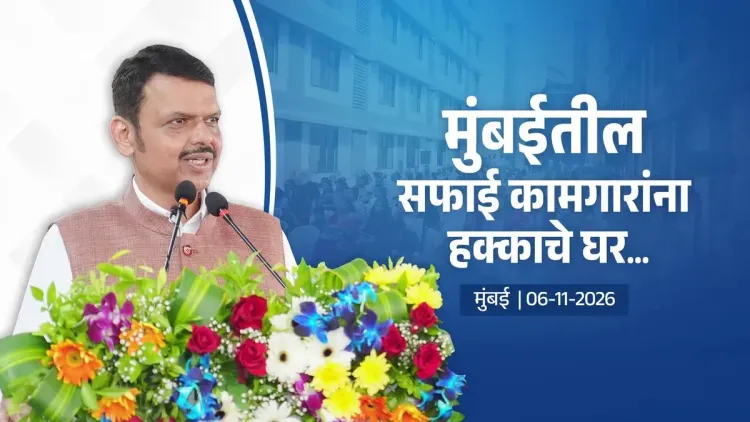
Homes — not promises — are being handed over. On 6 November 2026, Maharashtra Chief Minister Devendra Fadnavis announced that sanitation workers in Mumbai will receive rightful housing under the 'Dr. Babasaheb Ambedkar Shram Safalya Awas Yojana', marking the occasion with a key-distribution ceremony for employee residences in the city.
Posting on X, Fadnavis declared — in both Marathi and Hindi — 'डॉ. बाबासाहेब आंबेडकर श्रमसाफल्य आवास योजने अंतर्गत आगामी काळात मुंबईतील सफाई कामगारांना हक्काचे घर देणार' ('Under the Dr. Babasaheb Ambedkar Shram Safalya Awas Yojana, sanitation workers of Mumbai will be given their rightful homes in the coming period'). The event, tagged Mumbai, 6-11-2026, centred on the physical handover of residence keys to Brihanmumbai Municipal Corporation (BMC) sanitation employees.
Who Gets a Home — and Why It Matters
Mumbai's sanitation workers form the invisible backbone of India's most densely populated metropolis. They collect waste, clean drains, and keep a city of over 20 million people functioning — often while living in precarious, informal settlements far from their work zones. Formal housing directly tied to their occupation is not just a welfare measure; it is a stabilising force for essential civic services.
The scheme is named after Dr. B.R. Ambedkar, the chief architect of the Indian Constitution and lifelong champion of rights for marginalised communities — a deliberate invocation, given that sanitation work in India has historically been performed by Scheduled Caste communities. Naming the scheme after Ambedkar signals both political intent and a social-justice framing that resonates deeply in Maharashtra, where his legacy commands enormous reverence.
Maharashtra's Pattern of Municipal Housing Commitments
This is not a standalone gesture. Maharashtra governments have, over successive administrations, periodically announced targeted housing support for municipal sanitation staff, often framing such schemes around Ambedkar's legacy to underscore the occupational-welfare dimension. These efforts also run parallel to Pradhan Mantri Awas Yojana (Urban), the central government's flagship affordable-housing programme launched in 2015, under which the state has extended benefits to eligible urban workers.
The BMC, as the civic body administering Mumbai, plays a central role: it manages the sanitation workforce, maintains employee housing stock, and coordinates the actual key handovers. The scale of Friday's ceremony — and the number of beneficiaries — will determine how meaningful this round of distribution truly is.
What to Watch as Keys Change Hands
The immediate question is beneficiary count: how many sanitation workers received keys on 6 November, and how many more are in the pipeline? State budget allocations for the scheme will also signal whether this is a sustained programme or a one-cycle event. Any expansion beyond Mumbai — to sanitation workers in Pune, Nagpur, or other Maharashtra municipal corporations — would mark a significant scale-up worth tracking.
For now, the message from Mantralaya is clear: a city that never sleeps owes a debt to those who clean it. Fadnavis has picked up the keys — the test is in how many doors they actually open.
Point of View
Fadnavis is threading two political needles at once — signalling welfare delivery to a historically marginalised occupational group and reinforcing the BJP's outreach to Dalit communities in Maharashtra. The move fits a recognisable pattern where state housing schemes double as political branding exercises ahead of civic and state elections. The real test of substance will be in the beneficiary numbers and budget lineage: a one-time ceremony is optics, but a funded, recurring rollout would represent a genuine policy commitment. Tracking how the scheme scales beyond Mumbai will reveal whether this is a durable welfare architecture or a well-staged announcement.
NationPress
6 Nov 2026
Frequently Asked Questions
What is the Dr. Babasaheb Ambedkar Shram Safalya Awas Yojana?
It is a Maharashtra state housing scheme announced by CM Devendra Fadnavis to provide rightful homes to sanitation workers in Mumbai, named after Dr. B.R. Ambedkar to emphasise its social-justice mandate for marginalised civic workers.
Who will benefit from the sanitation worker housing scheme in Mumbai?
Sanitation employees of the Brihanmumbai Municipal Corporation (BMC) are the primary beneficiaries, with the state committing to distribute residence keys and expand the rollout in the coming period.
What happened at the Mumbai key-distribution ceremony on 6 November 2026?
CM Devendra Fadnavis presided over the handover of residence keys to BMC sanitation workers in Mumbai as part of the 'Dr. Babasaheb Ambedkar Shram Safalya Awas Yojana', pledging further housing in the near future.
How does this scheme connect to central government housing programmes?
The scheme runs alongside the Pradhan Mantri Awas Yojana (Urban), launched in 2015, through which Maharashtra has extended affordable housing benefits to eligible urban workers including municipal staff.
Why is the scheme named after Dr. Babasaheb Ambedkar?
Dr. Ambedkar is the chief architect of the Indian Constitution and a champion of rights for Scheduled Caste and marginalised communities; since sanitation work in India has historically been performed by such communities, invoking his name underscores the scheme's social-justice intent.