CM Fadnavis: All BMC Sanitation Workers to Get Housing by 2028
Synopsis
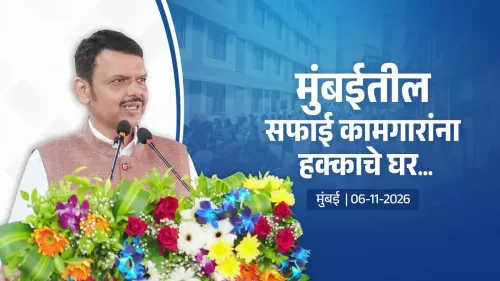
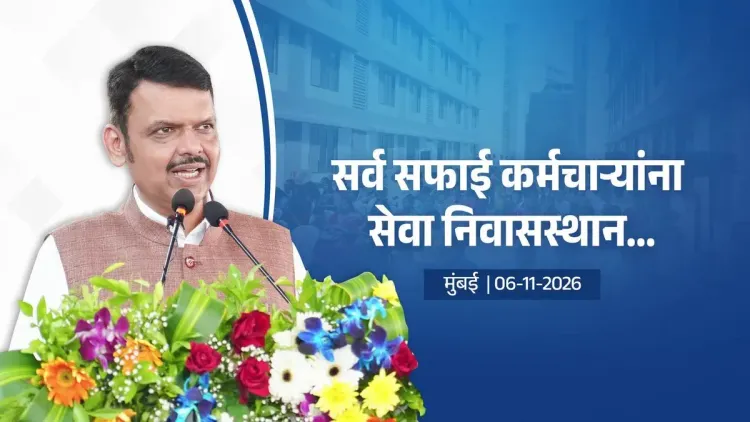
Maharashtra CM Devendra Fadnavis announced on 6 November 2026 that all BMC sanitation workers will be provided service residences under the Ashray Yojana by 2028, marking the occasion with a key distribution ceremony in Mumbai.
Key Takeaways
Devendra Fadnavis announced that all BMC sanitation workers will receive service residences by 2028 under the Ashray Yojana .
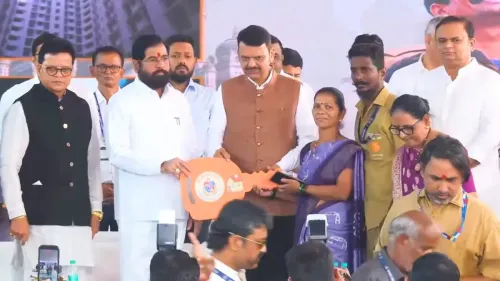
The announcement was made at a key distribution ceremony in Mumbai on 6 November 2026 , where workers received keys to new service quarters.
The Ashray Yojana is Maharashtra's targeted housing scheme for municipal and sanitation employees.
The BMC will be responsible for executing the housing rollout, including land identification, construction, and allocation.
The 2028 deadline signals a phased, multi-year programme rather than a single event, with Friday's ceremony marking one early tranche.
Stable housing for sanitation workers addresses long-standing workforce retention challenges within BMC operations.
Every sanitation worker keeping Mumbai's streets clean will have a roof of their own — that is the commitment Maharashtra Chief Minister Devendra Fadnavis made in Mumbai on 6 November 2026, announcing that all Brihanmumbai Municipal Corporation (BMC) sanitation employees will receive service residences under the Ashray Yojana by 2028.
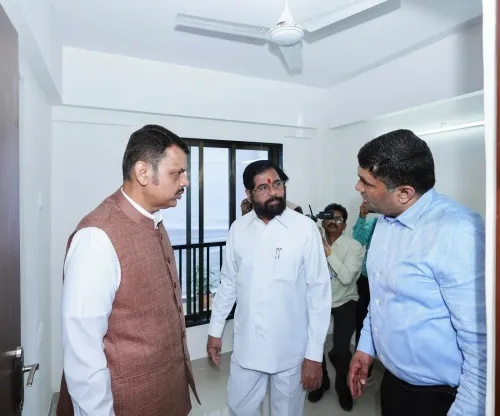
The announcement came during a key distribution ceremony where workers received keys to their new service quarters. Fadnavis stated plainly: '2028 पर्यंत सर्व सफाई कर्मचाऱ्यांना सेवा निवासस्थान उपलब्ध होणार' — 'By 2028, all sanitation workers will be provided service residences.' The ceremony marked a tangible, symbolic milestone: keys handed over, not just promises made.
Who the Ashray Yojana is meant to reach
Sanitation workers sit at the base of Mumbai's civic infrastructure — without them, one of the world's densest cities grinds toward dysfunction. Yet for decades, housing for BMC employees has lagged far behind the city's glass-and-steel ambitions. The Ashray Yojana (literally 'shelter scheme') is the state's attempt to close that gap, targeting service residences — quarters tied to employment — for the men and women on the frontlines of waste collection and street sanitation.
Maharashtra governments have periodically committed to housing support for municipal employees since the early 2000s, framing it as both a welfare measure and a tool for workforce retention. High attrition among sanitation staff has long been a pressure point for BMC operations. Stable, proximate housing is one of the most direct levers to fix it.
What a 2028 deadline means in practice
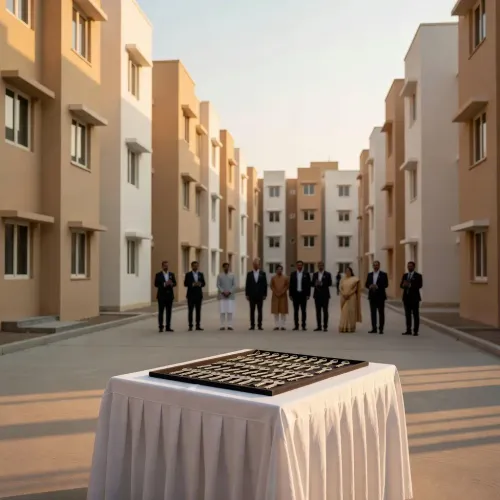
Setting 2028 as the completion target signals a multi-year construction and allocation pipeline rather than a one-off event. Friday's key distribution ceremony represents one phase of that rollout — an early tranche of units handed over as the broader programme scales up across Mumbai.
The BMC, as the city's principal civic body, will be central to executing the scheme: identifying land parcels, overseeing construction, and managing the allocation process. Progress on quarterly construction milestones and successive key distribution drives will be the real measure of whether the 2028 deadline holds.
India's national sanitation missions have consistently called on urban local bodies to improve living and working conditions for essential service staff — the Ashray Yojana in Maharashtra now carries that mandate into concrete, datable form. For thousands of workers who clean the city before the city wakes up, the countdown to 2028 has officially begun.
Point of View
Tangible welfare to essential-service workers in urban Maharashtra — a constituency that has historically received less attention than headline infrastructure projects. By attaching a hard 2028 deadline and staging a key-handover ceremony, the Fadnavis administration is signalling accountability by design, making the promise trackable. The move also aligns with Centre-state dynamics around urban sanitation missions, where state governments are increasingly expected to show measurable outcomes on worker welfare. The real test will be whether the BMC's construction pipeline and land availability can sustain the pace needed to meet that deadline at full scale.
NationPress
6 Nov 2026
Frequently Asked Questions
What is the Ashray Yojana for BMC sanitation workers?
The Ashray Yojana is a Maharashtra state housing scheme aimed at providing service residences — quarters tied to employment — to BMC sanitation and municipal workers. CM Devendra Fadnavis announced on 6 November 2026 that all eligible sanitation workers will receive housing under the scheme by 2028 .
By when will all BMC sanitation workers get service housing?
CM Devendra Fadnavis set a deadline of 2028 for all BMC sanitation workers to receive service residences under the Ashray Yojana .
What happened at the Mumbai Ashray Yojana ceremony on 6 November 2026?
On 6 November 2026 in Mumbai , Maharashtra Chief Minister Devendra Fadnavis distributed keys to service residential quarters for sanitation workers under the Ashray Yojana , marking an early phase of the scheme's rollout.
Who is responsible for implementing the Ashray Yojana in Mumbai?
The Brihanmumbai Municipal Corporation (BMC) , Mumbai's principal civic body, is responsible for executing the scheme — handling land acquisition, construction, and housing allocation for sanitation employees.
Why is housing for sanitation workers important in Mumbai?
Sanitation workers are essential to Mumbai's daily functioning, yet have historically lacked adequate housing. Providing stable, proximate service residences addresses workforce retention challenges for the BMC and improves living conditions for one of the city's most critical worker communities.