CM Dhami Thanks Amit Shah for Backing ₹1 Lakh Crore Uttarakhand Push
Synopsis
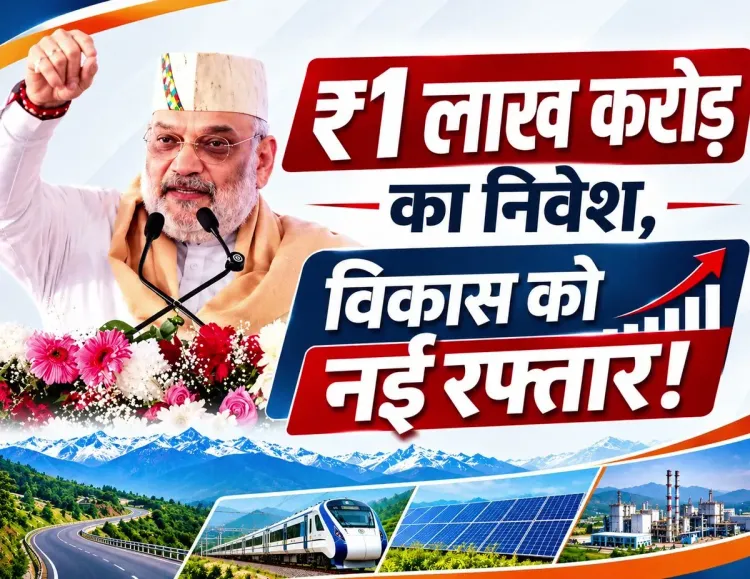
Uttarakhand CM Pushkar Singh Dhami publicly thanked Union Home Minister Amit Shah for encouraging the state's bid to ground a ₹1 lakh crore investment target, flagging geographical and industrial hurdles that make the ambition especially demanding.
Key Takeaways
CM Pushkar Singh Dhami thanked Union Minister Amit Shah on 6 November 2026 for appreciating Uttarakhand's investment drive.
The state is targeting ₹1 lakh crore in investment despite significant geographical and industrial constraints.
Uttarakhand has pursued targeted industrial policy since its formation as a state in November 2000 to overcome terrain barriers.
Amit Shah's visible endorsement signals Centre-state alignment that can facilitate clearances and infrastructure support.
Key sectors suited to the Himalayan landscape include pharmaceuticals, food processing, tourism infrastructure, and renewable energy.
Actual investment realisation will be tracked through state budget figures and performance at future investor summits.
Cracking open a Himalayan economy hemmed in by gorges and gradients is no small ambition — and Uttarakhand Chief Minister Pushkar Singh Dhami is making sure the Centre knows how much its encouragement means. On Friday, 6 November 2026, Dhami publicly thanked Union Home and Cooperation Minister Amit Shah for appreciating the state's drive to convert a ₹1 lakh crore investment target into ground-level reality, despite the geographical and industrial constraints that have long shadowed Uttarakhand's economic ambitions.
In his post, Dhami wrote — 'भौगोलिक एवं औद्योगिक चुनौतियों के बावजूद उत्तराखण्ड में ₹1 लाख करोड़ के निवेश को धरातल पर उतारने के प्रयासों की सराहना एवं उत्साहवर्धन के लिए आदरणीय केंद्रीय गृह एवं सहकारिता मंत्री श्री @AmitShah जी का हार्दिक आभार' — meaning, 'Despite geographical and industrial challenges, my heartfelt gratitude to Union Home and Cooperation Minister Amit Shah for appreciating and encouraging the efforts to bring ₹1 lakh crore of investment to ground level in Uttarakhand.'
The ₹1 Lakh Crore Mountain to Climb
Uttarakhand's terrain is both its identity and its economic adversary. Carved out of Uttar Pradesh in November 2000, the Himalayan state has spent over two decades building an investment case against the headwinds of altitude, limited flatlands, fragile ecology, and logistics costs that make conventional manufacturing an uphill proposition — literally. Attracting ₹1 lakh crore in investment to such a landscape is an audacious benchmark, one that requires sustained political will at both state and central levels.
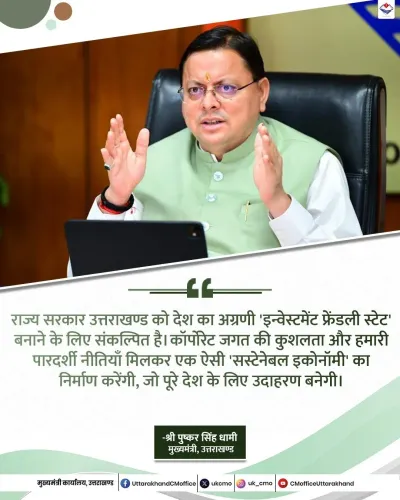
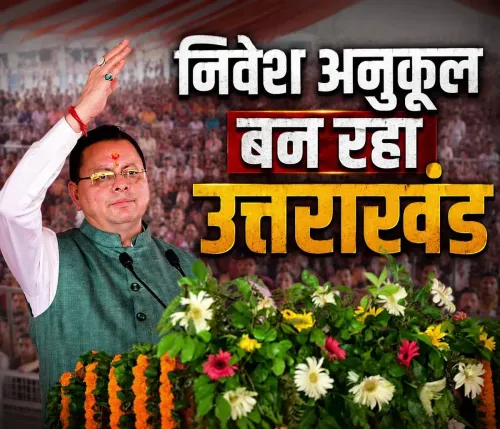
The state government under Dhami has pursued targeted industrial policy and investor outreach as its primary lever, banking on sectors like pharmaceuticals, food processing, tourism infrastructure, and renewable energy — industries where the mountains can be an asset rather than a liability. Converting commitment letters from investor summits into operational factories and projects, however, remains the perennial test for every Himalayan state.
Shah's Appreciation and the Centre-State Signal
When a Union minister of Amit Shah's stature visibly endorses a state's investment push, it does more than boost morale — it signals Centre-state alignment that can accelerate environmental clearances, infrastructure funding, and policy tailoring. Shah, whose portfolio spans home affairs and cooperation, holds considerable sway over matters that intersect with state development: border-area infrastructure, cooperative sector financing, and inter-agency coordination. His public appreciation, as acknowledged by Dhami, functions as political capital the state government can deploy in negotiations with investors and central agencies alike.
This dynamic is well-established in India's competitive federalism. BJP-governed states routinely leverage central endorsements to sharpen their investment pitch, and Himalayan states in particular need that edge — competing against larger, flatter, better-connected industrial corridors in neighbouring states. Dhami's public acknowledgement of Shah's support is both a courtesy and a strategic reaffirmation of that partnership on the record.
What the ₹1 Lakh Crore Ambition Means for Uttarakhand
For the state's local workforce and industries, the stakes are tangible. Industrial investment translates to jobs in a state where youth outmigration has been a chronic concern — young people leaving hill districts for the plains in search of economic opportunity. Every factory commissioned, every logistics hub built, every tourism project operationalised in Uttarakhand is a small reversal of that trend.
The real measure of this ₹1 lakh crore ambition will come through forthcoming state budget allocations, investor summit follow-through reports, and actual employment numbers on the ground. The applause from New Delhi is a good sign — but the mountains will demand proof.
Point of View
Where geography has historically capped industrial ambition, central endorsement is not ceremonial; it is a clearance-easing, coalition-building instrument. The ₹1 lakh crore target also positions Uttarakhand aggressively within India's competitive federalism, where hill states must work harder to attract capital that naturally gravitates toward flatter, better-connected corridors. The harder question — how much of that target has translated into operational investment — will define Dhami's economic legacy in the years ahead.
NationPress
6 Nov 2026
Frequently Asked Questions
What is Uttarakhand's ₹1 lakh crore investment target?
Uttarakhand has set a target to attract ₹1 lakh crore worth of investment into the state despite its challenging Himalayan terrain and limited industrial infrastructure. CM Dhami's government has been pursuing this through investor outreach and targeted industrial policy.
Why did CM Dhami thank Amit Shah?
CM Pushkar Singh Dhami thanked Union Home and Cooperation Minister Amit Shah for publicly appreciating and encouraging the state's efforts to convert the ₹1 lakh crore investment target into on-the-ground projects, as posted on 6 November 2026.
What are the main challenges for investment in Uttarakhand?
Uttarakhand faces geographical constraints including mountainous terrain, limited flat land, fragile ecology, and high logistics costs that make large-scale conventional manufacturing difficult compared to plains states.
Which sectors is Uttarakhand targeting for industrial investment?
Uttarakhand's investment push focuses on sectors suited to its landscape, including pharmaceuticals, food processing, tourism infrastructure, and renewable energy — areas where mountain geography can be leveraged as an asset.
How does central government support help Uttarakhand attract investment?
Endorsement from central ministers like Amit Shah can accelerate environmental clearances, unlock infrastructure funding, and strengthen the state's pitch to investors by signalling strong Centre-state policy alignment.