CM Dhami Touts 35,000 Jobs, Anti-Conversion Law in Uttarakhand
Synopsis
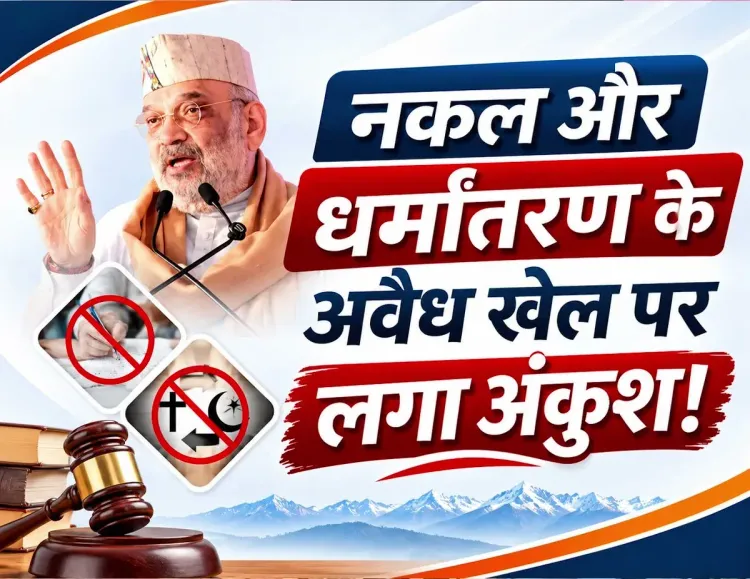
Uttarakhand CM Pushkar Singh Dhami claims 35,000 government jobs delivered, paper-leak mafias cracked down upon, and cultural identity laws enacted — crediting PM Modi and Home Minister Amit Shah for guiding the state's governance agenda.
Key Takeaways
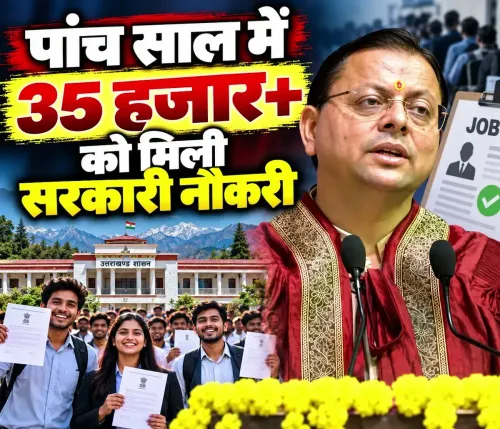
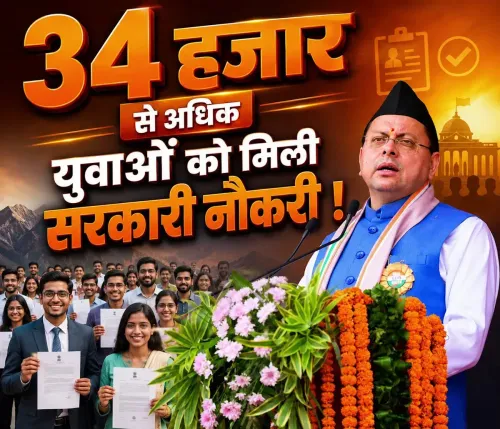
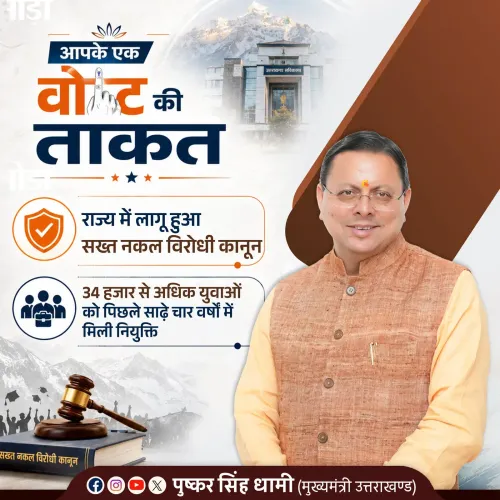
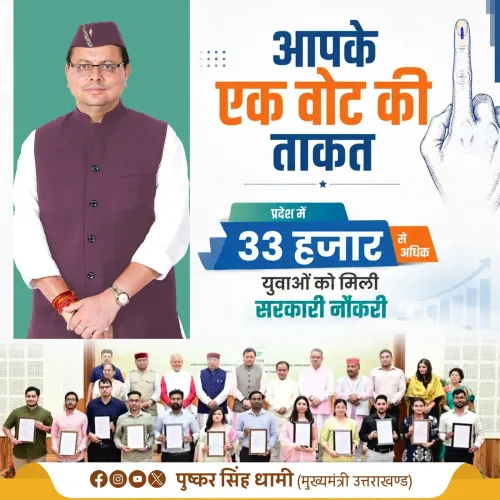
35,000+ government jobs claimed to have been given to youth in Uttarakhand under the Dhami administration.
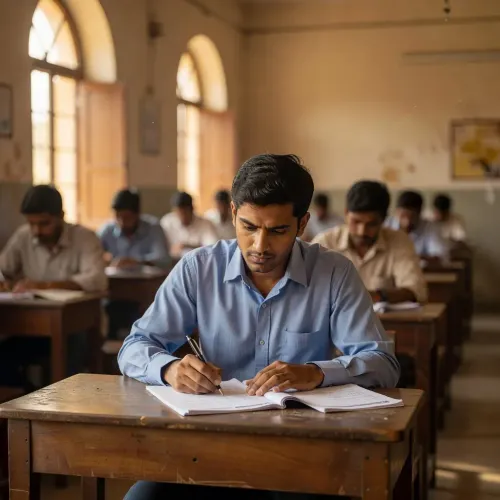
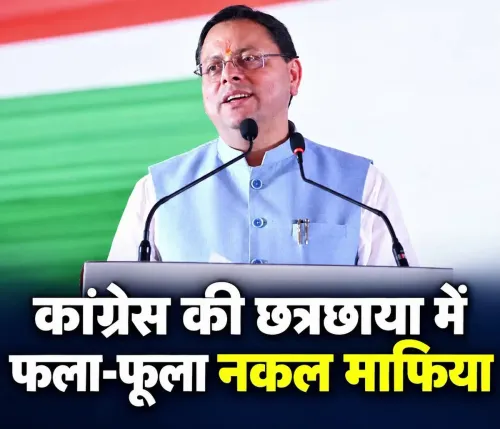
CM Dhami cites a targeted crackdown on paper-leak and exam-cheating networks in public recruitment processes.
The Uttarakhand Prohibition of Unlawful Conversion of Religion Act (2022) is highlighted as a measure protecting the state's cultural character.
Stricter land-ownership rules, tightened in 2021–2022 , restrict property purchases by non-residents in hill districts.
Dhami explicitly credits PM Narendra Modi and Union Home Minister Amit Shah for leadership and guidance behind these measures.
Both the anti-conversion law and land regulations face ongoing court challenges; the 35,000 jobs figure is yet to be independently verified.
Three governance pillars in one post — and a pointed reminder of who Uttarakhand's BJP government credits for them. Uttarakhand Chief Minister Pushkar Singh Dhami on Friday, 6 November 2026, took to X to highlight his government's crackdown on paper leaks, delivery of over 35,000 government jobs, and the enactment of laws protecting the state's cultural identity — framing each achievement as flowing from the leadership of Prime Minister Narendra Modi and Union Home Minister Amit Shah.
Paper Leaks Targeted, 35,000 Jobs Claimed
Dhami's post, written in Hindi, states: 'peper leak aur nakal mafia par kathor karvai sunishchit ki hai' — 'strict action has been ensured against paper leak and exam-cheating mafias.' Alongside that, he claims more than 35,000 young people have been given government jobs under his administration.
The claim lands against a nationally charged backdrop. Recruitment exam irregularities have rattled aspirants across multiple Indian states since 2021, eroding trust in public hiring. Uttarakhand intensified prosecutions against paper-leak networks in that period, positioning the state as one of the more aggressive actors in cleaning up competitive examination processes.
Devbhoomi's Cultural Laws: What Dhami Is Pointing To
The second half of the post highlights two specific legislative moves: an anti-conversion law and stricter land regulations. The Uttarakhand Prohibition of Unlawful Conversion of Religion Act, passed in 2022, bars forced or fraudulent religious conversions and carries criminal penalties. Dhami frames it — along with tougher land-ownership rules — as protecting 'Devbhoomi ki sanskritik pahchaan aur mool swaroop': 'the cultural identity and original character of Devbhoomi.'
The land regulations, tightened in 2021–2022, restrict property purchases by non-residents in certain hill districts — a measure supporters argue shields local demographics and that critics have challenged in court. Both laws are part of a broader BJP-state pattern: Uttar Pradesh, Madhya Pradesh, and Gujarat have enacted parallel anti-conversion and land-restriction statutes since 2018.
Modi–Shah as the Acknowledged Frame
Dhami's decision to open with an explicit acknowledgement of Modi and Shah is itself a political signal — placing Uttarakhand's governance record firmly inside the national BJP narrative ahead of any future electoral cycle. It is a standard rhetorical architecture in BJP-ruled states, but the specificity here — three named policy domains, one concrete number — gives the post more texture than routine loyalty signalling.
Court challenges to the conversion and land laws remain active, and the claimed 35,000 jobs figure awaits independent audit. How the recruitment anti-leak machinery holds up under scrutiny in forthcoming examination cycles will be the real measure of that claim.
Point of View
Hindu-identity legislation, and job creation into a single narrative credited to the Modi–Shah central leadership. The move mirrors a wider BJP state-level playbook where cultural-protection laws and anti-corruption drives are packaged together as complementary, not competing, priorities. The unverified 35,000-jobs figure, if substantiated, would represent a significant credential in a state where government employment remains highly sought; if not, it becomes a vulnerability. Legal headwinds against the land and anti-conversion laws mean the cultural-identity wins Dhami is claiming are still contested terrain.
NationPress
6 Nov 2026
Frequently Asked Questions
What has the Dhami government done about paper leaks in Uttarakhand?
CM Dhami states that his government has ensured strict action against paper-leak and exam-cheating mafias, with intensified prosecutions against recruitment irregularity networks — part of a broader drive in BJP-governed states since 2021.
How many government jobs has Uttarakhand given under CM Dhami?
CM Dhami claims more than 35,000 government jobs have been provided to youth in Uttarakhand; this figure has not yet been independently verified.
What is Uttarakhand's anti-conversion law?
The Uttarakhand Prohibition of Unlawful Conversion of Religion Act, passed in 2022, bars forced or fraudulent religious conversions and carries criminal penalties, aimed at protecting the state's cultural identity.
What are Uttarakhand's land ownership restrictions?
Uttarakhand tightened land-ownership regulations in 2021–2022 to limit property purchases by non-residents in certain hill districts, with the stated aim of preserving local demographics and culture; the rules face legal challenges.
Why does CM Dhami credit PM Modi and Amit Shah in his governance post?
Dhami explicitly credits PM Modi and Home Minister Amit Shah for leadership and guidance, a standard BJP political framing that ties state achievements to the national party leadership and reinforces ideological alignment.