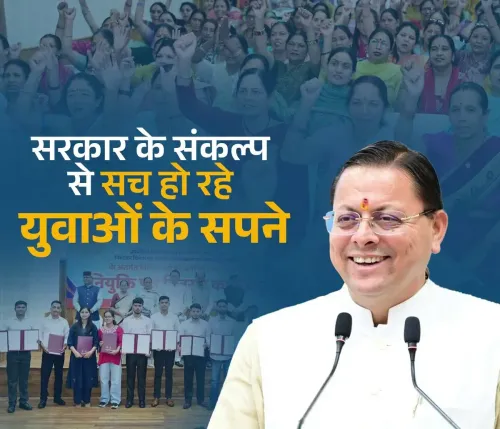
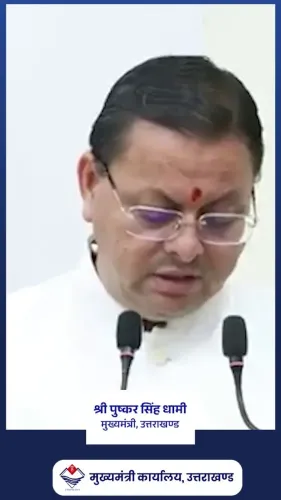
CM Dhami Credits Voters as 33,000 Uttarakhand Youth Get Jobs

Synopsis
Uttarakhand CM Pushkar Singh Dhami announced that over 33,000 youth have secured government jobs under his administration's transparent, merit-based recruitment drive, crediting the electorate's 2022 mandate and citing strict action against cheating networks as the foundation of the reform.
Key Takeaways
CM Pushkar Singh Dhami announced that more than 33,000 young people in Uttarakhand have received government appointments under the current BJP administration.
The government attributes the milestone to a transparent recruitment process, merit-based selection, and strict enforcement against organised cheating networks.
Dhami framed the recruitment drive as a direct outcome of the 2022 electoral mandate , linking voter trust to governance delivery.
The drive reflects a broader national trend of state governments digitising and monitoring public examinations following paper-leak scandals.
The Uttarakhand Public Service Commission 's next examination cycle and potential anti-cheating legislation are key developments to watch.
Government employment holds outsized economic importance in Uttarakhand 's hill districts, making credible recruitment a high-stakes issue for families across the state.
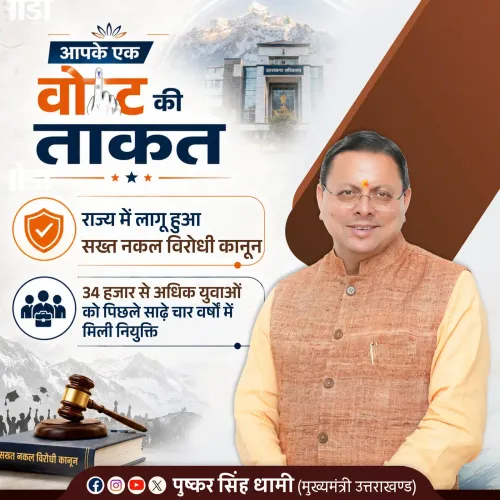
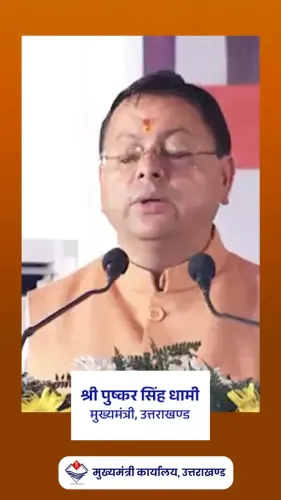
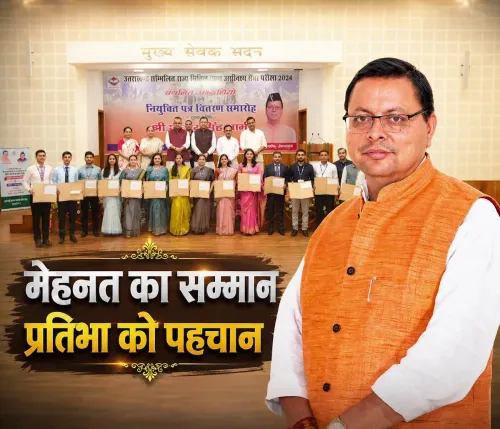
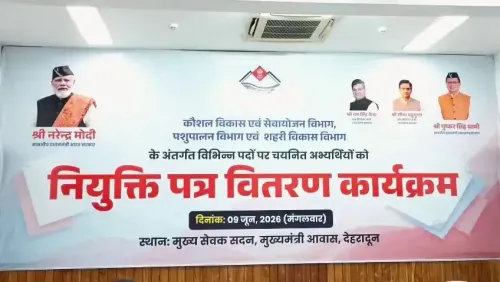
Uttarakhand Chief Minister Pushkar Singh Dhami on Thursday, June 11, 2026, credited the electorate's mandate for enabling the appointment of more than 33,000 young people in state government positions, calling it a fulfilment of his government's pledge to secure the future of Uttarakhand's youth through transparent, merit-based recruitment.
Context
Posting in Hindi on X, CM Dhami wrote: 'Aapke ek vote ki takat ne Uttarakhand ke 33 hazar se adhik yuvaon ke sapnon ko nayi udaan di hai' ('The power of your one vote has given new wings to the dreams of more than 33,000 youth of Uttarakhand'). He attributed the milestone to a transparent recruitment process, strict action against 'cheating mafias' (nakal mafiaaon par sakht karyavahi), and merit-based selection — framing the appointments not merely as jobs but as 'a resolve to secure the future of youth.'
The post carries a direct political message, linking the BJP government's electoral mandate in Uttarakhand to a concrete governance outcome for job-seeking youth and their families.
Policy Backdrop
Following the 2022 Uttarakhand assembly elections, the Dhami government announced a zero-tolerance stance on recruitment irregularities and initiated a review of pending vacancies across state departments. Uttarakhand had, in earlier years, seen public anger over paper-leak incidents and allegations of irregular appointments in state services.
The state's approach mirrors a wider national pattern: since 2022, multiple Indian states have passed or strengthened anti-cheating legislation and digitised recruitment workflows after high-profile paper-leak scandals eroded public trust in government hiring. BJP-ruled states have consistently highlighted merit-based selections in electoral messaging as evidence of improved governance delivery.
The Dhami administration has pursued measures such as CCTV-monitored examination halls and digitised application processes to reduce human intervention and the scope for malpractice, positioning these reforms as a structural shift rather than a one-time drive.
Stakeholders and Impact
The primary beneficiaries are the 33,000-plus young recruits and their families across Uttarakhand — a state where government employment carries significant economic weight, particularly in hill districts with limited private-sector opportunities. For aspirants who have spent years preparing for state-service examinations, a credible, leak-free process represents both a practical and psychological shift.
The crackdown on 'cheating mafias' — organised networks that historically sold question papers or arranged proxy candidates — is also significant for the broader pool of honest aspirants, who previously competed on an uneven playing field. A merit-driven system directly raises the returns on legitimate preparation.
Politically, the announcement reinforces the BJP's governance narrative ahead of any future electoral cycle, presenting the recruitment drive as a tangible dividend of the 2022 mandate.
What's Next
Attention will now turn to the next cycle of Uttarakhand Public Service Commission examinations and whether the state moves to institutionalise its reformed recruitment framework through dedicated legislation — a step several other states have already taken. Any proposed law would need to address digital infrastructure, grievance redressal timelines, and penalties for officials complicit in leaks.
With youth unemployment and the credibility of public examinations remaining sensitive issues nationally, the Dhami government's ability to sustain and scale this momentum will be closely watched by both aspirants and political observers across the country.
Point of View
Converting an administrative milestone into a political dividend by explicitly tying the recruitment numbers to the 2022 voter mandate — a framing designed to deepen the BJP's accountability narrative in a state where youth unemployment and exam integrity have historically been friction points. The emphasis on 'cheating mafias' signals that the government is aware of the credibility deficit left by earlier paper-leak episodes and is actively working to close it. Within the broader BJP playbook, transparent recruitment has become a replicable electoral asset, and Uttarakhand's scale — over 33,000 appointments — gives Dhami a concrete data point to defend in future campaigns. The forward challenge is institutionalisation: whether these reforms survive beyond the current administration will determine whether they represent a structural shift or a term-specific performance.
NationPress
20 Sept 2026
Frequently Asked Questions
How many jobs has the Dhami government given to Uttarakhand youth?
CM Pushkar Singh Dhami stated on June 11, 2026 that more than 33,000 young people in Uttarakhand have received government appointments under his administration's transparent recruitment drive.
What is Uttarakhand doing to stop paper leaks in government exams?
The Dhami government has pursued a zero-tolerance policy on recruitment irregularities, including strict action against organised cheating networks, CCTV-monitored examination halls, and digitised application processes to reduce malpractice.
What did CM Dhami say about Uttarakhand recruitment on X?
CM Dhami posted in Hindi that 'the power of your one vote has given new wings to the dreams of more than 33,000 youth of Uttarakhand,' crediting transparent, merit-based selection and action against cheating mafias for the milestone.
Why is government recruitment important in Uttarakhand?
Government employment carries significant economic weight in Uttarakhand, especially in hill districts where private-sector opportunities are limited, making credible and fair recruitment a high-stakes issue for thousands of families.
What comes next for Uttarakhand recruitment reforms?
The next cycle of Uttarakhand Public Service Commission examinations is a key milestone to watch, along with any proposed state legislation to permanently institutionalise online, monitored recruitment processes.