CM Hemant Soren Signs MoU with Union Bank of India in Ranchi
Synopsis
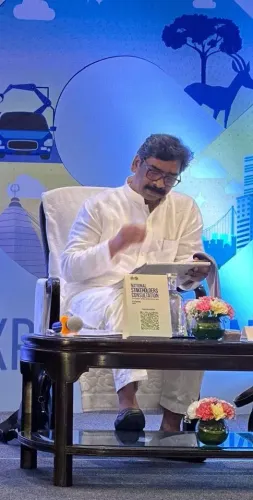
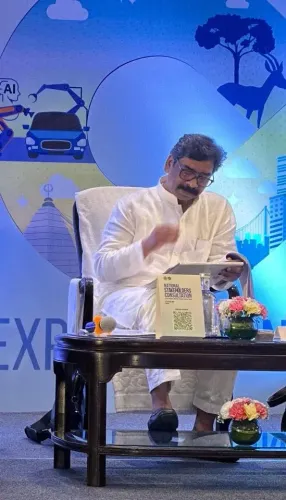
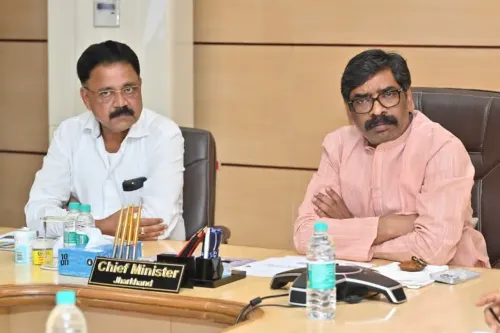
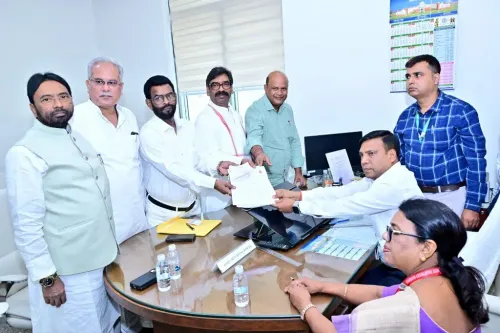
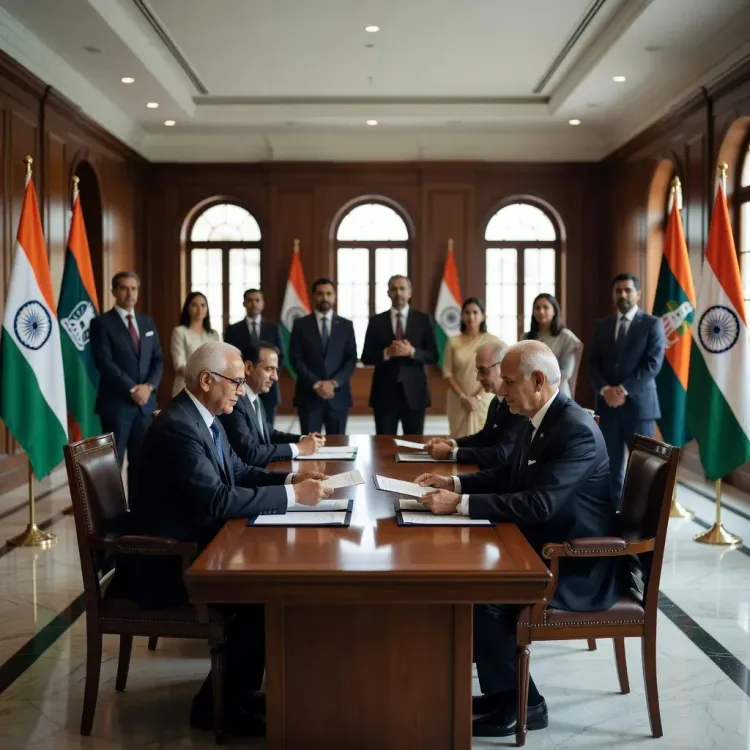
Jharkhand Chief Minister Hemant Soren attended an MoU-signing ceremony between his state government and Union Bank of India at Project Bhawan, Ranchi, on 4 November 2026, calling it a historic occasion aimed at deepening financial services access across the state.
Key Takeaways
The Jharkhand government and Union Bank of India signed an MoU on 4 November 2026 at Project Bhawan, Ranchi .
Chief Minister Hemant Soren attended the ceremony in person, describing it as a 'historic occasion.' Union Bank of India is a public sector lender with a track record of state-level MoUs for welfare delivery and financial inclusion.
Jharkhand's rural and tribal districts remain a key focus for last-mile banking connectivity under Soren's government.
The specific terms, timelines, and financial scope of the November 2026 MoU are yet to be officially released.
A formal agreement between the Jharkhand government and Union Bank of India was sealed on Wednesday, 4 November 2026, at Project Bhawan in Ranchi — a partnership that deepens the state's growing web of public-sector banking tie-ups aimed at bringing financial services closer to its predominantly rural and tribal population. Chief Minister Hemant Soren attended the MoU-signing ceremony in person, lending the event direct executive weight.
Posting on X, Soren called it an 'aitehasik avsar' (ऐतिहासिक अवसर) — a historic occasion — and extended congratulations and greetings to all, signing off with the traditional Jharkhand salutation 'Johar'. The ceremony was held at Project Bhawan, the official government complex in Ranchi that serves as the customary venue for high-level state agreements.
Union Bank of India's role in state-level partnerships
Union Bank of India, a public sector lender under the Union government, has a track record of entering state-level memoranda of understanding to support welfare-scheme delivery and expand credit access in underserved geographies. Its branch network and rural banking infrastructure make it a natural partner for states like Jharkhand, where last-mile financial connectivity remains a policy priority.
Jharkhand has historically collaborated with national banks to push financial inclusion across its 24 districts, many of which carry a significant Scheduled Tribe population with limited access to formal banking. MoUs of this kind typically serve as the scaffolding for disbursing direct-benefit transfers, agricultural credit, self-help-group loans, and state-sponsored insurance products through a bank's branch-and-correspondent network.
What the MoU signals — and what is still to come
The specific terms, financial commitments, and operational timelines of this November 2026 agreement have not yet been made public. That detail will matter: the breadth of the partnership — whether it covers MSME credit, tribal welfare disbursements, women's self-help groups, or digital banking infrastructure — will determine how transformative the tie-up proves in practice.
What is already clear is the political optics. Chief Minister Soren has consistently positioned financial inclusion and welfare delivery as central planks of his government's identity. A public, ceremonial MoU with one of India's largest state-owned banks reinforces that narrative at a time when Jharkhand's governance record is under continual scrutiny.
The specifics are forthcoming. But if the rollout matches the ceremony's ambition, this agreement could add measurable reach to banking services across one of India's most financially underserved states.
Point of View
Such agreements carry a dual purpose: they advance genuine policy goals around financial inclusion while reinforcing his government's pro-poor, pro-tribal credentials. The absence of disclosed terms is the story's outstanding thread — without specifics, the partnership's real-world impact cannot yet be assessed. Watch for the rollout notification: that document will reveal whether this MoU is a framework agreement or a targeted, funded programme.
NationPress
4 Nov 2026
Frequently Asked Questions
What MoU did the Jharkhand government sign with Union Bank of India?
The Jharkhand government and Union Bank of India signed a memorandum of understanding on 4 November 2026 at Project Bhawan in Ranchi. The specific terms have not yet been made public, but such MoUs typically cover financial inclusion, welfare-scheme disbursement, and credit access for underserved communities.
Where is Project Bhawan in Ranchi?
Project Bhawan is the official government complex in Ranchi, Jharkhand, regularly used for state-level ceremonies, agreement signings, and high-level administrative functions.
Why does Jharkhand sign MoUs with public sector banks?
Jharkhand has a large rural and tribal population with limited access to formal banking. MoUs with national public sector banks help the state route direct-benefit transfers, agricultural credit, and welfare payments through an established branch-and-correspondent network.
What is Union Bank of India's role in state government schemes?
Union Bank of India, a public sector bank, regularly partners with state governments through MoUs to implement financial inclusion programmes, disburse scheme benefits, support self-help groups, and extend credit to underserved districts.
What does 'Johar' mean in the context of Jharkhand?
'Johar' is a traditional greeting and expression of respect used by the tribal communities of Jharkhand. Chief Minister Hemant Soren frequently uses it as a cultural salutation in official communications.