NITI Aayog, GIZ India sign pact to speed up road freight decarbonisation
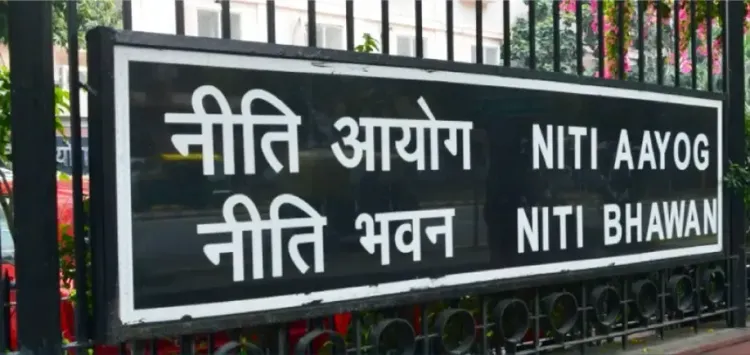
Synopsis
NITI Aayog and Germany's GIZ GmbH have formalised a partnership to push India's road freight sector toward low-carbon alternatives — a move that plugs a critical gap in the country's NDC commitments. With heavy-vehicle electrification still in its infancy and charging infrastructure lacking, this agreement is as much an acknowledgement of how far India has to go as it is a roadmap for getting there.
Key Takeaways
NITI Aayog and GIZ GmbH signed an implementation agreement on 4 November 2026 to accelerate road freight decarbonisation.
The pact operates under the NDC-TIA II initiative, backed by Germany's International Climate Initiative (IKI) .
Implementing partners include WRI India , ICCT India , and Agora Energiewende .
Electrification of medium and heavy-duty freight vehicles remains at an early stage, with gaps in charging infrastructure and financing.
NITI Aayog also launched the India S&T Scoreboard on Tuesday, mapping the science and technology ecosystem across all states and UTs.
NITI Aayog and Germany's GIZ GmbH signed an implementation agreement on Wednesday, 4 November 2026, to accelerate the decarbonisation of India's road freight sector, contributing to the country's Nationally Determined Contribution (NDC) targets and long-term climate commitments, according to an official statement. The pact formalises a structured collaboration aimed at shifting India's heavy transport away from fossil fuels.
What the Agreement Covers
The deal operates under the Nationally Determined Contribution–Transport Initiative for Asia Phase II (NDC-TIA II), a regional initiative supported by the German government's International Climate Initiative (IKI). Implementing partners include World Resources Institute (WRI) India, the International Council on Clean Transportation (ICCT) India, and Agora Energiewende.
'The Agreement formalises the collaboration between the project partners for accelerating the decarbonisation of India's road freight sector,' the official statement noted.
Why Road Freight Decarbonisation Is Urgent
Decarbonising road freight is widely regarded as a critical pillar of India's transition to a sustainable, energy-efficient, and low-carbon transport system. Despite this, the electrification of medium and heavy-duty freight vehicles remains at an early stage. Key gaps persist in charging infrastructure, innovative financing mechanisms, and an enabling regulatory framework — all of which the new agreement aims to address.
Broader Infrastructure Context
The agreement arrives as India's infrastructure planning has evolved from isolated project delivery toward an integrated, people-centric model under the PM Gati Shakti framework. National highways have expanded substantially, and new expressways, ports, and metro systems have reshaped the country's connectivity landscape. Critics of the earlier approach point out that piecemeal, ministry-wise project execution failed to reflect how citizens and businesses actually experience infrastructure.
NITI Aayog Also Launches S&T Scoreboard
Separately, NITI Aayog on Tuesday launched the 'India S&T Scoreboard' — an interactive platform providing an integrated view of the science and technology landscape across states and Union Territories. The platform aggregates data on higher education institutions, R&D centres, deep-tech startups, and incubators, alongside outputs such as research publications and patents.
NITI Aayog Vice Chairman Ashok Kumar Lahiri emphasised that India's further progress in science and technology requires a more active role from states. He noted the Scoreboard will help states identify strengths and gaps, learn from one another, and design stronger programmes. He urged all states and UTs to make full use of the platform.
What Comes Next
With the implementation framework now in place, stakeholders will be watching for concrete timelines on charging infrastructure rollout, regulatory updates for heavy-duty electric vehicles, and financing models that can scale across India's vast freight network. The success of this initiative could meaningfully advance India's NDC commitments ahead of upcoming global climate assessments.
Point of View
Carbon-intensive, and barely touched by the EV transition that has made headlines in the passenger vehicle space. The NITI Aayog–GIZ agreement is a necessary first step, but formalising collaboration is the easy part; building out charging corridors for heavy trucks on national highways and unlocking patient capital for fleet operators is where past initiatives have stalled. The inclusion of WRI India, ICCT, and Agora Energiewende as implementing partners adds technical credibility, but without binding timelines and measurable milestones tied to India's NDC review cycles, this risks becoming another well-intentioned MoU that does not move freight emissions. The parallel launch of the S&T Scoreboard suggests NITI Aayog is on a broader push to demonstrate data-led governance — but connecting that data infrastructure to actual decarbonisation outcomes will be the real test.
NationPress
4 Nov 2026
Frequently Asked Questions
What did NITI Aayog and GIZ India sign?
NITI Aayog and Germany's GIZ GmbH signed an implementation agreement on 4 November 2026 to accelerate the decarbonisation of India's road freight sector. The pact formalises collaboration aimed at advancing India's Nationally Determined Contribution targets and long-term climate goals.
What is the NDC-TIA II initiative?
The Nationally Determined Contribution–Transport Initiative for Asia Phase II (NDC-TIA II) is a regional programme supported by the German government's International Climate Initiative (IKI). It works with implementing partners including WRI India, ICCT India, and Agora Energiewende to reduce transport emissions across Asian economies.
Why is road freight decarbonisation a challenge in India?
The electrification of medium and heavy-duty freight vehicles in India is still at an early stage, with significant gaps in charging infrastructure, financing mechanisms, and regulatory frameworks. Road freight is a major contributor to transport emissions, making its decarbonisation critical to India's climate targets.
What is the India S&T Scoreboard launched by NITI Aayog?
The India S&T Scoreboard, launched on Tuesday, is an interactive platform that maps the science and technology ecosystem across India's states and Union Territories. It consolidates data on higher education institutions, R&D centres, deep-tech startups, patents, and research publications to help states benchmark and improve their S&T policies.
Who are the key partners in the road freight decarbonisation agreement?
Beyond NITI Aayog and GIZ GmbH, the initiative's implementing partners include World Resources Institute (WRI) India, the International Council on Clean Transportation (ICCT) India, and Agora Energiewende. The broader initiative is funded by Germany's International Climate Initiative (IKI).