CM Sukhu Hits Back on School Closures, Cites BJP-Era Rank
Synopsis
Chief Minister Sukhvinder Singh Sukhu defends school consolidations in Himachal Pradesh, claiming the BJP-era government allowed the state to slip to 21st in education quality rankings despite having qualified teachers, and vowing not to offer cosmetic upgrades that do not improve learning.
Key Takeaways
CM Sukhu claims Himachal Pradesh ranked 21st in qualitative education during the BJP government (2017–2022), despite having qualified teachers.
The Churah MLA (Chamba district) criticised the Congress government over school closures, triggering Sukhu's public rebuttal.
Sukhu framed school consolidations as a quality-over-quantity decision, not a cutback.
The CM said the government could notify all schools as senior secondary institutions overnight but refused to make a move he called 'deceiving the people.' The debate reflects a wider Indian policy tension between geographic school access and institutional quality, especially in hilly terrain.
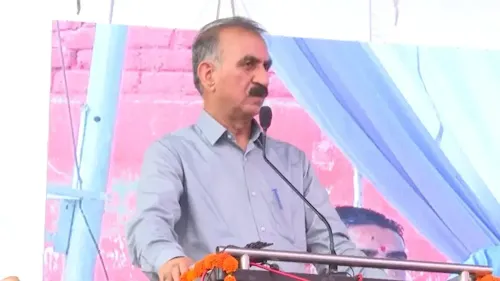
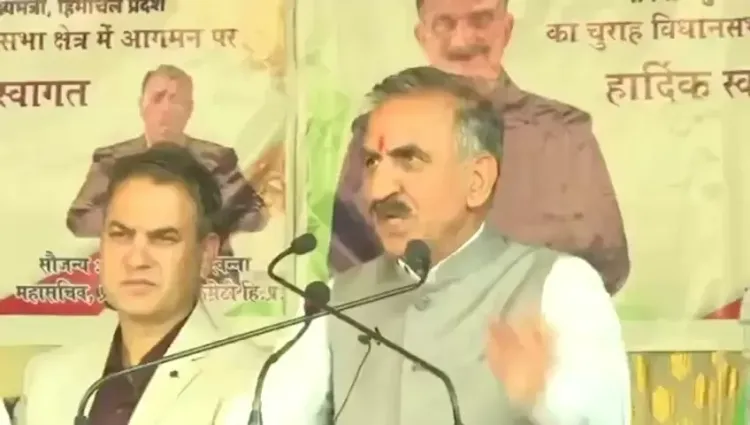
Quality over quantity — that is the line Himachal Pradesh Chief Minister Sukhvinder Singh Sukhu is drawing in the state's sharpening education debate, firing back at opposition criticism over school consolidations on Wednesday, 4 November 2026.
The 21st-Rank Charge Against the BJP Era
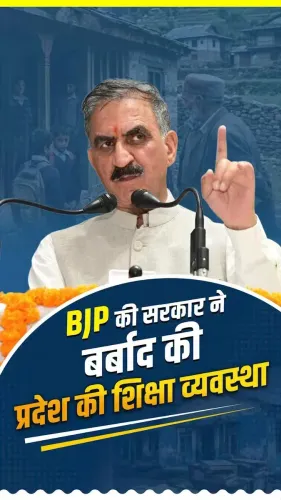
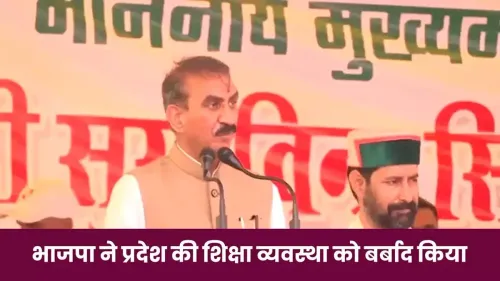
Sukhu opened with a pointed historical indictment: 'BJP sarkar ke samay Himachal Pradesh gunatmak shiksha ke kshetra mein 21ven sthan par tha' — 'During the BJP government's time, Himachal Pradesh stood at 21st place in qualitative education, even though we had qualified teachers.' His argument is blunt: a government that does not discharge its duties with sincerity squanders even the resources it already has. The BJP governed Himachal Pradesh from 2017 to 2022, before the Indian National Congress returned to power under Sukhu in December 2022.
The Churah Flashpoint
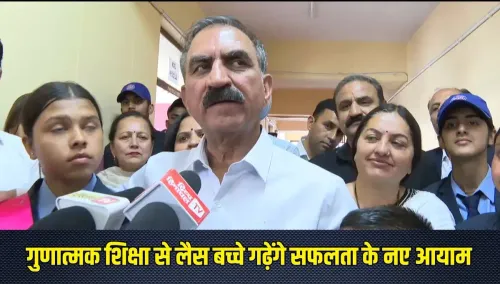
The immediate trigger is a statement by the MLA from Churah — an assembly constituency in Chamba district — who flagged the closure of several schools under the current government. Sukhu turned the criticism on its head with a rhetorical challenge directed at the people of Churah themselves: 'What is the use of schools where children cannot receive a good education?' The question cuts to the heart of a dilemma that haunts hilly states — a school building in every village sounds like access, but without adequate teachers and learning outcomes, it can be an empty promise.
The 'Senior Secondary Upgrade' Temptation — and Why Sukhu Is Resisting It
Perhaps the sharpest moment in the CM's post is a deliberate act of political restraint. 'We could, if we wanted, notify all schools today and upgrade every one of them to senior secondary level,' he said — but added that the Congress government does not want to 'deceive the people of Himachal Pradesh and Churah.' It is a dig at a well-worn electoral maneuver: announcing sweeping institutional upgrades before elections, inflating numbers without filling classrooms with teachers or learning materials. Sukhu is framing consolidation not as cutback, but as honesty.
Access vs. Quality — A Battle Across India's Hills
The tension Sukhu is navigating is not unique to Himachal Pradesh. Across India's mountainous and sparsely populated states, education administrators routinely wrestle with the same trade-off: maintain numerous small schools to keep children close to home, or merge institutions to concentrate teachers and resources where they can actually raise outcomes. Opposition parties almost always campaign on closures; ruling parties almost always defend them on quality grounds. What makes Himachal distinctive is its unusually high literacy rate — the state has historically punched above its weight on education, which makes any slide in quality rankings land harder politically.
The school-rationalization debate in Chamba district, with its remote terrain and dispersed population, is precisely the kind of ground where both arguments — access and quality — carry real weight. Sukhu's challenge is to prove that fewer, better-resourced schools genuinely serve students better, not just on a ranking table, but in the lived experience of families in valleys where the next school may be hours away.
The numbers will eventually settle the argument — and that is exactly what Sukhu is betting on.
Point of View
He attempts to frame consolidations as corrective governance rather than retreat. The rhetorical offer — 'we could upgrade every school today but won't' — is a calculated signal to educated voters that the Congress government values substance over optics. Whether the gambit holds depends entirely on whether measurable learning outcomes in rationalised schools improve in time for the next electoral cycle.
NationPress
4 Nov 2026
Frequently Asked Questions
Why did Himachal Pradesh close schools under the Sukhu government?
CM Sukhu says the closures are part of a school-rationalisation drive aimed at concentrating teachers and resources to improve learning outcomes, rather than maintaining numerous under-resourced institutions.
What is Himachal Pradesh's ranking in education quality?
CM Sukhu claimed in his post that Himachal Pradesh ranked 21st in qualitative education during the BJP government's tenure (2017–2022); this specific ranking figure has not been independently verified.
What did the Churah MLA say about school closures?
The MLA from Churah constituency in Chamba district raised concerns that multiple schools had been shut under the current Congress government, which prompted CM Sukhu's public rebuttal.
Why is Sukhu against upgrading all schools to senior secondary status?
Sukhu argues that announcing blanket upgrades without deploying adequate teachers and resources would amount to deceiving the public — a hollow gesture that improves statistics on paper but not education in practice.
How long has Sukhvinder Singh Sukhu been Chief Minister of Himachal Pradesh?
Sukhvinder Singh Sukhu has been Chief Minister of Himachal Pradesh since December 2022 , when the Indian National Congress won the state assembly elections.