CM Sukhu Bets on Education to Build Self-Reliant HP Youth
Synopsis
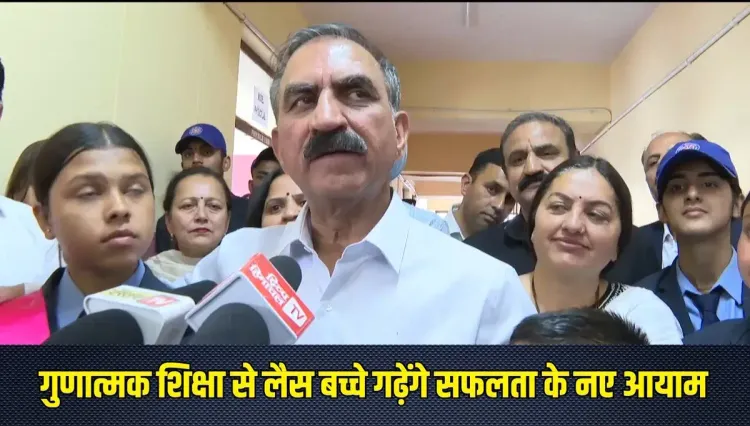
Himachal Pradesh CM Sukhvinder Singh Sukhu on 25 May 2026 reaffirmed his government's push for transformative education reform, arguing that quality schooling and skill-building are the surest routes to youth self-reliance and employment in the state.
Key Takeaways
CM Sukhvinder Singh Sukhu posted on 25 May 2026 reaffirming education as the foundation of his government's development agenda.
He described the Congress-led Himachal Pradesh government as bringing 'unprecedented changes' to the education sector.
Himachal Pradesh began phased adoption of the National Education Policy 2020 from 2021 , with vocational subjects introduced in secondary schools.
The Chief Minister linked quality education directly to youth self-employment, aligning with the central Skill India and Atmanirbhar Bharat frameworks.
Future state budget allocations for school upgrades and new vocational courses will be the key metric to watch for follow-through.
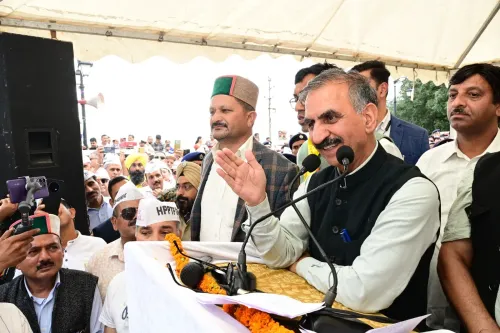
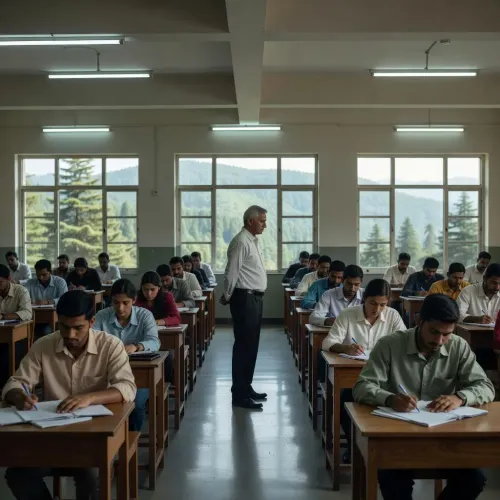
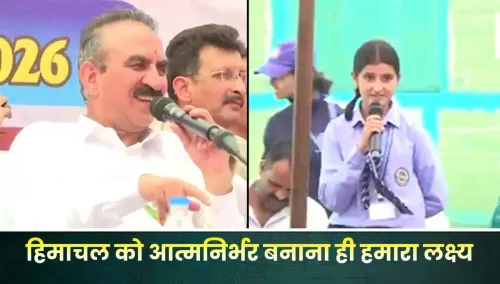
Himachal Pradesh Chief Minister Sukhvinder Singh Sukhu on Monday, 25 May 2026, reaffirmed his government's commitment to transforming education in the state, asserting that quality schooling is the single most powerful tool to equip children for future challenges and enable young people to achieve self-employment.
Posting in Hindi on X, CM Sukhu wrote: 'बच्चों को भविष्य की चुनौतियों का सामना करने की ताकत यदि किसी चीज से मिलती है, तो वह शिक्षा है' ['If there is one thing that gives children the strength to face future challenges, it is education']. He added that his government is bringing 'unprecedented changes' to the education sector and expressed confidence that youth equipped with better education and skills will be capable of securing employment on their own.
Context
Himachal Pradesh has historically maintained one of India's higher literacy rates, yet the state, like much of the country, grapples with youth unemployment and a gap between academic credentials and market-ready skills. CM Sukhu, who took office in December 2022, has positioned education reform as a cornerstone of his administration's development agenda. His post on 25 May 2026 signals a continued political emphasis on this theme ahead of future legislative and budgetary decisions.
Policy Backdrop
Himachal Pradesh began phased adoption of the National Education Policy (NEP) 2020 from 2021 onward, with particular focus on introducing vocational subjects in secondary schools. The NEP framework directs states to move toward multidisciplinary, skill-oriented schooling — a shift from the earlier access-first model to an outcomes-first one. CM Sukhu's reference to making youth 'capable of securing employment on their own' echoes the language of the central government's Skill India and Atmanirbhar Bharat frameworks, reflecting a broad post-pandemic consensus across party lines on linking schooling directly to economic self-sufficiency.
State governments across India accelerated education and skill reforms after 2020, responding to disruptions exposed by the pandemic and persistent concerns about graduate employability. Himachal Pradesh's moves in this space fit a nationwide pattern, even as individual states differ on pace and specific interventions.
Stakeholders and Impact
The primary stakeholders are Himachal Pradesh's school students and the state's youth workforce. Families in rural and semi-urban districts, where access to private coaching or higher education is limited, stand to gain most from improvements in government school quality and vocational training. Teachers, school administrators, and district education officers are the key delivery layer whose capacity will determine whether policy intent translates into classroom outcomes.
For the broader economy of Himachal Pradesh — heavily dependent on tourism, horticulture, and a growing services sector — a more skilled young workforce could reduce out-migration and strengthen local enterprise. The Chief Minister's framing of education as a path to self-employment rather than merely salaried jobs also signals an interest in nurturing entrepreneurship among youth.
What's Next
Observers will watch the Himachal Pradesh government's next legislative session and state budget for concrete allocations toward school infrastructure upgrades, teacher training, and the rollout of new vocational courses. The degree to which the 'unprecedented changes' referenced by CM Sukhu translate into measurable outcomes — enrolment figures, learning assessments, and youth employment data — will be the real test of the administration's education agenda. Any new scheme announcements or inter-departmental convergence between the education and skill-development ministries in coming months will be closely tracked.
Point of View
He is borrowing a vocabulary that resonates nationally while anchoring it in a Congress-governed state context — a strategic move to neutralise BJP's ownership of the Skill India narrative. The emphasis on outcomes over access also signals a maturing of the discourse in Himachal Pradesh, where literacy was never the core problem but graduate employability has been. Whether the rhetoric is matched by ring-fenced budgetary commitments will determine its political durability.
NationPress
19 Sept 2026
Frequently Asked Questions
What did CM Sukhu say about education in Himachal Pradesh?
On 25 May 2026, CM Sukhvinder Singh Sukhu stated that education is the strongest tool to prepare children for future challenges, and that his government is making unprecedented changes to the sector to ensure youth become self-reliant and employment-ready.
What education reforms has the Himachal Pradesh government introduced?
Himachal Pradesh began phased implementation of the National Education Policy 2020 from 2021, introducing vocational subjects in secondary schools and focusing on skill-oriented learning to improve graduate employability.
How does Himachal Pradesh's education policy connect to Skill India?
CM Sukhu's emphasis on youth self-employment through quality education aligns with the central government's Skill India and Atmanirbhar Bharat frameworks, reflecting a nationwide post-pandemic shift toward outcome-focused education policy.
Why is education reform important for Himachal Pradesh's youth?
Despite high literacy rates, Himachal Pradesh faces youth unemployment and a skills gap. Improving school quality and vocational training is seen as critical to retaining talent in the state and strengthening sectors like tourism, horticulture, and services.
What should we watch for next on Himachal Pradesh education policy?
The next state budget and legislative session will be key, with observers tracking allocations for school infrastructure, teacher training, and vocational course rollouts to assess whether the government's stated commitments translate into concrete action.