CM Sukhu Reaffirms HP's Self-Reliance Push
Synopsis
Chief Minister Sukhvinder Singh Sukhu, through the official CMO Himachal Pradesh account, has reiterated his government's full commitment to making the state self-reliant and achieving balanced, sustainable development across all sectors — signalling continued policy focus ahead of the 2026-27 budget cycle.
Key Takeaways
CM Thakur Sukhvinder Singh Sukhu declared on 17 June 2026 that his government is 'fully committed' to making Himachal Pradesh self-reliant.
The statement calls for 'balanced and sustainable development in every sector,' covering hydropower , horticulture , and tourism .
The pledge aligns with India's Atmanirbhar Bharat framework while addressing hill-state-specific challenges such as climate vulnerability and out-migration .
Himachal Pradesh's 2023-24 budget had already set a course for green energy , sustainable tourism , and MSME support.
The 2026-27 state budget is expected to be the next major milestone for translating this commitment into concrete schemes.
The Chief Minister's Office of Himachal Pradesh posted a statement on X on 17 June 2026 in which Chief Minister Thakur Sukhvinder Singh Sukhu reaffirmed his government's commitment to making Himachal Pradesh self-reliant and pursuing balanced, sustainable development across all sectors.
In the post, CM Sukhu stated — 'हमारी सरकार हिमाचल प्रदेश को आत्मनिर्भर बनाने के लिए पूर्णतः प्रतिबद्ध है और हर क्षेत्र में संतुलित एवं सतत विकास के लिए प्रयासरत है' — translated: 'Our government is fully committed to making Himachal Pradesh self-reliant and is working towards balanced and sustainable development in every sector.'
Context
Sukhu has led a Congress government in Himachal Pradesh since December 2022, positioning inclusive and ecologically sensitive growth at the centre of his administration's agenda. The statement echoes a broader political emphasis on state-level self-sufficiency that has gained currency across India in recent years. For a Himalayan state with limited industrial infrastructure, the language of self-reliance carries particular weight.Policy Backdrop
The framing aligns with India's Atmanirbhar Bharat initiative, announced in May 2020, which encouraged states to build economic resilience through local production and resource optimisation. Himachal Pradesh has historically relied on hydropower, horticulture, and tourism as its primary economic pillars. The state's 2023-24 budget laid groundwork for diversification into green energy, sustainable tourism, and MSME support to stimulate balanced regional growth. CM Sukhu's latest statement signals continued intent to deepen those priorities heading into the 2026-27 budget cycle.Stakeholders and Impact
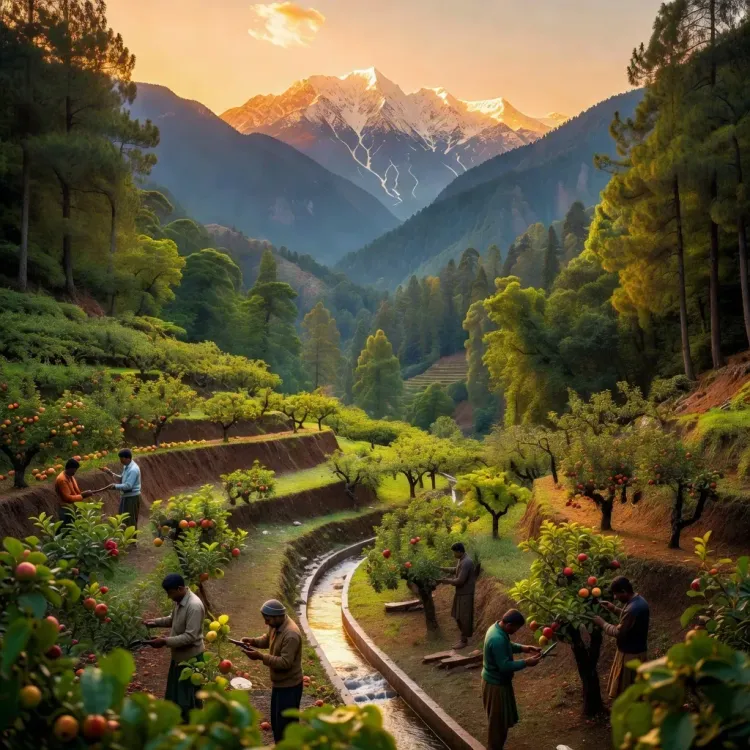
The constituencies most directly addressed by a self-reliance agenda in Himachal Pradesh include horticulture farmers — particularly apple growers in the upper hills — hydropower developers, and the tourism sector, which sustains livelihoods across Shimla, Kullu-Manali, and Dharamshala. Hill states face compounding challenges: climate vulnerability, a limited industrial base, and persistent out-migration of working-age residents to plains cities. Balanced development rhetoric, if translated into targeted schemes, could address the uneven economic geography that leaves interior districts behind. Residents and civil society groups in the state will be watching for concrete programme announcements that give substance to the commitment.What's Next
Policy watchers will look to the Himachal Pradesh state budget for 2026-27 as the clearest test of how the self-reliance commitment translates into allocations. Sector-specific schemes in renewable energy, organic farming, and skill development are among the areas where announcements could give operational meaning to CM Sukhu's pledge. If the government follows through with targeted investment in these domains, Himachal Pradesh could offer a replicable model for other ecologically sensitive Himalayan states seeking growth without sacrificing environmental integrity.Point of View
Designed to anchor his administration's identity around sustainable, hill-appropriate development. By invoking balanced growth across 'every sector,' the statement attempts to speak simultaneously to farmers, tourism workers, and energy investors — constituencies with often divergent interests. The language mirrors the national Atmanirbhar Bharat vocabulary while giving the Congress-led state government its own developmental brand distinct from the BJP-led Centre. Whether the rhetoric converts into measurable outcomes will depend on the specificity of upcoming budget allocations and scheme rollouts.
NationPress
16 Sept 2026
Frequently Asked Questions
What did CM Sukhu say about Himachal Pradesh's development?
CM Sukhvinder Singh Sukhu stated on 17 June 2026 that his government is fully committed to making Himachal Pradesh self-reliant and is working towards balanced and sustainable development in every sector.
What is Atmanirbhar Himachal Pradesh?
Atmanirbhar Himachal Pradesh refers to the state government's goal of economic self-reliance, aligned with India's broader Atmanirbhar Bharat initiative, focusing on sectors like hydropower, horticulture, green energy, and tourism.
When did Sukhvinder Singh Sukhu become Chief Minister of Himachal Pradesh?
Thakur Sukhvinder Singh Sukhu became Chief Minister of Himachal Pradesh in December 2022, leading a Congress government.
What are the key sectors for Himachal Pradesh's self-reliance?
Himachal Pradesh's self-reliance agenda centres on hydropower, horticulture, tourism, green energy, organic farming, and MSME development, as outlined in state budget priorities.
What challenges does Himachal Pradesh face in achieving balanced development?
The state faces climate vulnerability, a limited industrial base, and out-migration of working-age people, making balanced regional development particularly challenging for interior and high-altitude districts.