CM Sukhu: HP's transformation building a healthy, self-reliant state

Synopsis
Chief Minister Sukhvinder Singh Sukhu declared on 12 July 2026 that Himachal Pradesh's transformation is writing a new chapter of health and self-reliance. The statement, shared by the official CMO account, underscores the Congress government's twin development priorities for the hill state.
Key Takeaways
CM Sukhvinder Singh Sukhu stated on 12 July 2026 that an ongoing transformation is building a 'healthy and self-reliant Himachal Pradesh.' The statement was shared by the official Chief Minister's Office of Himachal Pradesh account on X.
Sukhu has led the Congress government in Himachal Pradesh since December 2022 , with development and reform as stated priorities.
Himachal Pradesh's economy is anchored in tourism, hydropower, horticulture, and remittances , making self-reliance a structurally significant goal.
The specific programme or event prompting the Chief Minister's remark was not detailed in the post; further policy specifics are awaited.
Upcoming state assembly sessions and budget presentations will be key moments to watch for concrete announcements.
The Chief Minister's Office of Himachal Pradesh on Sunday, 12 July 2026 shared a statement from Chief Minister Thakur Sukhvinder Singh Sukhu affirming that an ongoing transformation in the state is laying the foundation for a healthier and self-reliant Himachal Pradesh.
In the post, CM Sukhu stated — 'यह परिवर्तन स्वस्थ और आत्मनिर्भर हिमाचल की नई इबारत गढ़ रहा है' — translated as: 'This transformation is writing a new chapter of a healthy and self-reliant Himachal.' The message, attributed directly to the Chief Minister, signals the government's continued emphasis on dual pillars of public health and economic self-sufficiency.
Context
Sukhvinder Singh Sukhu has led the Congress government in Himachal Pradesh since December 2022, positioning his administration around inclusive development and reform. The statement's framing — 'new chapter' — suggests a deliberate effort to mark a milestone or reinforce the direction of ongoing state-level initiatives, though the specific programme or event prompting the remark was not detailed in the post.
The phrase 'nai ibarat gadhna' (writing a new script) is a rhetorical device frequently used in Indian political communication to signal a break from the past and the beginning of a new governance era.
Policy Backdrop
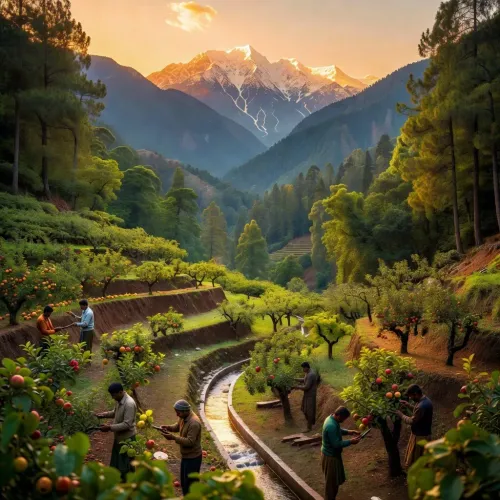
Himachal Pradesh's economy rests on tourism, hydropower, horticulture, and remittances — sectors that make the hill state particularly sensitive to both ecological pressures and fiscal constraints. State administrations across party lines have historically anchored their development narratives around sustainable and self-reliant growth, given these structural realities.
The twin themes of health and self-reliance also echo the broader national policy vocabulary that gained prominence after 2020, when central and state governments began aligning local schemes with 'Aatmanirbhar Bharat' (self-reliant India) goals. CM Sukhu's statement appears to situate Himachal's own reform agenda within this larger rhetorical and policy framework, while asserting a distinctly state-driven identity for the transformation.
Stakeholders and Impact
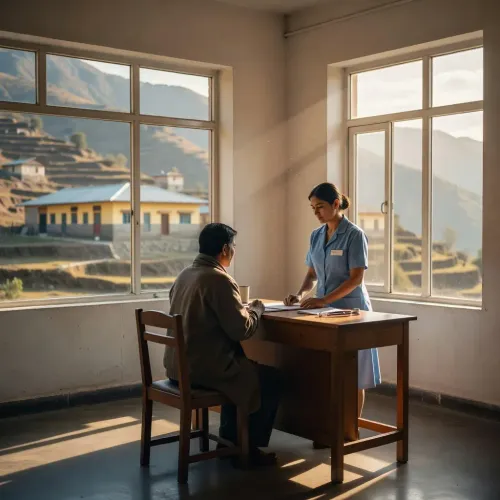
The primary beneficiaries of any health and self-reliance drive in Himachal Pradesh are the state's residents — including farming communities dependent on horticulture, workers in the tourism sector, and rural populations in remote hill districts who rely heavily on state-provided services. Improved health infrastructure and economic resilience would have outsized significance for such communities given the terrain and connectivity challenges of the state.
Opposition parties and civil society groups in the state are likely to scrutinise what specific programmes or budget allocations underpin the Chief Minister's assertion, particularly as the state has navigated fiscal pressures in recent years.
What's Next
Observers will watch for concrete policy announcements — including health infrastructure investments or self-reliance schemes — in upcoming Himachal Pradesh Legislative Assembly sessions or annual state budget presentations. The Chief Minister's statement may also be a precursor to a formal programme launch or a progress report on existing initiatives.
If the government follows through with detailed rollout plans, it could strengthen CM Sukhu's positioning ahead of future electoral cycles and set a measurable benchmark against which the administration's delivery record will be assessed.
Point of View
While self-reliance taps into a dominant national policy vocabulary. Without specifics attached, the statement functions more as a branding exercise than a policy commitment, but it sets a public benchmark the government will eventually be held to. The Congress administration in Shimla appears to be building a narrative arc that distinguishes its tenure from its predecessor's record — a standard but necessary move as it consolidates its mandate.
NationPress
11 Oct 2026
Frequently Asked Questions
What did CM Sukhu say about Himachal Pradesh's transformation?
CM Sukhvinder Singh Sukhu said that the ongoing transformation in Himachal Pradesh is 'writing a new chapter of a healthy and self-reliant Himachal,' as shared by the Chief Minister's Office on 12 July 2026.
Who is the Chief Minister of Himachal Pradesh in 2026?
Thakur Sukhvinder Singh Sukhu of the Indian National Congress is the Chief Minister of Himachal Pradesh, a position he has held since December 2022.
What does 'Aatmanirbhar Himachal' mean?
'Aatmanirbhar Himachal' translates to 'self-reliant Himachal Pradesh,' referring to efforts by the state government to reduce dependence on external support and strengthen local economic and social systems.
What are the main sectors of Himachal Pradesh's economy?
Himachal Pradesh's economy primarily depends on tourism, hydropower generation, horticulture (especially apple cultivation), and remittances from residents working outside the state.
What policy announcements are expected from the Himachal Pradesh government?
Observers are watching for health infrastructure investments and self-reliance scheme details in upcoming Himachal Pradesh Legislative Assembly sessions and state budget presentations.