CM Sukhu vows to make Himachal Pradesh self-reliant

Synopsis
Chief Minister Sukhvinder Singh Sukhu has pledged that his government will take all necessary decisions with firm resolve to make Himachal Pradesh self-reliant, signalling a clear policy direction for the Congress-led administration as it looks to reduce dependence on central transfers.
Key Takeaways
CM Thakur Sukhvinder Singh Sukhu declared on 13 June 2026 that the Himachal Pradesh government will pursue self-reliance with firm resolve.
The statement was posted by the official Chief Minister's Office account on X, quoting the CM directly in Hindi.
Himachal Pradesh's economy is anchored in tourism, hydropower, horticulture and remittances , all identified as levers for reducing central dependence.
The pledge aligns with the national Atmanirbhar Bharat Abhiyan framework launched by the Government of India in May 2020 .
Concrete measures are expected to be revealed in the upcoming state assembly session , particularly for renewable energy, apple growers and tourism .
The Chief Minister's Office of Himachal Pradesh, on behalf of Chief Minister Thakur Sukhvinder Singh Sukhu, declared on Saturday, 13 June 2026 that the state government will take all necessary decisions with firm resolve to make Himachal Pradesh self-reliant (Atmanirbhar).
Context
The statement, posted on the official CMO account, quotes CM Sukhu directly: 'हमारी सरकार हिमाचल प्रदेश को आत्मनिर्भर बनाने के लिए सभी आवश्यक निर्णय दृढ़ निश्चय के साथ लेगी' — 'Our government will take all necessary decisions with firm resolve to make Himachal Pradesh self-reliant.' The remark signals a deliberate policy posture by the Congress-led administration, which has governed the state since December 2022.
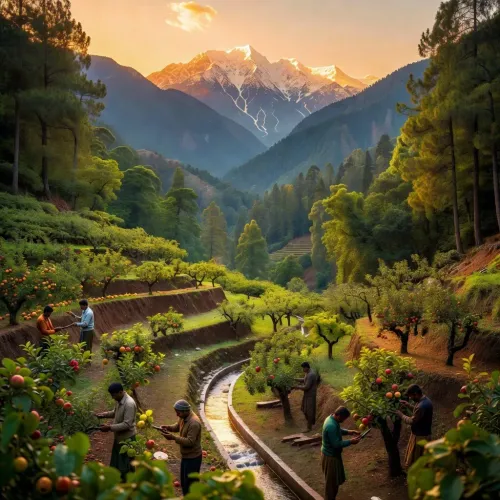
Himachal Pradesh's economy rests on four principal pillars: tourism, hydropower, horticulture and remittances. The state has historically depended heavily on central transfers to fund its expenditure, making the self-reliance pledge a pointed political and fiscal commitment.
Policy Backdrop
The language of Atmanirbhar (self-reliance) entered mainstream Indian policy discourse in May 2020, when the Government of India launched the Atmanirbhar Bharat Abhiyan — a stimulus and structural-reform package designed to reduce the country's dependence on imports and strengthen domestic production. Since then, state governments across the political spectrum have adopted the vocabulary, framing their budgets and sectoral schemes as local expressions of the national self-reliance agenda.
Hill states such as Himachal Pradesh have been particularly vocal in pointing to hydropower potential, apple-belt horticulture and eco-tourism as routes through which they can reduce their fiscal dependence on New Delhi. CM Sukhu's statement continues that pattern of rhetorical alignment, while simultaneously staking out a distinct state-level ownership of the agenda.
Stakeholders and Impact
The most direct beneficiaries of any credible self-reliance push would be Himachal Pradesh's roughly 75 lakh residents, local MSMEs, apple growers in Shimla, Kullu and Kinnaur districts, and operators in the state's tourism corridor. A stronger revenue base would also give the state government more fiscal headroom to fund welfare schemes without waiting for central allocations.
Critics and opposition voices have in the past questioned whether such declarations translate into concrete budgetary action, pointing to the state's persistent debt burden and salary-heavy expenditure profile as structural constraints that rhetoric alone cannot resolve.
What's Next
Observers will watch the upcoming Himachal Pradesh assembly session for any sector-specific packages — particularly for renewable energy, apple growers and tourism infrastructure — that give legislative and budgetary substance to the Chief Minister's declaration. Any new fiscal consolidation measures or investment-attraction drives will be the real test of how the government intends to operationalise its self-reliance commitment.
Point of View
The pledge carries both political symbolism and a real fiscal imperative. The statement's brevity — a single, resolute sentence — suggests it may be a precursor to a larger policy announcement, possibly a budget or a sector-specific package. Whether the administration can convert this rhetorical commitment into measurable outcomes will define a key plank of CM Sukhu's legacy heading into the next electoral cycle.
NationPress
27 Oct 2026
Frequently Asked Questions
What did CM Sukhu say about making Himachal Pradesh self-reliant?
CM Sukhvinder Singh Sukhu stated that his government will take all necessary decisions with firm resolve to make Himachal Pradesh self-reliant, as posted by the official Chief Minister's Office on 13 June 2026.
What does Atmanirbhar mean in the context of Himachal Pradesh?
Atmanirbhar means self-reliant. In Himachal Pradesh's context it refers to reducing the state's fiscal dependence on central government transfers by strengthening local revenue from sectors like hydropower, tourism and horticulture.
When did Sukhvinder Singh Sukhu become Chief Minister of Himachal Pradesh?
Sukhvinder Singh Sukhu became Chief Minister of Himachal Pradesh in December 2022 after the Congress party won the state assembly elections.
What is the Atmanirbhar Bharat Abhiyan?
The Atmanirbhar Bharat Abhiyan is a national stimulus and structural-reform framework launched by the Government of India in May 2020 to promote self-reliance at both the national and sub-national level.
Which sectors can help Himachal Pradesh become self-reliant?
Tourism, hydropower, horticulture — especially apple cultivation in Shimla, Kullu and Kinnaur — and small and medium enterprises are widely identified as the key sectors through which Himachal Pradesh can build a stronger independent revenue base.