Jaishankar meets Ethiopian Investments CEO, eyes deeper India-Ethiopia ties
Synopsis
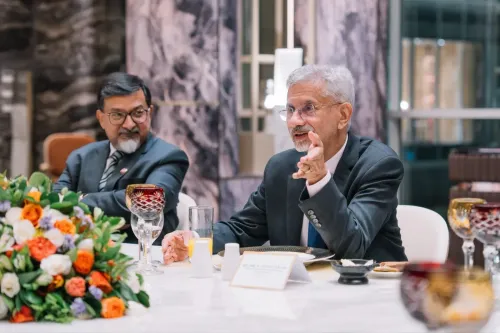
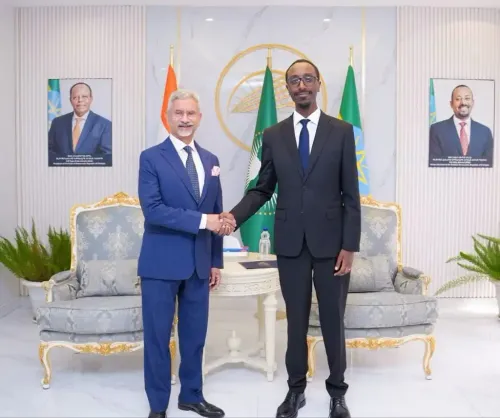
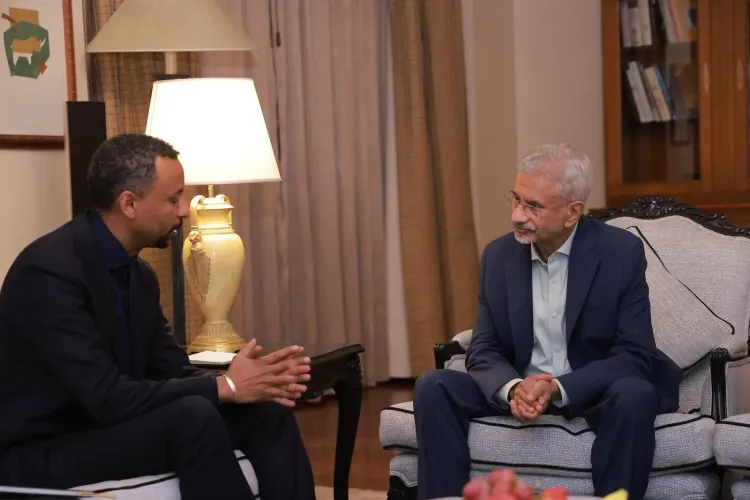
EAM Dr. S. Jaishankar met Ethiopian Investment Holdings CEO Brook Taye to discuss deeper India-Ethiopia investment partnerships, signalling a structured push to expand bilateral economic ties with one of Africa's largest economies.
Key Takeaways
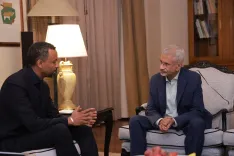
Jaishankar met Brook Taye , CEO of Ethiopian Investment Holdings (EIH) , on 11 October 2026 .
The discussion centred on deepening investment partnerships between India and Ethiopia .
EIH is Ethiopia's sovereign investment vehicle overseeing state-linked enterprises across multiple sectors.
Indian companies have historically been major foreign investors in Ethiopian manufacturing, including textiles and agro-processing.
The meeting fits India's broader strategy of intensifying economic diplomacy across Africa, particularly after the African Union joined the G20 under India's presidency.
Ethiopia's role as host of the African Union headquarters makes it a strategic anchor for India's Africa engagement.
A quiet but pointed meeting in the margins of diplomacy: Union External Affairs Minister Dr. S. Jaishankar sat down with Brook Taye, CEO of Ethiopian Investment Holdings (EIH), to explore deeper investment partnerships between India and Ethiopia — two of the fastest-growing large economies across Asia and Africa.
Brook Taye and the weight of EIH's mandate
Ethiopian Investment Holdings is Ethiopia's sovereign investment vehicle, overseeing a portfolio of state-linked enterprises across sectors ranging from manufacturing and logistics to telecoms and agriculture. Brook Taye, its CEO, is one of the central figures in Addis Ababa's push to attract foreign capital and restructure state-owned assets into competitive, investment-ready entities. A meeting at this level — with India's top diplomat — signals that the conversation has moved well beyond courtesy.
India-Ethiopia: the investment case taking shape
India and Ethiopia share a long arc of engagement: Indian companies have historically been among the largest foreign investors in Ethiopian manufacturing, particularly in textiles, leather, and agro-processing. Ethiopia, with a population exceeding 120 million, offers one of Africa's largest domestic markets and a strategic gateway to the broader Horn of Africa. For India, deepening that footprint aligns with its wider Africa-engagement strategy, accelerated after the India-Africa Forum Summit framework and the country's elevation to the African Union's G20 seat under New Delhi's presidency.
Dr. Jaishankar's direct engagement with EIH's chief executive suggests the two sides are looking at structured, institutional investment channels — not just bilateral goodwill. Sovereign-to-sovereign investment frameworks, joint ventures in infrastructure, and people-to-people economic corridors are all live possibilities when a foreign minister meets a sovereign fund CEO.
Why this moment matters for India's Africa pivot
India has been deliberately and visibly intensifying its economic diplomacy across Africa, positioning itself as a partner of choice against competing interests from China and the Gulf. Ethiopia — politically influential in the African Union, which is headquartered in Addis Ababa — is a natural anchor for that strategy. A meeting between Dr. Jaishankar and EIH is not a footnote; it is a data point in a deliberate pattern.
The two national flags in the minister's post — 🇮🇳 🇪🇹 — are small symbols of a relationship that both governments appear ready to scale up in concrete, capital terms.
The next question is what follows the conversation: a framework agreement, a joint working group, or a specific investment commitment. Diplomatic meetings at this level rarely end without a follow-up file.
Point of View
New Delhi is seeking durable, structured capital channels rather than one-off project deals — a more sophisticated playbook than the one India ran on the continent a decade ago. Ethiopia's centrality to the African Union also gives any India-Ethiopia investment framework an outsized diplomatic multiplier. The meeting is a small but telling indicator of how India's foreign ministry is increasingly doubling as an investment-promotion office for the Indo-African corridor.
NationPress
11 Oct 2026
Frequently Asked Questions
Who is Brook Taye and what is Ethiopian Investment Holdings?
Brook Taye is the CEO of Ethiopian Investment Holdings (EIH), Ethiopia's sovereign investment vehicle that manages a portfolio of state-linked enterprises across sectors including manufacturing, logistics, and telecoms.
What did Jaishankar and Brook Taye discuss?
They discussed deeper investment partnerships between India and Ethiopia, according to Dr. Jaishankar's post on 11 October 2026.
Why is Ethiopia important for India's Africa strategy?
Ethiopia is one of Africa's largest economies with a population exceeding 120 million and hosts the African Union headquarters in Addis Ababa, making it a strategic anchor for India's broader Africa engagement.
What is the history of Indian investment in Ethiopia?
Indian companies have historically been among the largest foreign investors in Ethiopia, particularly in textiles, leather goods, and agro-processing sectors.
How does this meeting fit India's wider diplomatic goals?
It aligns with India's intensified economic diplomacy across Africa, a strategy accelerated after the African Union joined the G20 under India's presidency and through the India-Africa Forum Summit framework.