NITI Aayog, IIT-ISM TEXMiN sign pact to strengthen India's critical minerals sector
Synopsis
India's push for critical mineral self-reliance just got a structural boost. NITI Aayog and IIT-ISM's TEXMiN have formalised a pact covering research, policy, and capacity-building across the minerals value chain — from exploration to recycling. With the National Critical Mineral Mission as the backdrop, the question is whether this translates into industrial-scale technology, or stays at the symposium stage.
Key Takeaways
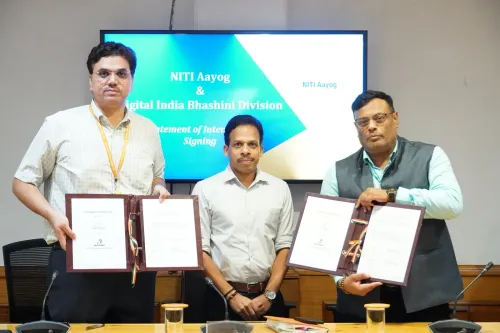
NITI Aayog and TEXMiN at IIT (ISM) Dhanbad signed a Joint Statement of Intent on 3 November 2026 to collaborate on critical and strategic minerals.
The partnership spans four areas : research and technology development, technical studies, policy support, and capacity building.
The initiative is aligned with India's National Critical Mineral Mission (NCMM) and the Viksit Bharat 2047 vision.
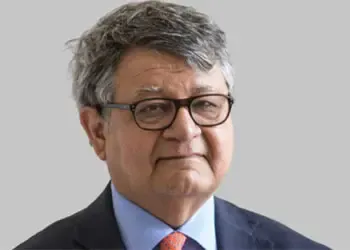
NITI Aayog Member Prof.
Gobardhan Das called for a shift from mine-centric models to a full value-chain strategy covering exploration, processing, refining, and recycling.
Recovery of critical minerals from secondary sources — coal fly ash, red mud, mine tailings, and e-waste — was highlighted as a key sustainability priority.
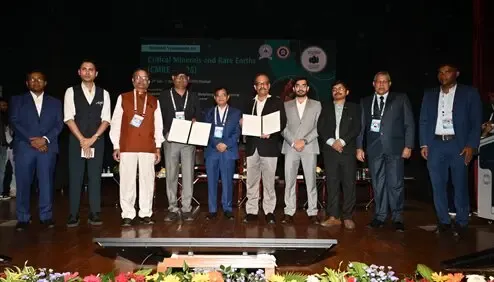
NITI Aayog and TEXMiN — the Technology Translation Research Park at IIT (ISM) Dhanbad — signed a Joint Statement of Intent (SoI) on 3 November 2026 to deepen collaboration in India's critical and strategic minerals sector. The agreement aims to build indigenous technological capabilities, accelerate research and innovation, and support the development of resilient, sustainable mineral value chains aligned with the National Critical Mineral Mission (NCMM) and India's Viksit Bharat 2047 goals.
Key Areas of Collaboration
Under the partnership, the two institutions will work across four strategic domains: research and technology development, technical and strategic studies, policy and institutional support, and capacity building and knowledge exchange. The initiative is designed to bridge the gap between laboratory-stage research and commercially deployable technologies, while forging stronger linkages among government agencies, academic institutions, and industry players.
What Was Said at the Symposium
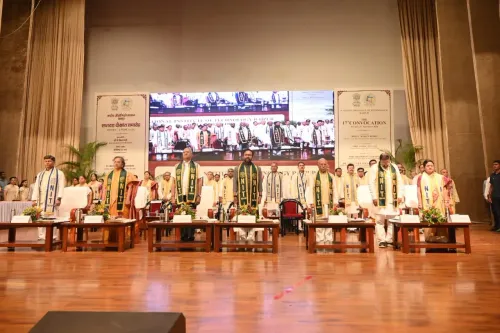
The SoI was formalised during a visit by NITI Aayog Member Prof. Gobardhan Das to IIT (ISM) Dhanbad, where he inaugurated the National Symposium on Critical Minerals and Rare Earths (CMRE 2026), held as part of the 45th Annual National Conference of the Indian Council of Chemists. Addressing delegates, Prof. Das described critical minerals as 'strategic resources essential for national security, technological advancement and economic growth.' He stressed the urgency of building domestic capabilities through stronger academia-industry-government collaboration.
A Shift in Strategic Thinking
Prof. Das called for a fundamental pivot — away from a traditional mine-centric model towards a comprehensive value-chain strategy that encompasses exploration, processing, refining, advanced materials manufacturing, and recycling. He also highlighted the potential of recovering critical minerals from secondary resources such as coal fly ash, red mud, mine tailings, and electronic waste, describing this as a key lever for resource efficiency and sustainability. Notably, this approach mirrors frameworks being adopted by the European Union and the United States as they seek to reduce dependence on Chinese mineral processing.
Why Critical Minerals Matter for India
Critical minerals — including lithium, cobalt, nickel, and rare earth elements — are foundational to electric vehicles, semiconductors, defence systems, and clean energy infrastructure. India currently relies heavily on imports for many of these materials, making domestic capability-building a strategic imperative. The NCMM, launched earlier this year, provides the overarching policy framework within which this NITI Aayog-TEXMiN collaboration sits. This agreement represents one of the more operationally focused partnerships to emerge under the Mission so far.
What Comes Next
The collaboration is expected to catalyse technology translation efforts and enable knowledge exchange between research institutions and commercial entities. Observers note that the real measure of success will be whether joint research translates into patents, pilot plants, and eventually scaled production — a path that India's minerals ecosystem has historically struggled to complete. Sectoral follow-up activities and specific project roadmaps are anticipated in the coming months.
Point of View
But execution has lagged ambition. The NITI Aayog-TEXMiN agreement is operationally more specific than most — covering not just research but technology translation and policy support — which gives it a marginally better chance of bearing industrial fruit. The real gap in India's minerals strategy, however, is not research but the leap from pilot to scale: that requires patient capital and procurement commitments that a Statement of Intent cannot guarantee. Until the NCMM produces verifiable domestic processing capacity, India will remain structurally exposed on minerals in the same way it was on semiconductors a decade ago.
NationPress
3 Nov 2026
Frequently Asked Questions
What is the NITI Aayog-TEXMiN agreement on critical minerals?
It is a Joint Statement of Intent signed on 3 November 2026 between NITI Aayog and TEXMiN — the Technology Translation Research Park at IIT (ISM) Dhanbad — to collaborate on building India's critical minerals capabilities. The pact covers research, policy support, technology translation, and capacity building across the minerals value chain.
What is TEXMiN and why does it matter for critical minerals?
TEXMiN is the Technology Translation Research Park housed at IIT (ISM) Dhanbad, a premier institution in mining and mineral engineering. It bridges academic research and commercial deployment, making it a key partner for translating laboratory innovations into scalable industrial solutions in the minerals sector.
How does this agreement link to the National Critical Mineral Mission?
The partnership is explicitly aligned with the National Critical Mineral Mission (NCMM), India's overarching policy framework for securing and developing critical mineral supply chains. The NITI Aayog-TEXMiN collaboration is intended to support NCMM's goals by generating indigenous technologies and reducing import dependence.
Which minerals and secondary sources were highlighted as priorities?
NITI Aayog Member Prof. Gobardhan Das highlighted lithium, cobalt, nickel, and rare earth elements as strategically important. He also emphasised recovering critical minerals from secondary sources including coal fly ash, red mud, mine tailings, and electronic waste to improve resource efficiency.
What are the next steps following the signing of the SoI?
Specific project roadmaps and follow-up activities are expected in the coming months. The collaboration will focus on enabling technology translation, fostering industry-academia linkages, and contributing to policy frameworks — with measurable outcomes likely to be defined in subsequent implementation agreements.