Dakar 2026: Senegal's wushu athletes make Youth Olympic history
Synopsis
Wushu made its Olympic debut at Dakar 2026, and Senegal was on the floor for it — not just as the host nation, but as a team that had spent two years training in China to earn the right to compete. Neither athlete reached a final, but the story of a coach who learned the sport from a videotape and built a 10,000-strong movement from scratch may outlast any medal.
Key Takeaways
Wushu made its debut as an official medal sport at the Dakar 2026 Youth Olympic Games , marking the first time Chinese martial arts have featured in Olympic competition.
Senegalese athletes Mahib Amar and Woreye Ndiaye , both 16 , represented the host nation; Ndiaye withdrew after injury and Amar did not advance to the final.
The team completed nearly two months of intensive training at the Tianjin Huo Yuanjia Civil and Military School in August 2026 , with Chinese coaches Zhao Qingjian and Wu Yanan .
Head coach Ousmane Sakho also trained at an International Wushu Federation course in China in April 2025 .
More than 10,000 people now practise wushu in Senegal across over 400 clubs in 11 of 14 administrative regions.
Amar, who began wushu in 2020 in the village of Bayakh , said his goal remains becoming an Olympic champion .
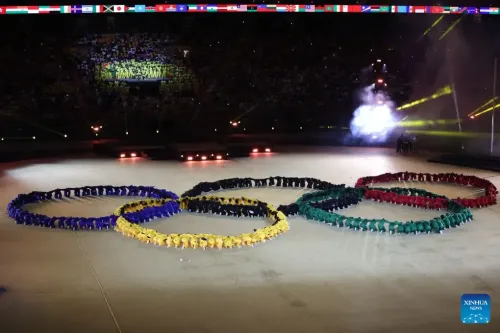
Senegalese wushu athletes Mahib Amar and Woreye Ndiaye, both 16, stepped onto an Olympic stage in Dakar on 1 November 2026, competing in wushu's debut as an official medal sport at the Dakar 2026 Youth Olympic Games — a milestone that head coach Ousmane Sakho once described as unimaginable. The moment marked the first time the movements of Chinese martial arts have featured in an Olympic competition, and for Senegal, it represented the culmination of years of grassroots effort in a country where football overwhelmingly dominates sport.
A Coach's Unlikely Journey
Sakho's path to the Olympic stage began with a kung fu film on a videotape. 'I was immediately fascinated,' he recalled. By the age of 20, he had resolved to dedicate himself to promoting wushu in Senegal — a commitment he maintained for more than a decade with scant resources, no dedicated training hall, and limited equipment. 'In the beginning, we trained with almost nothing,' he said. 'I would never have imagined bringing young people to the Youth Olympics here in Senegal.'
His breakthrough came when wushu was confirmed as an official medal event at Dakar 2026, giving him both a mandate and a deadline. Appointed head coach of Senegal's youth wushu team, Sakho set about preparing the next generation for the biggest competition of their lives.
Training in China: Bridging the Technical Gap
Competitive wushu demands precise execution of standardised routines, with strict requirements governing technique, direction, difficulty, and movement — a significant step up from the martial arts forms Sakho had long taught. In April 2025, he travelled to China for a training course organised by the International Wushu Federation, studying the third set of international competition routines. Chinese coach Zheng Jutian, who worked with him there, recalled that Sakho was initially unfamiliar with several required movements and that their sessions focused on correcting technique and clarifying the details that attract deductions in international competition.
In March 2026, Sakho returned to China with his athletes, including a trip to Tianjin for the World Junior Wushu Championships, a key qualification event for the Dakar Games. By August, four young athletes were back in Tianjin for nearly two months of intensive training at the Tianjin Huo Yuanjia Civil and Military School. Chinese coaches Zhao Qingjian — a champion at the 2008 Beijing Wushu Tournament — and Wu Yanan worked with the Senegalese athletes on flexibility, physical conditioning, and the precise execution of difficult movements such as a jumping kick followed by a split. 'We started teaching them movement by movement,' Zhao recalled. The coaching team also helped the athletes select competition music and understand scoring procedures.
Wu acknowledged that the gap was considerable at the outset. 'At the beginning of the training, I found that the Senegalese athletes' level was far below what I had expected,' he said. Progress, however, came through repetition. El Hadji Ndiogou Gueye, president of the Senegalese Wushu Federation, credited the China stints with measurable gains: 'They improved in technique, physical fitness and discipline. Their ability to perform difficult movements also improved significantly.'
Olympic Competition: Pride and Setback
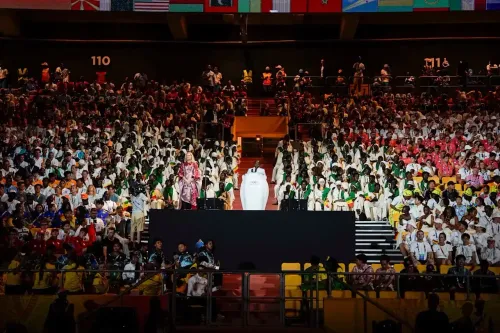
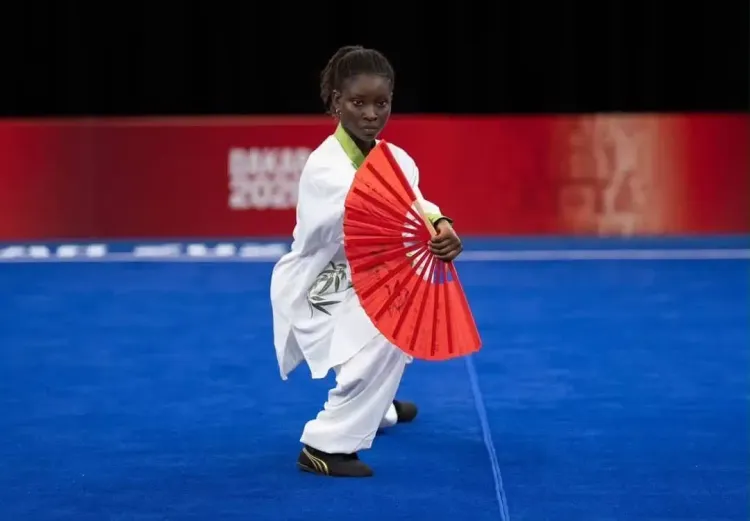
Ndiaye, who had carried the symbolic weight of delivering the athletes' oath at the opening ceremony, competed in the women's taijishan preliminary round on 1 November, performing a fan routine that blended controlled movement with sudden bursts of power. Her message to fellow competitors was simple: 'Enjoy the competition, enjoy the moment.' Her Olympic debut, however, ended in disappointment — an injury sustained during competition forced her withdrawal from the remaining preliminary round the following day.
Amar completed both the taijiquan and taijishan preliminary rounds in the men's combined event but did not finish among the top eight required to advance to the final. He remained philosophical. 'We trained hard to get to this competition. We went to China twice and finished our preparation with a final training camp in Guereo,' he said. Amar, who hails from the village of Bayakh in Senegal's Thies region and began practising wushu in 2020, noted that his performances had improved since the World Junior Championships. His ambitions are undimmed: 'My dream is to become an Olympic champion.'
Sakho absorbed both the pride and the pain. 'Amar has improved, and he will continue to improve. He has worked hard,' he said. 'And Ndiaye got injured at the worst possible moment. Sport can be cruel.'
Wushu's Growing Footprint in Senegal
By 2 November, Senegal's wushu campaign had concluded without either athlete reaching a final. Yet the broader picture offers cause for optimism. According to Gueye, more than 10,000 people now practise wushu across Senegal, supported by over 400 clubs and regional organisations in 11 of the country's 14 administrative regions. 'We have fought for many years for wushu to become part of the Olympic family,' Gueye said. He hopes the Dakar Games will generate a lasting legacy in the form of better equipment, improved training facilities, and wider recognition for the sport.
For Sakho, success has always been measured by something harder to quantify than a podium finish. 'When I see these young people find direction in life and learn to stand tall through wushu, that is worth more than all the medals,' he said. 'I'll stay as long as they keep training.' With the competition over, his focus has already shifted to what comes next. 'We go back to the club and start training again. That's all.'
Point of View
000 practitioners and representation at an Olympic event — on home soil. The China training partnership is worth scrutinising, too: it is both a genuine transfer of technical knowledge and a soft-power projection that Beijing has quietly pursued through sport federations across Africa for years. The fact that neither athlete reached a final should not obscure what was actually achieved. The harder question for Gueye and Sakho is whether the Dakar moment translates into sustained funding and infrastructure, or whether wushu in Senegal reverts to its pre-Games invisibility once the cameras leave.
NationPress
3 Nov 2026
Frequently Asked Questions
What is wushu and why is Dakar 2026 significant for the sport?
Wushu is the competitive form of Chinese martial arts, involving precisely executed standardised routines judged on technique, difficulty, and movement. Dakar 2026 marks its debut as an official medal sport at a Youth Olympic Games — the first time the discipline has appeared on an Olympic programme.
How did Senegal prepare its wushu team for the Dakar 2026 Youth Olympics?
Coach Ousmane Sakho attended an International Wushu Federation training course in China in April 2025, and later brought athletes to Tianjin for the World Junior Wushu Championships in March 2026. In August 2026, four athletes completed nearly two months of intensive training at the Tianjin Huo Yuanjia Civil and Military School under Chinese coaches Zhao Qingjian and Wu Yanan.
What were the results for Senegal's wushu athletes at Dakar 2026?
Woreye Ndiaye competed in the women's taijishan preliminary round on 1 November but withdrew the following day due to injury. Mahib Amar completed both the taijiquan and taijishan preliminary rounds in the men's combined event but did not finish in the top eight needed to reach the final.
How large is the wushu community in Senegal?
According to Senegalese Wushu Federation president El Hadji Ndiogou Gueye, more than 10,000 people now practise wushu in Senegal, supported by over 400 clubs and regional organisations established in 11 of the country's 14 administrative regions.
What is the long-term ambition for wushu in Senegal after Dakar 2026?
Federation president Gueye hopes the Games will generate a lasting legacy through better equipment, improved training opportunities, and wider recognition for the sport. Athlete Mahib Amar has stated his personal goal is to become an Olympic champion, while coach Sakho intends to continue training the next generation regardless of results.