CM Majhi pitches Odisha at Renewable Energy Summit in Delhi
Synopsis
Odisha Chief Minister Mohan Charan Majhi addressed the Bharat Renewable Energy Summit 2026 at Bharat Mandapam, announcing 18 MoUs worth ₹1.17 lakh crore and a 11,742 MW tentative capacity addition, with a goal to make Odisha a top-five power-exporting state by 2047.
Key Takeaways
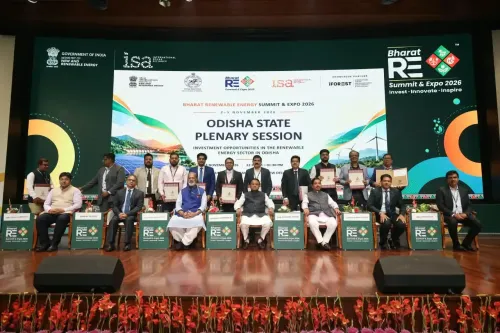
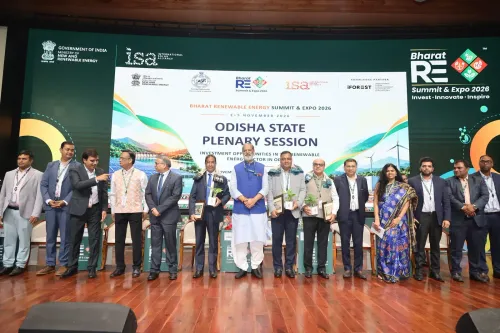
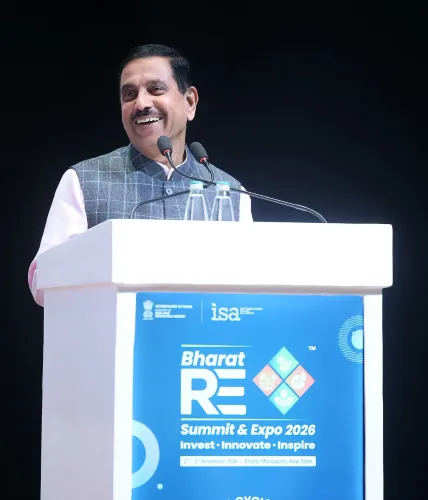
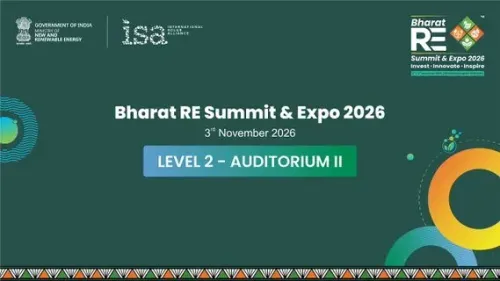
Odisha CM Mohan Charan Majhi addressed the Bharat Renewable Energy Summit & Expo 2026 at Bharat Mandapam, New Delhi on November 3, 2026 .
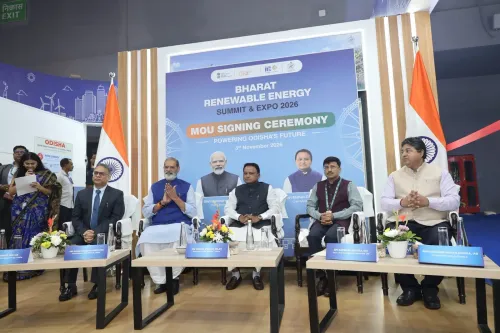
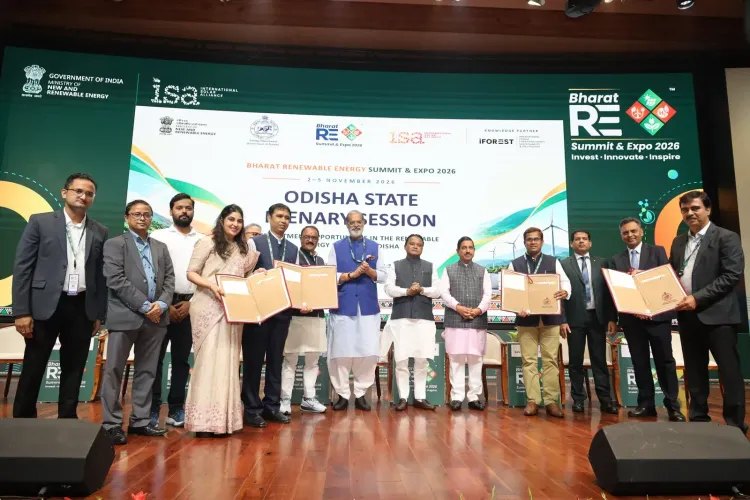
18 MoUs representing prospective investments of around ₹1.17 lakh crore were highlighted at the Odisha State Plenary.
The MoUs carry a tentative renewable energy capacity addition of 11,742 MW .
Odisha aims to become one of India's top five power-exporting states by 2047 , aligned with the Viksit Bharat vision.
Union Minister for New and Renewable Energy Pralhad Joshi co-addressed the session, signalling central government backing.
The state is pitching policy stability, time-bound clearances and transmission infrastructure as its core investor-friendly differentiators.
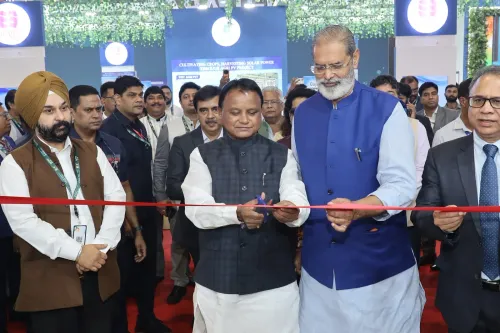
A state with vast mineral wealth and a long coastline is now staking its claim on India's clean-energy map. At the Bharat Renewable Energy Summit & Expo 2026 held at Bharat Mandapam, New Delhi, Odisha Chief Minister Mohan Charan Majhi addressed the Odisha State Plenary on Tuesday, November 3, 2026, presenting his government's renewable energy pitch alongside Union Minister for New and Renewable Energy Pralhad Joshi.
₹1.17 lakh crore on the table: the MoU count and what it signals
The headline numbers are striking. 18 MoUs representing prospective investments of around ₹1.17 lakh crore, with a tentative capacity addition of 11,742 MW, were presented as evidence of growing investor confidence in the state. Chief Minister Majhi framed these not as aspirational targets but as a signal — that the market has begun to take Odisha seriously as a clean-energy destination.
The state's pitch rests on a combination of natural resource abundance, existing industrial infrastructure, and a declared commitment to policy stability and time-bound clearances. These are precisely the friction points that have historically slowed renewable projects in India: land acquisition delays, grid connectivity bottlenecks, and regulatory uncertainty. Odisha's explicit promise to address each of them is a direct play for investor attention in a competitive field.
The 2047 ambition: top-five power exporter
CM Majhi articulated a long-horizon goal — positioning Odisha among India's top five power-exporting states by 2047. That year is not accidental. It aligns with the central government's Viksit Bharat vision, which anchors transformational state-level commitments to India's centenary of independence. For Odisha, a state historically more associated with steel and aluminium than solar panels and wind turbines, the pivot is significant.
India's renewable energy ambition has national architecture behind it. The country committed at COP26 in 2021 to its Panchamrit goals — including 500 GW of non-fossil fuel capacity by 2030 and net-zero emissions by 2070. States are now the delivery layer for that national target, and the race to attract clean-energy capital has intensified accordingly. Multiple states have been hosting similar investment plenary sessions, offering incentives and showcasing transmission readiness.
Odisha's edge: resources, industry, and grid access
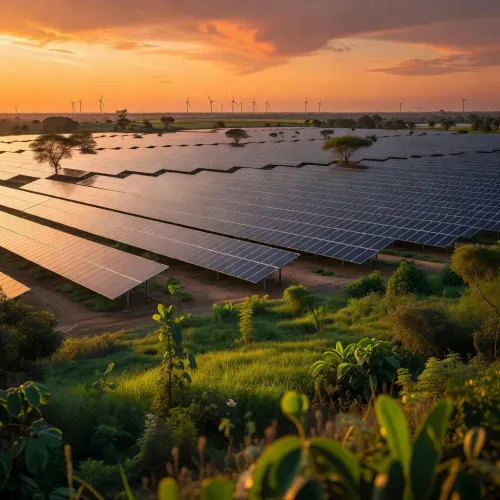
What does Odisha bring to that competition? The state's eastern coastline offers offshore wind potential. Its mineral-rich interior provides raw materials for battery storage and solar manufacturing supply chains. And its existing heavy-industry base — aluminium smelters, steel plants — creates a large captive demand pool for industrial renewable power purchase agreements.
CM Majhi highlighted robust transmission infrastructure as a key differentiator. Transmission capacity is the invisible bottleneck in India's renewable scale-up; states that can credibly promise grid evacuation for new capacity have a real structural advantage in attracting project developers.
The summit provided Odisha a national stage, with Union Minister Pralhad Joshi present to reinforce central government alignment with state-level clean-energy ambitions. That political signalling matters — investors read ministerial presence as a proxy for policy continuity.
The MoUs are signed; the megawatts are still to be built. Odisha's next test is converting investor confidence into steel-in-the-ground capacity — and that clock starts now.
Point of View
Dovetailing with the BJP-led central government's Viksit Bharat and Panchamrit commitments ahead of 2030. CM Majhi's framing of policy stability and transmission readiness directly addresses the two systemic barriers that have most deterred large-scale renewable investment across Indian states. The presence of Union Minister Pralhad Joshi alongside the Chief Minister sends a deliberate signal of centre-state alignment, reinforcing investor confidence in regulatory continuity. Whether the ₹1.17 lakh crore in MoUs translates into actual capacity will be the real measure of this summit's success — and a closely watched data point in Odisha's long-term economic repositioning.
NationPress
3 Nov 2026
Frequently Asked Questions
What is the Bharat Renewable Energy Summit 2026?
The Bharat Renewable Energy Summit & Expo 2026 is a national-level summit held at Bharat Mandapam, New Delhi, focused on renewable energy investments and showcasing state-level opportunities for clean-energy development.
How much investment did Odisha announce at the renewable energy summit?
Odisha announced 18 MoUs representing prospective investments of around ₹1.17 lakh crore, with a tentative renewable energy capacity addition of 11,742 MW, at the Bharat Renewable Energy Summit 2026.
What is Odisha's renewable energy target for 2047?
Chief Minister Mohan Charan Majhi has set a vision to make Odisha one of India's top five power-exporting states by 2047, aligned with the central government's Viksit Bharat framework.
Who is Pralhad Joshi and what role did he play at the summit?
Pralhad Joshi is India's Union Minister for New and Renewable Energy. He co-addressed the Odisha State Plenary at the Bharat Renewable Energy Summit 2026 alongside CM Majhi, reinforcing central government support for state-level clean-energy investment.
What is India's overall renewable energy goal and how does Odisha fit in?
India committed at COP26 in 2021 to achieving 500 GW of non-fossil fuel capacity by 2030 and net-zero emissions by 2070. States like Odisha are key delivery layers for these national targets, attracting investment through policy incentives and infrastructure readiness.