Pralhad Joshi Sets 10.96 GW Target for Odisha at Renewable Summit
Synopsis
At the Bharat Renewable Energy Summit 2026, Union Minister Pralhad Joshi set a 10.96 GW renewable energy target for Odisha by 2030 and declared Centre's full commitment to making Odisha a Green Energy Hub by 2036, spotlighting PM Surya Ghar and PM-KUSUM progress.
Key Takeaways
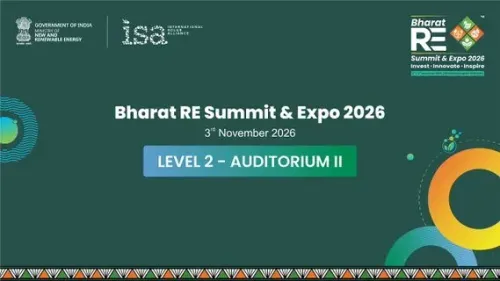
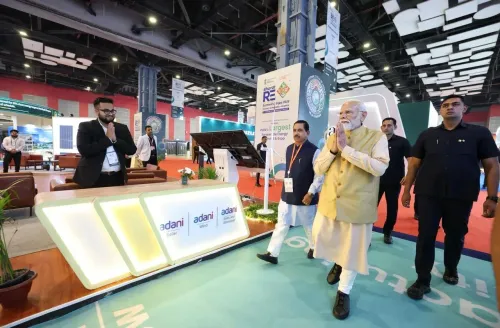
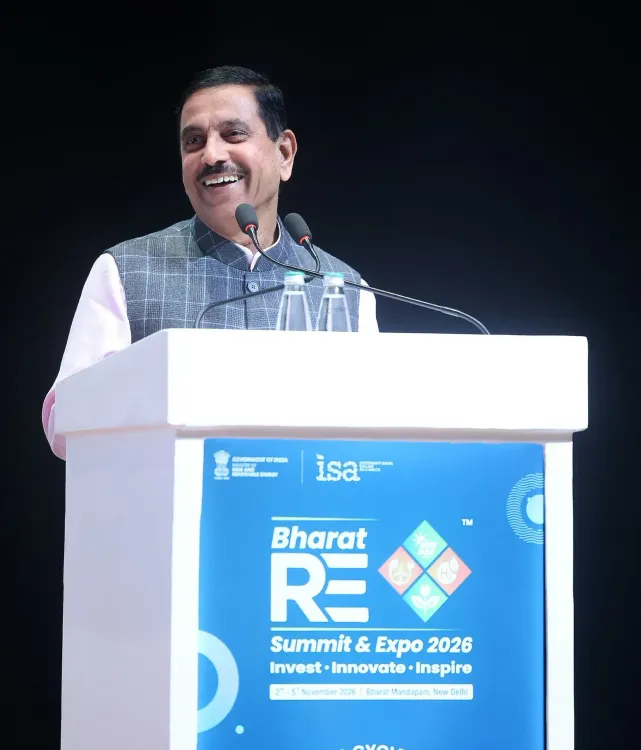
Union Minister Pralhad Joshi addressed the Odisha State Plenary at #BharatRenewableEnergySummit2026 on November 3, 2026 .
Odisha has a stated renewable energy capacity target of 10.96 GW by 2030 , spanning solar, wind, pumped storage and green hydrogen.
Joshi articulated a vision of Odisha as a Green Energy Hub by 2036 .
Progress under PM Surya Ghar Muft Bijli Yojana (rooftop solar for households) and PM-KUSUM (solar for farmers, launched 2019) was highlighted, with a call to accelerate implementation.
The Centre pledged full commitment to converting Odisha's renewable potential into investments, jobs and reliable clean energy .
Odisha CM Mohan Charan Majhi and Deputy CM K.V.
Singh Deo were present, signalling state-Centre alignment.
A state with coastlines, mineral wealth, and abundant solar corridors just got a direct pitch from the Centre: Union Minister for New and Renewable Energy Pralhad Joshi addressed the Odisha State Plenary at the #BharatRenewableEnergySummit2026 on Tuesday, November 3, 2026, calling Odisha's clean energy runway 'immense' and pledging full Central government commitment to convert that potential into real investments and jobs.
Odisha's 10.96 GW Goal and the 2036 Green Energy Hub Vision
At the heart of Joshi's address was a striking number: 10.96 GW of renewable energy capacity to be achieved by 2030. Spread across solar, wind, pumped storage, and green hydrogen, the target signals that Odisha is no longer a peripheral player in India's clean energy story — it is being positioned as an eastern anchor. Joshi went further, articulating a longer arc: Odisha as a full-fledged 'Green Energy Hub' by 2036.
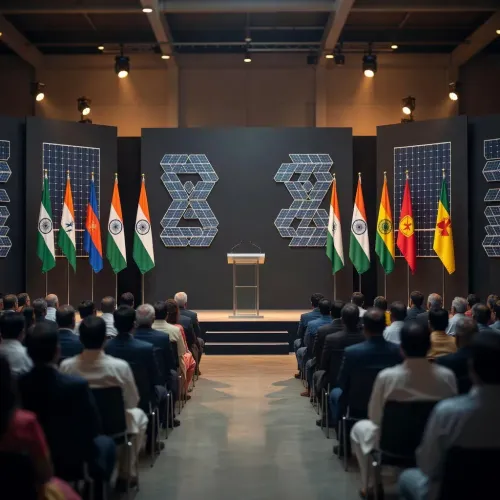
Chief Minister Mohan Charan Majhi and Deputy Chief Minister K.V. Singh Deo, who holds the energy portfolio, were both present at the plenary — a signal that state leadership is aligned with the Centre's push. 'Firmly believe Odisha can achieve much more,' Joshi said, raising the bar beyond even the official target.
PM Surya Ghar and PM-KUSUM: The Two Schemes Driving Distributed Solar
Joshi highlighted progress under two flagship Central schemes. PM Surya Ghar Muft Bijli Yojana, launched in 2024, targets subsidised rooftop solar installations for households — a demand-side lever designed to push distributed generation deep into residential India. PM-KUSUM (Pradhan Mantri Kisan Urja Suraksha evam Utthaan Mahabhiyan), running since 2019, takes the push into agriculture: solar pumps and decentralised power for farmers who are among the grid's most stressed users.
The Minister's emphasis, however, was not on past roll-outs — it was on acceleration. He stressed 'the need to accelerate implementation,' a phrase that carries weight given how often scheme targets and on-ground installation numbers diverge in India's renewable buildout.
Where Odisha Fits in India's 500 GW Puzzle
India has committed to 500 GW of non-fossil fuel capacity by 2030 under its updated Nationally Determined Contribution — a pledge made at COP26 in 2021. With the National Green Hydrogen Mission approved in 2023, coastal and mineral-rich states like Odisha have been earmarked for hydrogen production hubs, leveraging port access and raw material proximity. Pumped storage — essentially a giant rechargeable battery carved into a hillside — adds another dimension, addressing the intermittency challenge that has dogged large-scale solar and wind deployment.
The Bharat Renewable Energy Summit's state-plenary format itself reflects a deliberate federal strategy: get state governments in the room, put a number on the table, and create public accountability. Joshi's Kannada-language addition to the post — addressed to a Karnataka audience — underscores how politically invested the Minister is in cross-state visibility for this agenda.
Odisha's minerals, coastline, and now its political alignment with the BJP's renewable energy agenda make it a test case for whether the Centre's 500 GW ambition can be genuinely distributed across eastern India — or whether it remains concentrated in the traditional solar belts of Rajasthan and Gujarat. The next milestones will be in the contracts signed and the megawatts actually commissioned.
Point of View
Giving the BJP a durable infrastructure narrative in a state it now governs. Odisha's positioning as a green hydrogen and pumped storage destination also fits a broader pattern of shifting India's renewable story eastward, diversifying away from the Rajasthan-Gujarat concentration. The real test will be whether Central scheme disbursements and state-level land and grid infrastructure keep pace with the ambition on display at the podium.
NationPress
3 Nov 2026
Frequently Asked Questions
What is Odisha's renewable energy target by 2030?
Odisha has a target of 10.96 GW of renewable energy capacity by 2030, covering solar, wind, pumped storage and green hydrogen, as highlighted by Union Minister Pralhad Joshi at the Bharat Renewable Energy Summit 2026.
What is the PM Surya Ghar Muft Bijli Yojana?
PM Surya Ghar Muft Bijli Yojana is a Central government scheme launched in 2024 that provides subsidies for rooftop solar panel installations in households, aiming to boost distributed solar generation across India.
What is the PM-KUSUM scheme?
PM-KUSUM (Pradhan Mantri Kisan Urja Suraksha evam Utthaan Mahabhiyan), launched in 2019, supports the installation of solar pumps and decentralised renewable energy systems for farmers to reduce grid dependency in agriculture.
What is the Odisha Green Energy Hub vision?
Union Minister Pralhad Joshi articulated a vision of making Odisha a Green Energy Hub by 2036 , leveraging its potential in solar, wind, pumped storage and green hydrogen, backed by Central government investment and policy support.
Who attended the Bharat Renewable Energy Summit 2026 Odisha plenary?
The Odisha State Plenary at the summit was attended by Union Minister Pralhad Joshi , Odisha Chief Minister Mohan Charan Majhi , and Deputy Chief Minister K.V. Singh Deo .