Pralhad Joshi Flags India's Clean Energy Push Ahead of BRE Summit 2026
Synopsis
Union Minister Pralhad Joshi shares an op-ed on India's clean energy revolution, spotlighting PM Surya Ghar, PM-KUSUM, green hydrogen and domestic solar manufacturing, while flagging the upcoming Bharat Renewable Energy Summit 2026 as a platform for global clean energy partnerships.
Key Takeaways
Pralhad Joshi published an op-ed titled 'An Energy Revolution in the Making' on 2 November 2026 , outlining India's clean energy progress.
PM Surya Ghar (launched 2024) provides subsidised rooftop solar to households; PM-KUSUM (launched 2019) solarises agricultural pumps and supplements farmer incomes.
The National Green Hydrogen Mission was approved in 2023 to scale domestic production and position India as a potential green hydrogen exporter.
A PLI scheme for high-efficiency solar PV modules (notified 2021) aims to build competitive domestic solar manufacturing and reduce import dependence.
India targets 500 GW of non-fossil power capacity by 2030 and net-zero emissions by 2070 .
The Bharat Renewable Energy Summit 2026 is positioned as a global platform for clean energy investment and technology partnerships.
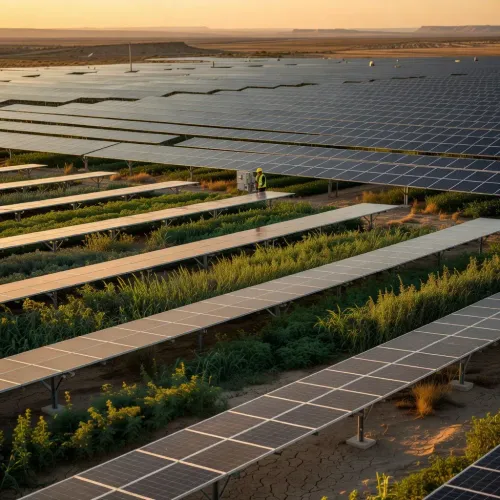
From rooftop panels in urban neighbourhoods to solar pumps humming across farmlands, India's renewable energy transformation is no longer a distant policy promise — it is a daily, visible reality. Union Minister for New and Renewable Energy Pralhad Joshi made that case publicly on Monday, 2 November 2026, sharing an op-ed he penned titled 'An Energy Revolution in the Making,' spotlighting flagship schemes and looking ahead to the imminent Bharat Renewable Energy Summit 2026.
In the piece, Joshi frames the ongoing transition as the product of Prime Minister Narendra Modi's long-term vision, anchored by four policy pillars: the PM Surya Ghar Muft Bijli Yojana for household rooftop solar, PM-KUSUM for agricultural solarisation, a green hydrogen mission, and a domestic solar manufacturing push. 'From rooftops to farmlands, India's clean energy transition is creating new possibilities for millions,' he wrote, underscoring the breadth of the programme's intended reach.
Four Schemes, One Strategic Arc
Each of the four pillars Joshi highlights carries its own policy lineage. PM-KUSUM — the Pradhan Mantri Kisan Urja Suraksha evam Utthaan Mahabhiyan — was launched in 2019 to solarise agricultural pumps and offer farmers a supplementary income stream by feeding surplus power to the grid. Five years later, PM Surya Ghar arrived in 2024 to extend subsidised rooftop solar to ordinary households, targeting a significant reduction in monthly electricity bills.
On the production side, a Production Linked Incentive (PLI) scheme for high-efficiency solar PV modules, notified in 2021, was designed to wean India off imported solar hardware and build competitive domestic manufacturing capacity. The National Green Hydrogen Mission, approved in 2023, added an industrial-decarbonisation layer — positioning India as a potential future exporter of green hydrogen to energy-hungry markets in Europe and East Asia.
The 500 GW Clock Is Ticking
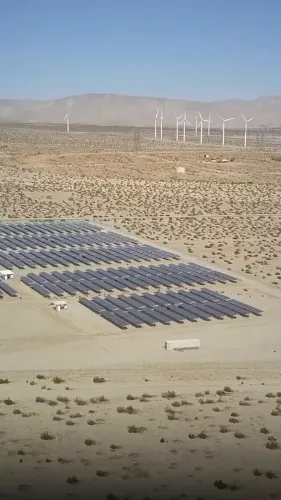
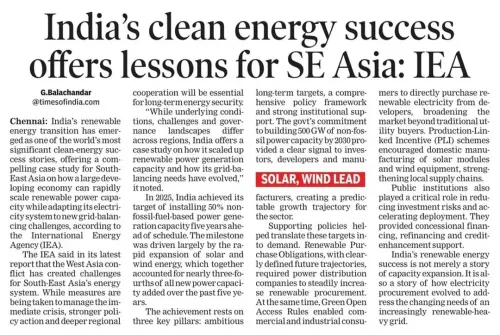
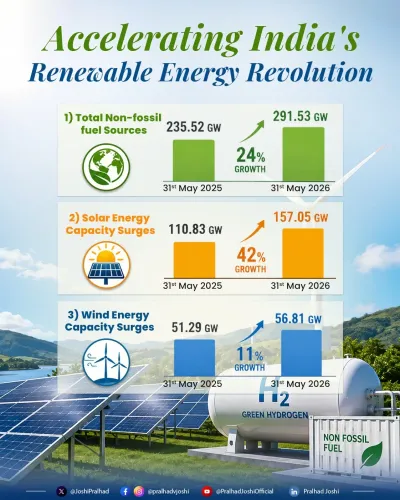
The urgency behind Joshi's messaging is not rhetorical. India has committed to reaching 500 GW of non-fossil power capacity by 2030 and net-zero emissions by 2070. Rooftop solar and farm-level solar pumps — the human-scale end of the energy transition — are essential to hitting that macro number, both by adding distributed generation and by easing demand on a grid still heavily reliant on coal. The domestic manufacturing push is equally strategic: a country that builds its own panels is insulated from the supply-chain disruptions and geopolitical pricing shocks that have rattled energy programmes elsewhere.
Bharat Renewable Energy Summit 2026 on the Horizon
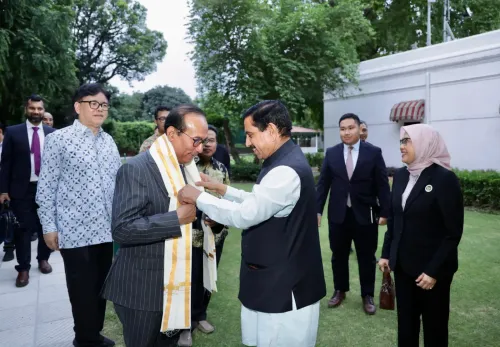
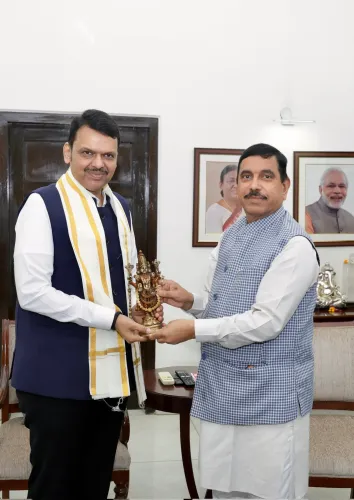
Joshi's op-ed and post serve as a visible warm-up for the Bharat Renewable Energy Summit 2026 (#BRESummit2026), which he describes as a gathering of 'global leaders and innovators' to advance clean energy partnerships. The minister expressed his eagerness to welcome international participants, signalling that the summit is being positioned as both a deal-making and image-setting moment for India's renewables sector on the world stage.
Whether the summit delivers concrete investment pledges or new technology tie-ups will be the real measure of this pre-summit momentum — and for millions of households and farmers who have waited for their solar connections, that ledger matters far more than any headline.
Point of View
Urban consumers, and global investors. However, the gap between announced targets and on-ground installation numbers for both PM-KUSUM and PM Surya Ghar remains a recurring accountability question that the summit's spotlight may intensify rather than deflect.
NationPress
2 Nov 2026
Frequently Asked Questions
What is PM Surya Ghar Muft Bijli Yojana?
PM Surya Ghar Muft Bijli Yojana, launched in 2024 , is a central government scheme that provides subsidies to households for installing rooftop solar panels, aiming to reduce electricity bills and expand distributed solar generation across India.
What is PM-KUSUM scheme for farmers?
PM-KUSUM (Pradhan Mantri Kisan Urja Suraksha evam Utthaan Mahabhiyan), launched in 2019 , solarises agricultural water pumps and allows farmers to sell surplus power to the grid, creating an additional income stream alongside reduced irrigation costs.
What is India's green hydrogen mission?
The National Green Hydrogen Mission , approved in 2023 , aims to scale domestic production and industrial use of green hydrogen in India, with a longer-term goal of positioning the country as an exporter of green hydrogen to global markets.
What is the Bharat Renewable Energy Summit 2026?
The Bharat Renewable Energy Summit 2026 (BRESummit2026) is an upcoming international event that Union Minister Pralhad Joshi has described as a platform to bring together global leaders and innovators to advance clean energy investment and technology partnerships with India.
What is India's renewable energy target by 2030?
India has committed to achieving 500 GW of non-fossil fuel power capacity by 2030 and reaching net-zero emissions by 2070 , with solar energy — both utility-scale and decentralised — forming the core of that expansion strategy.