Pralhad Joshi Maps India's Clean Energy Road in Magazine Interview
Synopsis
Union Minister Pralhad Joshi spoke to a national magazine on 29 October 2026 about India's clean energy roadmap, highlighting solar, green hydrogen, battery storage, and agrovoltaics as pillars of the country's push toward its 500 GW non-fossil fuel target by 2030.
Key Takeaways
Pralhad Joshi , Union Minister for New and Renewable Energy, outlined India's clean energy strategy in a magazine interview on 29 October 2026 .
Four technology vectors were highlighted: solar power, green hydrogen, energy storage, and agrovoltaics .
India's 500 GW non-fossil fuel capacity target by 2030 , pledged at COP26 in 2021 , underpins the strategic roadmap.
The National Green Hydrogen Mission , launched in 2023 , aims to make India a global production and export hub for green hydrogen.
Agrovoltaics — dual use of farmland for solar panels and crops — was flagged as a frontier solution to land-use conflicts in solar expansion.
Policy watchers are tracking state-level agrovoltaics guidelines and viability gap funding for battery storage projects as the next expected steps.
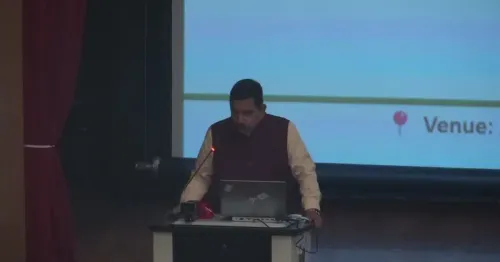
India's renewable energy ambitions — from rooftop solar to green hydrogen farms — got a sweeping ministerial articulation on Thursday, 29 October 2026, when Union Minister for New and Renewable Energy Pralhad Joshi sat down with a national magazine to lay out the country's strategic roadmap toward a clean, secure energy future. The conversation ranged across solar power, green hydrogen, energy storage, and the fast-emerging concept of agrovoltaics — a sign of just how wide India's clean-energy canvas has grown.
In the interview, Joshi described India's progress as advancing 'under the visionary leadership' of Prime Minister Narendra Modi, framing the country's transition not as aspiration but as 'tangible progress.' The minister highlighted four distinct technology vectors — solar power, green hydrogen, energy storage, and agrovoltaics — underlining a deliberate policy shift away from relying on a single clean-energy source.
From COP26 pledges to on-the-ground watts
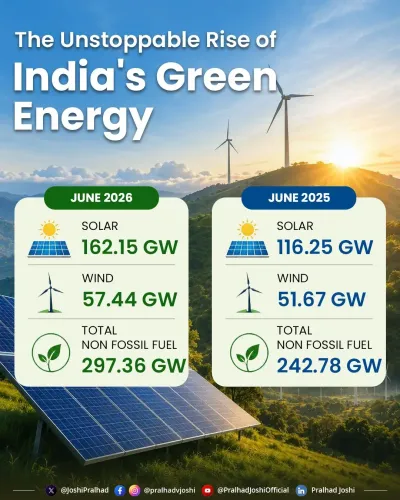
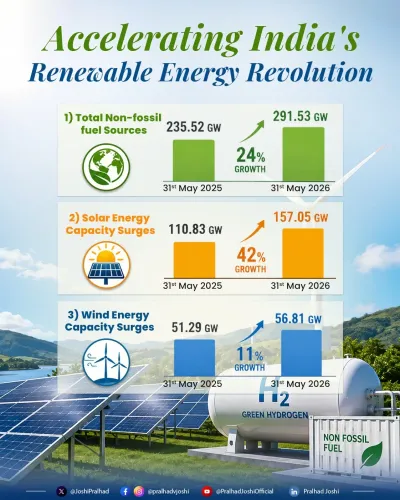
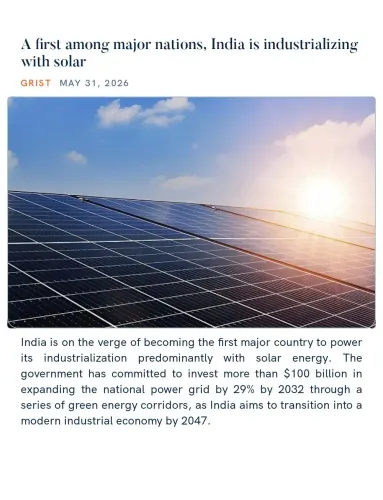
India's renewable push has a firm deadline anchoring it: a pledge, made at COP26 in Glasgow in 2021, to install 500 GW of non-fossil fuel capacity by 2030. That target has since driven a cascade of policy action. Solar capacity addition has accelerated sharply, with the country leaning on the Atmanirbhar framework to build domestic manufacturing capability rather than remain dependent on imported panels and components. The minister's mention of 'energy security' alongside 'clean energy' reflects that dual logic — decarbonisation and supply-chain resilience are being pursued as a single package, not traded off against each other.
Green Hydrogen Mission and the agrovoltaics frontier
Among the vectors Joshi flagged, green hydrogen carries perhaps the longest policy lineage. The National Green Hydrogen Mission, approved in 2023, set out to position India as a global production and export hub for the fuel — targeting sectors like steel, fertilisers, and heavy transport that are notoriously hard to electrify directly. The mission has attracted interest from renewable energy developers who see an opportunity to monetise surplus solar and wind generation.
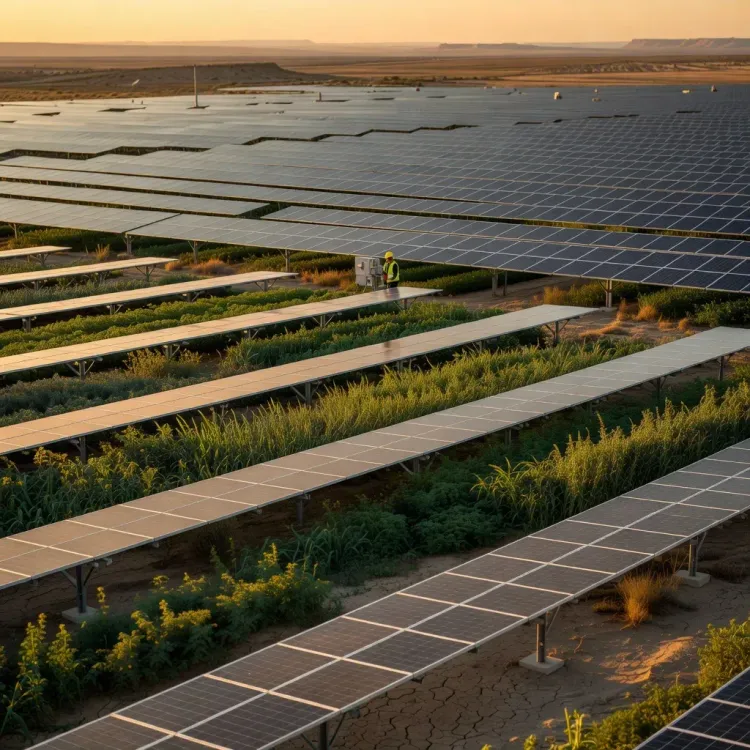
Agrovoltaics — the dual use of agricultural land for both solar panel deployment and crop cultivation — is the newer frontier Joshi flagged. The model promises to address the land-use tension that has complicated large-scale solar expansion, particularly in states where arable land is scarce and farmer opposition has stalled projects. Policy watchers are now tracking whether state-level agrovoltaics guidelines and viability gap funding for battery storage will follow as the next legislative step.
Storage: the piece that ties it all together
Energy storage — batteries and other grid-stabilisation technologies — is the connective tissue of the entire transition. Without it, solar and wind generation remain intermittent and grid-unreliable. Joshi's explicit mention of storage alongside solar and green hydrogen signals that the government views these not as separate programmes but as an integrated system. The agricultural sector, a significant power consumer and increasingly a potential solar producer through agrovoltaics, stands to be among the most direct beneficiaries if that integration lands well.
India's clean-energy story has shifted register — from announcing targets to defending delivery. The minister's magazine interview is as much a progress report as a policy pitch, and the measure of its credibility will be counted in gigawatts installed, hydrogen tonnes shipped, and farmland doubled up as power plants.
Point of View
The minister signals that the policy toolkit is maturing beyond flagship numbers. The framing under Modi's 'visionary leadership' is a standard BJP communications beat, but the substantive breadth of the technology list suggests the ministry is also managing expectations about complexity and timelines. The real test will come in whether state-level implementation — particularly agrovoltaics land-use rules and storage funding — keeps pace with the ministerial ambition on display.
NationPress
29 Oct 2026
Frequently Asked Questions
What did Pralhad Joshi say about India's renewable energy plans?
Joshi outlined a strategic roadmap covering solar power, green hydrogen, energy storage, and agrovoltaics, describing India's clean energy transition as making tangible progress under Prime Minister Modi's leadership.
What is India's renewable energy target by 2030?
India pledged at COP26 in 2021 to achieve 500 GW of non-fossil fuel installed capacity by 2030, which serves as the anchor target for the country's clean energy policy.
What is the National Green Hydrogen Mission?
The National Green Hydrogen Mission, approved in 2023, aims to position India as a global hub for the production, use, and export of green hydrogen, targeting hard-to-electrify sectors like steel and fertilisers.
What is agrovoltaics and why is India interested in it?
Agrovoltaics refers to the dual use of agricultural land for both solar panel installation and crop cultivation. India is exploring it to resolve land-use conflicts that have slowed large-scale solar projects in farming regions.
Why is energy storage important to India's clean energy goals?
Battery and grid-storage technologies stabilise the intermittent output of solar and wind power, making them reliable for the grid. India's policy now treats storage as integral to — rather than separate from — its renewable energy expansion.