Odisha CM's Office: ₹69.23 Cr refunded to 1.11 lakh UG students
Synopsis
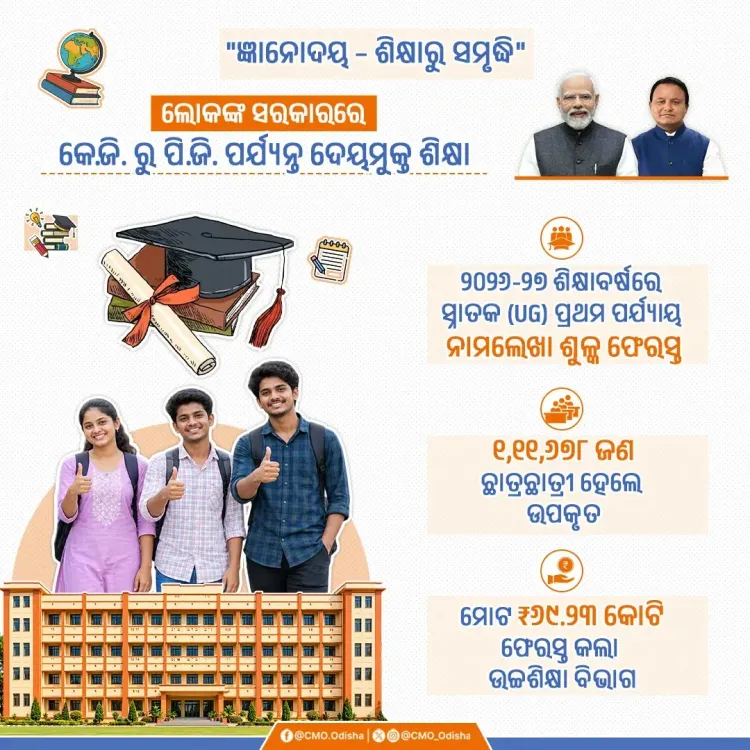
The Odisha CMO announced a ₹69.23 crore refund of undergraduate enrollment fees to 1,11,678 students for 2026-27 under the Jnanodaya – Shiksharu Samriddhi scheme, which commits to fee-free education from kindergarten through postgraduate level.
Key Takeaways
₹69.23 crore has been refunded to undergraduate students in the first enrollment phase of academic year 2026-27 .
1,11,678 students are direct beneficiaries of this disbursement round.
The refund is under the Jnanodaya – Shiksharu Samriddhi campaign, Odisha's KG-to-PG fee-free education initiative.
The announcement covers only the first phase of undergraduate admissions; further refund tranches are expected in subsequent phases.
The scheme aims to eliminate financial barriers at every level of formal education in Odisha's public institutions.
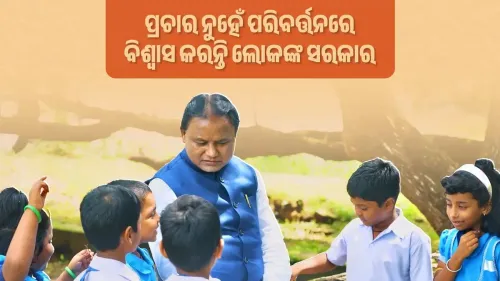
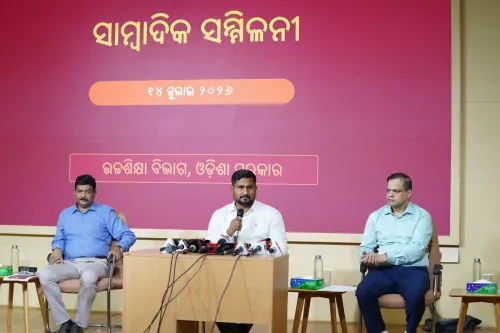
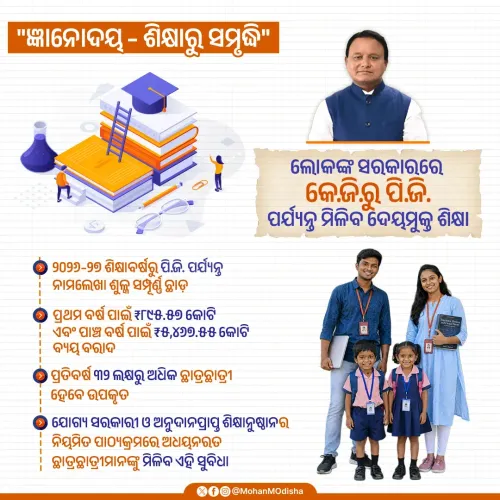
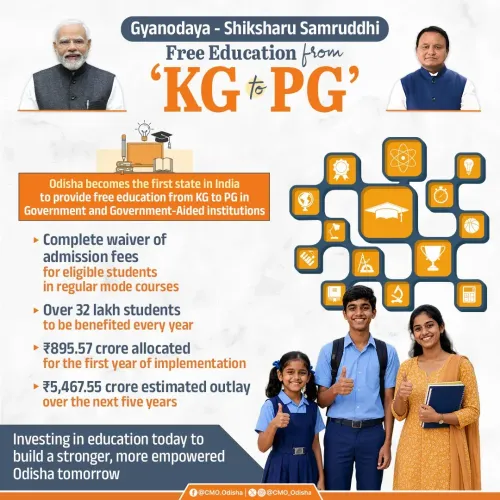
Over a lakh Odisha students just got their college admission fees back — and the state government wants that fact heard loud and clear. The Chief Minister's Office of Odisha announced on Thursday, 29 October 2026 that ₹69.23 crore has been refunded to 1,11,678 undergraduate students enrolled in the first phase of the 2026-27 academic year, under the state's flagship 'Jnanodaya – Shiksharu Samriddhi' (Knowledge Awakening — Prosperity Through Education) campaign.
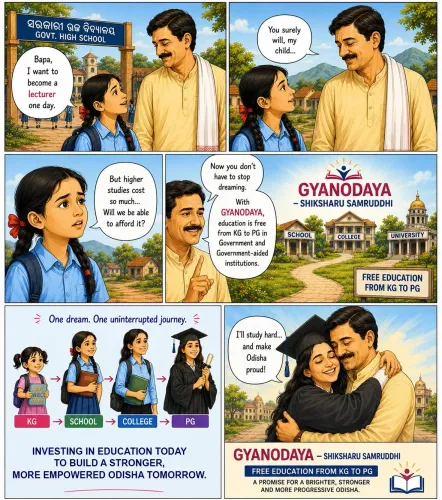
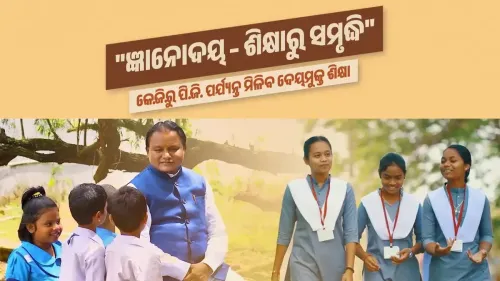
The post states directly: the government is 'committed to ensuring fee-free education from KG to PG' under the Jnanodaya scheme, and the ₹69.23 crore refund for undergraduate first-phase enrollment fees is the latest step in honouring that pledge.What the Jnanodaya scheme promises — and what it just delivered
The Jnanodaya – Shiksharu Samriddhi initiative is Odisha's comprehensive commitment to zero-fee public education across every level, from kindergarten through postgraduate study. Its logic is straightforward: financial barriers at the point of admission stop students before they ever sit in a classroom. By reimbursing enrollment fees directly, the government converts the promise of access into a concrete cash transfer that families actually feel.
The numbers here are specific and significant. A refund of ₹69.23 crore distributed across 1,11,678 students works out to roughly ₹6,200 per student on average — a sum that, for a family in a semi-urban or rural district of Odisha, can represent the difference between a child enrolling or staying home.
Odisha's place in India's expanding higher-education fee-waiver push
Odisha's move fits a recognisable pattern across Indian states — from Rajasthan's free higher-education schemes to Tamil Nadu's fee reimbursement for first-generation learners — where governments compete to lower the cost of college at the point of entry. What distinguishes the Jnanodaya framework is its stated ambition to cover the entire KG-to-PG continuum rather than cherry-picking specific levels or categories.
The 2026-27 first-phase disbursement covers undergraduate admissions — the widest funnel in higher education, where dropout risk due to financial stress is highest. Extending the same guarantee to postgraduate enrollment, as the scheme envisions, would push the state further along that arc.
What the next disbursement phases will reveal
This announcement covers only the first phase of the 2026-27 enrollment cycle. Subsequent refund tranches — for later admission rounds and eventually postgraduate registrations — will test whether the delivery infrastructure can sustain the ambition. Enrollment figures for this year, compared to previous cycles, will also serve as the clearest metric of whether fee reimbursement is actually pulling more students into higher education or simply rewarding those who would have enrolled anyway.
For now, more than a lakh families across Odisha are ₹6,200 richer — and a state government has a receipt to show for its flagship promise.
Point of View
Large-scale cash delivery rather than aspirational targets alone. Anchoring the scheme to a KG-to-PG continuum raises the institutional bar significantly: it demands a refund pipeline that scales from nursery admissions to research degrees, a logistical challenge few states have attempted comprehensively. The first-phase undergraduate refund is the easiest and most visible segment; the real test of the scheme's depth will come when postgraduate and technical education disbursements are due. If enrollment numbers for 2026-27 show a measurable uptick in first-generation college students, Odisha will have a replicable model; if they plateau, the scheme risks becoming a subsidy for families already predisposed to higher education.
NationPress
29 Oct 2026
Frequently Asked Questions
What is the Jnanodaya – Shiksharu Samriddhi scheme in Odisha?
It is an Odisha government initiative that commits to providing fee-free education from kindergarten through postgraduate level in state institutions, with enrollment fees refunded directly to eligible students.
How much money has Odisha refunded to students in 2026-27?
The Odisha government has refunded ₹69.23 crore to 1,11,678 undergraduate students in the first phase of the 2026-27 academic year under the Jnanodaya scheme.
Who is eligible for the Odisha undergraduate fee refund?
Students enrolling in undergraduate programs in the first admission phase of the 2026-27 academic year at eligible Odisha government institutions are the beneficiaries of this refund round.
Is the Odisha KG to PG free education scheme applicable to private colleges?
The Jnanodaya scheme as announced by the CMO focuses on government institutions; the post does not specify coverage of private or aided colleges.
When will the next phase of fee refunds be issued under Jnanodaya?
The CMO's announcement covers the first enrollment phase; subsequent disbursement phases for the 2026-27 cycle and postgraduate levels are expected but no specific date has been announced yet.