CM Majhi Launches Free KG-to-PG Education Scheme in Odisha
Synopsis
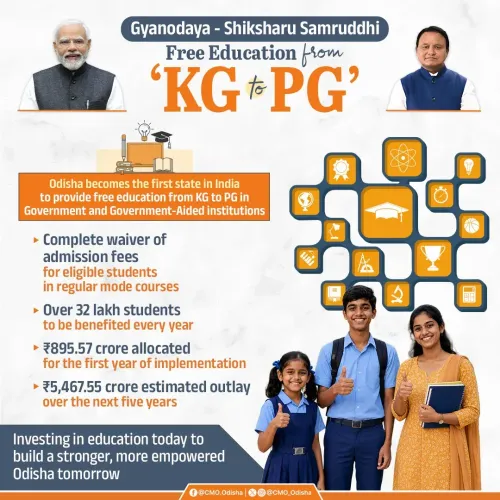
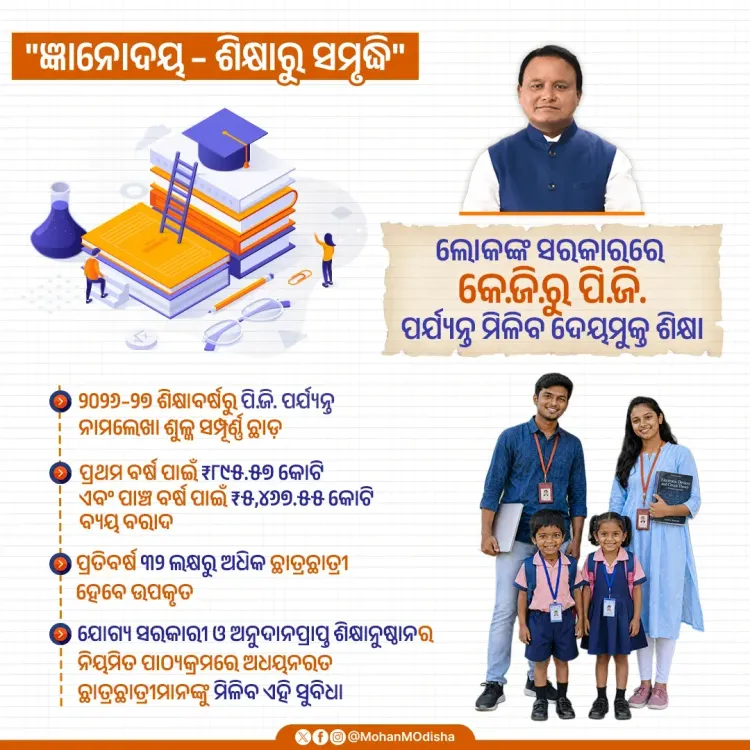
Odisha Chief Minister Mohan Charan Majhi announced the 'Jnanodaya' scheme on 2 July 2026, promising completely free education from KG to postgraduate level in government and aided institutions from the 2026–27 academic year, targeting over 32 lakh students annually.
Key Takeaways
Chief Minister Mohan Charan Majhi announced the 'Jnanodaya — Shiksharu Samruddhi' scheme on 2 July 2026 .
The scheme covers KG to postgraduate (PG) level education in eligible government and grant-aided institutions in Odisha .
All enrolment fees up to the PG level will be completely waived starting from the 2026–27 academic year .
More than 32 lakh students are projected to benefit from the fee waiver every year.
The initiative aligns with the National Education Policy 2020 's goals of universal, equitable access to public education.
Budget allocations and institutional eligibility rules are yet to be formally notified ahead of the 2026–27 session rollout.
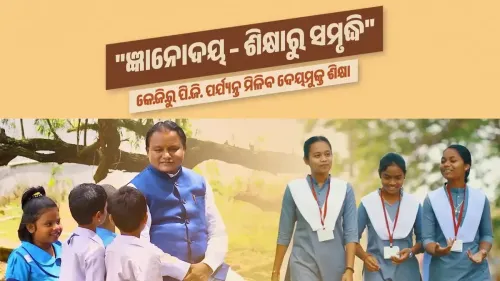
Odisha Chief Minister Mohan Charan Majhi on Thursday, 2 July 2026, announced a landmark fee-waiver initiative titled 'Jnanodaya — Shiksharu Samruddhi' ('Enlightenment — Prosperity Through Education'), committing his government to free education from kindergarten to postgraduate level across eligible government and aided institutions in the state. The scheme is set to take effect from the 2026–27 academic year, with enrolment fees waived entirely up to the PG level, benefiting more than 32 lakh students annually.
Context
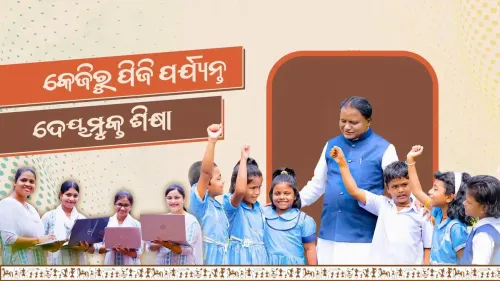
Posting in Odia, Chief Minister Majhi declared that his government has taken a 'firm step' toward ensuring fee-free education from KG to PG through the 'Jnanodaya' scheme. The post states that eligible government and grant-aided institutions will be covered, and that from the 2026–27 academic session, enrolment fees will be 'completely waived,' with more than 32 lakh students set to benefit every year. The announcement was accompanied by the hashtags #KGtoPGFreeEducation, #EducationReform, and #EmpoweringStudents.
Policy Backdrop
Odisha shifted to BJP-led governance in June 2024 after the party ended more than two decades of Biju Janata Dal rule. The Majhi government has since aligned several welfare initiatives with the National Education Policy 2020, which recommends universal access to quality education from pre-primary through higher levels, with a strong emphasis on equity and the strengthening of public institutions. Fee waivers in government and aided institutions are a recurring instrument across Indian states to raise enrolment rates and reduce out-of-pocket household expenditure on education.
The 'Jnanodaya' scheme extends coverage beyond school-level waivers — which already exist in many states — to include undergraduate and postgraduate programmes in aided colleges, a relatively broader commitment. The 2026–27 academic year deadline gives state education and finance departments a defined window to notify eligible institutions and finalise budget provisions.
Stakeholders and Impact
The primary beneficiaries are students enrolled in government and grant-aided institutions across Odisha, spanning early childhood education through postgraduate studies. Families in lower-income and rural households — who often bear disproportionate education costs even in publicly funded colleges — stand to gain most directly from the enrolment-fee waiver. The scheme also has implications for aided private institutions, which will need clarity on how fee revenue lost to the waiver will be reimbursed by the state.
Higher education faculty and institutional administrators will be watching for operational guidelines, particularly around the definition of 'eligible' aided institutions and the mechanism for state reimbursement. Student unions and civil society groups focused on education access are likely to scrutinise the rollout to ensure the waiver applies uniformly across disciplines and institution types.
What's Next
The immediate priority for the Odisha government will be translating the announcement into budgetary allocations and issuing eligibility criteria for institutions before the 2026–27 session begins. Detailed rules on which courses, institutions, and fee components are covered will determine the scheme's real-world reach. Observers will also track whether the 32 lakh projected annual beneficiary figure is substantiated once enrolment data and institutional lists are published. The scheme's success could set a benchmark for other eastern Indian states weighing similar expansions of fee-free education to the postgraduate level.
Point of View
Coming two years into Chief Minister Majhi's tenure as the party works to consolidate its 2024 mandate in a state long governed by the BJD. Extending fee waivers to aided colleges at the postgraduate level goes a step beyond what most states currently offer, and signals an attempt to anchor the government's identity around education access rather than just welfare transfers. The scheme's credibility, however, will hinge on the speed and completeness of budget notification — announcements of this scale without swift follow-through risk being read as aspirational rather than operational. If implemented fully, it could pressure neighbouring states to reconsider the ceiling on their own education fee-waiver programmes.
NationPress
1 Oct 2026
Frequently Asked Questions
What is the Jnanodaya scheme in Odisha?
'Jnanodaya — Shiksharu Samruddhi' is an Odisha government scheme announced by Chief Minister Mohan Charan Majhi that promises completely free education from kindergarten to postgraduate level in eligible government and grant-aided institutions, effective from the 2026–27 academic year.
Who will benefit from the Odisha KG to PG free education scheme?
Students enrolled in government and grant-aided institutions across Odisha from early childhood through postgraduate level are the intended beneficiaries, with the government projecting more than 32 lakh students to benefit every year.
From which academic year will the Odisha free education scheme apply?
The enrolment fee waiver under the 'Jnanodaya' scheme is set to take effect from the 2026–27 academic year, covering all levels up to postgraduate.
Does the Odisha free education scheme cover private colleges?
The scheme covers eligible government institutions and grant-aided (aided) institutions. Purely private, unaided colleges are not mentioned in the announcement; detailed eligibility criteria are expected to be notified by the state government ahead of the 2026–27 session.
How does the Jnanodaya scheme relate to the National Education Policy 2020?
The National Education Policy 2020 recommends universal access to quality education from pre-primary through higher levels with a focus on equity and public institutions. The 'Jnanodaya' scheme's KG-to-PG fee waiver directly reflects these goals at the state level.