CM Saini Demands Congress Apologise for 1984 Anti-Sikh Violence

Synopsis
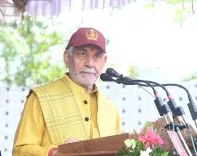
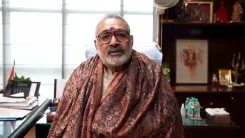
Haryana CM Nayab Singh Saini amplified BJP national president Nitin Nabin's call for Congress to publicly apologise for the 1984 anti-Sikh violence in Delhi, condemning reports of a party gathering around the 1 November anniversary as 'deeply saddening and shameful.'
Key Takeaways
Haryana Chief Minister Nayab Singh Saini shared the statement on 29 October 2026 , quoting BJP national president Nitin Nabin .
The statement demands Congress issue a public apology for the anti-Sikh violence that began in Delhi on 1 November 1984 .
BJP criticised Congress's reported plans to hold a public gathering around the 1 November anniversary as 'deeply saddening and shameful.' The 1984 riots followed the assassination of PM Indira Gandhi; official inquiries later documented failures in protection and justice.
Congress had not issued a formal response as of Thursday afternoon.
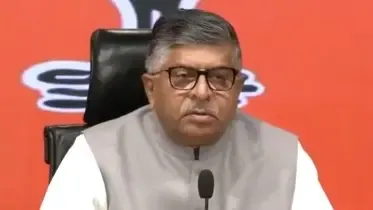
As the 42nd anniversary of the 1984 anti-Sikh riots approaches, a sharp political demand has cut through the air: the Indian National Congress must stand up and say sorry. Haryana Chief Minister Nayab Singh Saini on Thursday, 29 October 2026, shared a pointed statement on X, quoting BJP national president Nitin Nabin, calling the Congress's silence — and its reported plans for a public gathering around 1 November — not just tone-deaf, but shameful.
The quoted statement pulls no punches: '1 नवंबर 1984 को दिल्ली में हमारे सिख भाइयों के साथ जो दुखद घटना घटी' — 'the tragic events that befell our Sikh brothers in Delhi on 1 November 1984' — demand a public apology from Congress, not a celebration. 'The kind of gathering being organised is deeply saddening and a matter of shame,' Nabin's statement reads, as amplified by Saini.
What happened on 1 November 1984
The violence that erupted across Delhi beginning 1 November 1984 followed the assassination of Prime Minister Indira Gandhi the day before. Mobs targeted Sikh neighbourhoods across the capital in days of coordinated bloodshed. Official inquiries conducted over the decades that followed documented systematic failures in protection, prosecution, and justice. The episode remains one of the most contested chapters in Congress's political history, with the party's culpability a recurring flashpoint in Indian public life.
BJP's recurring apology demand and Congress's silence
BJP leaders have consistently returned to 1984 as a marker of what they describe as Congress's unwillingness to reckon with its own record on minority protection. The demand for a public apology is not new — but the timing sharpens it every year as 1 November arrives. This cycle, the charge carries extra weight: if Congress is indeed planning a public event around the same date, the BJP's framing positions that gathering as a provocation rather than commemoration.
The Sikh community — concentrated significantly in Punjab, Delhi, and Haryana, states where electoral arithmetic is always live — remains the central moral audience for this exchange. For them, accountability is not political messaging; it is unfinished grief.
Congress yet to respond to apology call
As of Thursday afternoon, Congress had issued no formal response to the apology demand or the criticism of its planned event. Whether the party addresses the charge directly, defends the gathering, or stays silent will define the next beat of this story ahead of the 1 November anniversary.
Forty-two years on, the wounds of 1984 still shape the politics of accountability in India — and neither side is letting the other forget it.
Point of View
And it signals solidarity with Sikh voters in electorally pivotal states like Punjab and Haryana. The decision to quote the party's national president rather than speak in his own voice gives Saini's amplification an institutional weight — this is party line, not personal opinion. Congress faces a familiar dilemma: any direct engagement risks reopening a wound the party would prefer remained settled, while silence reads as confirmation of the charge.
NationPress
29 Oct 2026
Frequently Asked Questions
What happened during the 1984 anti-Sikh riots in Delhi?
Large-scale violence targeting the Sikh community erupted across Delhi beginning 1 November 1984, the day after Prime Minister Indira Gandhi's assassination. Official inquiries documented failures in protection and prosecution, and the events remain one of the most contested episodes in modern Indian history.
Why is BJP demanding a Congress apology for 1984?
BJP has long held Congress responsible for failing to prevent or adequately prosecute perpetrators of the 1984 anti-Sikh violence. The party uses the anniversary to demand accountability and to contrast its own stated record on minority protection with Congress's historical role.
Who is Nitin Nabin and what did he say about 1984?
Nitin Nabin is identified in the post as BJP's national president. His statement, shared by CM Nayab Singh Saini, called on Congress to publicly apologise for the 1984 events and condemned reported plans for a public gathering around the 1 November anniversary as 'deeply saddening and shameful.'
Has Congress ever apologised for the 1984 Sikh riots?
Former Prime Minister Manmohan Singh expressed regret in Parliament in 2005, calling the events a 'national shame.' However, BJP and Sikh groups have maintained that a full formal apology from the Congress party itself has never been issued.
What is Nayab Singh Saini's role in this statement?
Nayab Singh Saini is the Chief Minister of Haryana and a senior BJP leader. He shared the statement attributed to BJP national president Nitin Nabin on X, amplifying the party's official demand for a Congress apology ahead of the 1 November anniversary.