Giriraj Singh warns of 'intellectual Naxalism' in politics
Synopsis
Union Textiles Minister Giriraj Singh on 29 October 2026 declared that 'intellectual Naxalism' is spreading within Indian politics, asserting that the country's people will ultimately deliver the cure — a combative rhetorical strike consistent with BJP's broader framing of ideological opponents.
Key Takeaways
Giriraj Singh posted on 29 October 2026 warning of dimagi Naxalvad (intellectual Naxalism) spreading in Indian politics.
He declared that 'desh ki janta' (the people of the country) will be the remedy — an appeal to popular sovereignty as political corrective.
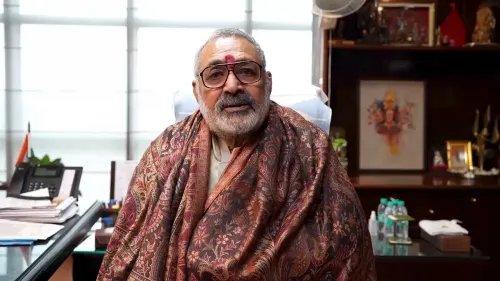
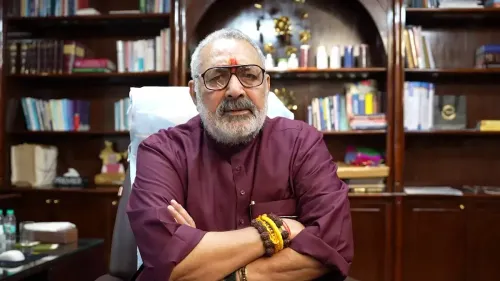
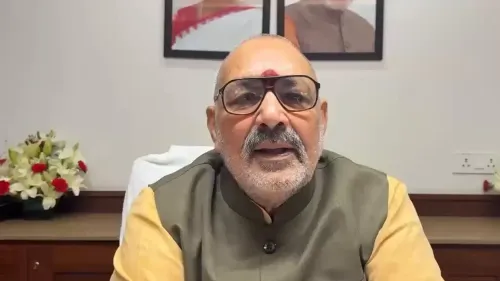
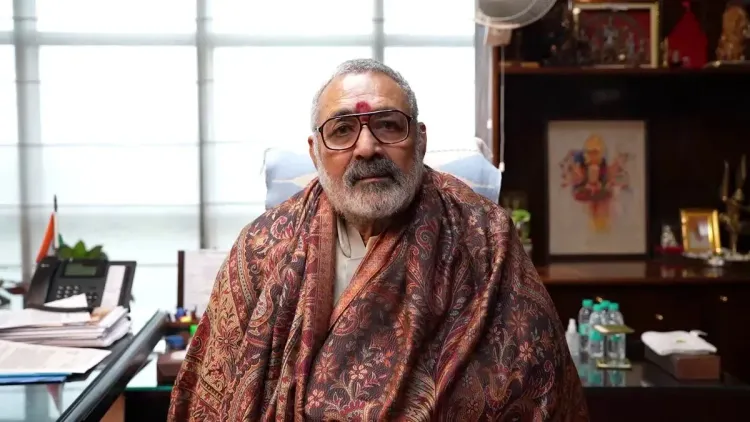
The post was accompanied by a video , amplifying its reach beyond a text-only statement.
BJP leaders have previously used 'urban Naxal' framing against critics and activists; Singh's language moves that discourse deeper into the ideological domain.
No specific individual, party, or policy event was named in the post; no formal opposition response had emerged at time of publication.
A sharp rhetorical salvo landed on Thursday when Union Textiles Minister Giriraj Singh took to X to warn that a strain of what he called 'दिमागी नक्सलवाद' — 'intellectual Naxalism' — is festering inside Indian politics, and declared that the country's public will be the one to cure it.
The charge: 'intellectual Naxalism' in the political mainstream
In his post on 29 October 2026, Singh wrote: 'राजनीति में पनप रहे दिमागी नक्सलवाद का इलाज देश की जनता करेगी!' — 'The people of the country will cure the intellectual Naxalism spreading in politics!' The statement, delivered without naming a specific target, was accompanied by a video, amplifying its reach across political circles.
The phrase fuses two charged concepts: Naxalism, India's decades-long left-wing extremist insurgency rooted in Maoist ideology, and 'dimagi' (intellectual or mental), redirecting the accusation from jungle insurgents toward ideological sympathisers operating in mainstream discourse. The implication is pointed — certain political actors are being framed not as mere opponents, but as carriers of an extremist worldview dressed in democratic clothing.
BJP's 'urban Naxal' playbook and Singh's role within it
BJP leaders have periodically deployed the 'urban Naxal' framework to describe critics, activists, and opposition figures they accuse of providing intellectual cover to left-wing extremism. Giriraj Singh, known for combative political rhetoric as a senior leader and Lok Sabha MP from Begusarai, Bihar, has consistently been among the BJP's most vocal voices on such themes. His framing on Thursday escalates that vocabulary — moving from 'urban' geography to 'dimagi' (cognitive/ideological) terrain, suggesting the threat he describes has seeped deeper into political life.
The appeal to desh ki janta — 'the people of the country' — as the ultimate corrective is a familiar populist device: casting the electorate as sovereign arbiter over a political class accused of ideological corruption. It also, implicitly, functions as electoral framing ahead of any political contest.
Opposition yet to respond; no Ministry policy attached
As of publication, no formal response had emerged from opposition parties or from intellectual circles targeted by such rhetoric in the past. The post carries no linked policy announcement or legislative action — it is a political statement of position, delivered from one of the BJP's most prominent pulpits. Whether it triggers a broader debate on the boundaries of political dissent, or remains one data point in an ongoing rhetorical pattern, will depend on how opponents choose to engage.
In Indian politics, the power of a phrase often outlasts the news cycle that births it. 'Intellectual Naxalism' may be Singh's bid to make one stick.
Point of View
Which is harder to contest or disprove. By vesting the 'cure' in the electorate rather than the state, the statement doubles as a mobilisation signal to the BJP's base while keeping the party insulated from charges of suppressing dissent. The absence of a named target is strategic: the vagueness maximises the scope of the indictment. Analysts will watch whether this framing gets amplified across the broader BJP ecosystem ahead of any upcoming electoral cycle.
NationPress
29 Oct 2026
Frequently Asked Questions
What did Giriraj Singh mean by 'intellectual Naxalism' in politics?
Giriraj Singh used the phrase dimagi Naxalvad to describe what he characterised as an ideological form of Naxalism — rooted not in armed insurgency but in the spread of left-wing extremist thinking within mainstream political discourse. He did not name specific individuals or parties.
What is the 'urban Naxal' debate in India?
The 'urban Naxal' term refers to a political argument, often made by BJP leaders, that certain activists, academics, and opposition figures provide intellectual legitimacy to Maoist or Naxalite extremism. It has been a contested label, with critics calling it a tool to silence dissent.
Who is Giriraj Singh and which constituency does he represent?
Giriraj Singh is a senior BJP leader, Union Minister of Textiles, and Lok Sabha Member of Parliament from Begusarai, Bihar . He is known for sharp political statements on ideological and national security themes.
Did Giriraj Singh name any party or person in his 'intellectual Naxalism' post?
No. The post on 29 October 2026 made no reference to a specific individual, party, or event. The language was broadly framed, targeting an unnamed ideological tendency within politics.
How has the opposition responded to Giriraj Singh's 'dimagi Naxalvad' remark?
As of publication, no formal response had emerged from opposition parties or targeted intellectual circles. The political conversation around the statement was still developing.