DGMA and MRC advance Marine Spatial Planning for sustainable maritime development
Synopsis
India's DGMA and the Marine Research Centre have taken a concrete step toward science-backed maritime governance, presenting an MSP platform covering predictive modelling, noise management, and Indian Ocean spatial planning — framing it not just as environmental policy but as a response to mounting geopolitical pressures in the IOR.
Key Takeaways
DGMA and MRC met on 29 October 2026 to review progress under their existing Memorandum of Understanding .
The MRC presented its Marine Spatial Planning (MSP) platform, with applications in predictive modelling and marine environmental assessment.
Key cooperation areas include Underwater Radiated Noise (URN) Management , Biofouling Management , Sediment Management , and MSP .
The session was chaired by Shyam Jagannathan , Director General of Maritime Administration.
The MRC highlighted the Indian Ocean Region as a critical zone of geopolitical and geo-strategic activity requiring coordinated spatial governance.
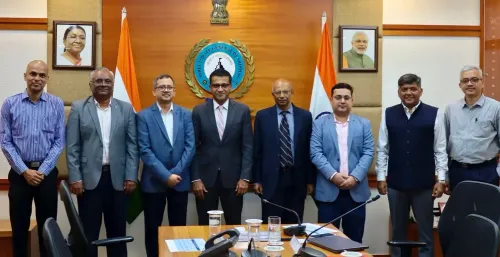
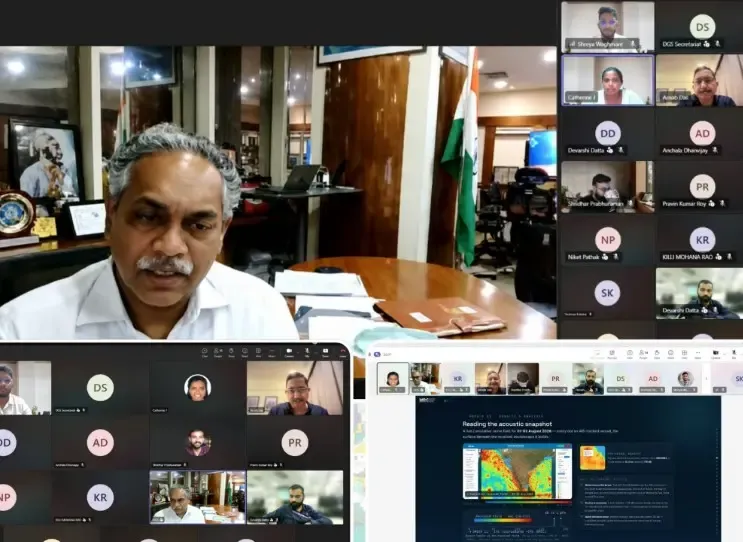
The Marine Research Centre (MRC) presented its Marine Spatial Planning (MSP) platform to the Directorate General of Maritime Administration (DGMA) during an online meeting on 29 October 2026, marking a significant step in advancing technology-driven, sustainable maritime governance in India. The session reviewed progress under the existing Memorandum of Understanding (MoU) between the two bodies and charted the path ahead for collaborative initiatives.
Key Areas of Cooperation
The meeting was chaired by Shyam Jagannathan, Director General of Maritime Administration. Discussions spanned four critical domains: Underwater Radiated Noise (URN) Management, Biofouling Management, Sediment Management, and Marine Spatial Planning. Additionally, proposals were tabled for maritime capacity building, stakeholder outreach, and coastal community engagement.
URN management focuses on reducing sound energy emitted by ships and offshore activities to safeguard marine ecosystems, navigation systems, and communication channels relied upon by marine life. Notably, several ports globally already offer berthing discounts to quieter vessels as an incentive — a practice gaining traction as nations adopt stricter noise-reduction standards.
What the MSP Platform Offers
The MRC's MSP platform is designed for predictive modelling, marine environmental assessment, and the systematic planning of maritime activities. According to the MRC, Marine Spatial Planning is a 'comprehensive, science-based approach to managing marine and freshwater resources,' integrating ecological, economic, and social considerations to optimise the sustainable use of ocean spaces.
'By systematically allocating marine areas for various uses, MSP enhances maritime security, supports environmental conservation, and facilitates economic activities. It plays a crucial role in addressing geopolitical and sustainability challenges, particularly in regions like the Indian Ocean,' the MRC stated.
Strategic Significance of the Indian Ocean Region
The MRC has underscored the growing strategic salience of the Indian Ocean Region (IOR), which has emerged as a key arena for geopolitical and geo-strategic competition in the 21st century. Nations from within and beyond the region are increasingly deploying strategic assets in the IOR, making coordinated spatial governance all the more urgent.
'By mapping resources accurately, addressing security and sustainability concerns, and deploying policy and technology interventions, MSP enables efficient exploitation of these vast systems,' the MRC noted. This framing situates the DGMA-MRC collaboration within a broader geopolitical context that extends well beyond routine maritime administration.
DGMA's Commitment and the Way Forward
The DGMA stated that the engagement reflects its 'continued commitment towards promoting technology-driven solutions, strengthening marine environmental management and fostering collaborative initiatives for sustainable maritime development.' Opportunities to leverage technical expertise, innovative technologies, and synergies with ongoing maritime sustainability and coastal management programmes were also explored during the session.
As the Indian Ocean's strategic and economic importance continues to grow, the DGMA-MRC partnership could serve as a template for science-policy integration in India's maritime governance framework.
Point of View
Cleaner vessels, a policy shift that has commercial and environmental consequences. More significantly, the MRC's framing of MSP as a response to IOR geopolitical pressures suggests that India is attempting to convert scientific mapping capability into strategic leverage. Whether the institutional bandwidth exists to translate these ambitions into binding spatial governance — rather than advisory platforms — remains the central question mainstream coverage tends to overlook.
NationPress
29 Oct 2026
Frequently Asked Questions
What is Marine Spatial Planning and why does it matter for India?
Marine Spatial Planning is a science-based approach to managing ocean and freshwater spaces by integrating ecological, economic, and social considerations. For India, it is particularly relevant given the Indian Ocean Region 's growing geopolitical significance and the need to balance maritime security, environmental conservation, and economic activity.
What is the MoU between DGMA and MRC about?
The MoU between the Directorate General of Maritime Administration (DGMA) and the Marine Research Centre (MRC) formalises collaborative initiatives in sustainable maritime development, covering areas such as Marine Spatial Planning, Underwater Radiated Noise Management, Biofouling Management, and Sediment Management.
What is Underwater Radiated Noise management?
Underwater Radiated Noise (URN) management involves reducing sound energy emitted by ships and offshore operations to protect marine ecosystems and communication systems used by marine life. Some ports globally already offer discounts to quieter vessels, and countries are increasingly adopting noise-reduction standards.
Who chaired the DGMA-MRC meeting on 29 October 2026?
The meeting was chaired by Shyam Jagannathan , Director General of Maritime Administration, who oversaw the review of MoU progress and discussions on the way forward for collaborative maritime sustainability initiatives.
How does the MSP platform connect to Indian Ocean geopolitics?
The MRC has highlighted that the Indian Ocean Region has become a key arena for geopolitical and geo-strategic activity, with nations from within and outside the region deploying strategic assets there. MSP is seen as a tool to govern and manage both challenges and opportunities in this strategically critical ocean space.