Shekhawat livestreams International Tourism Mart 2026 from Tawang
Synopsis
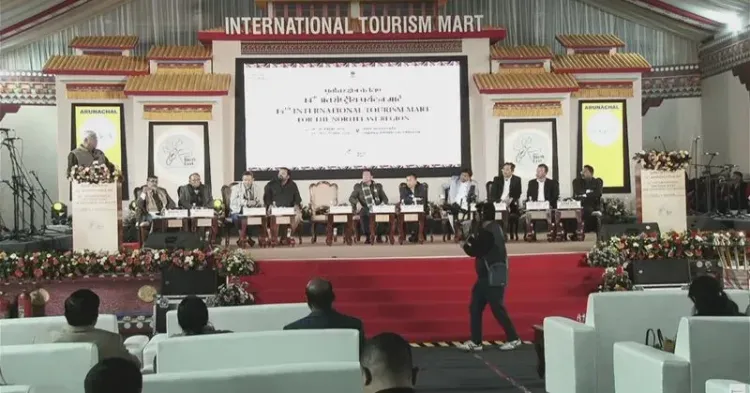
Union Tourism Minister Gajendra Singh Shekhawat livestreamed the International Tourism Mart 2026 from Tawang, Arunachal Pradesh, spotlighting the border town's Buddhist heritage and signalling the Centre's push to put the Northeast on the global tourism map.
Key Takeaways
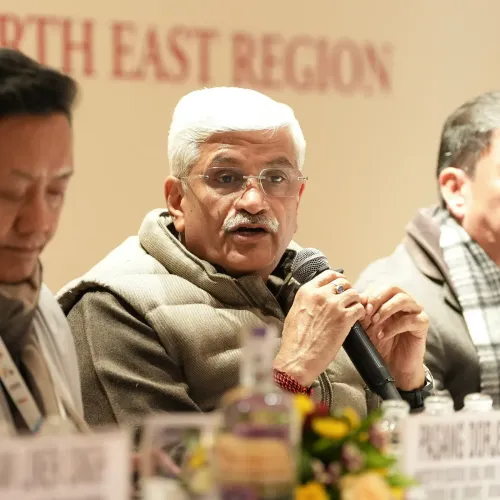
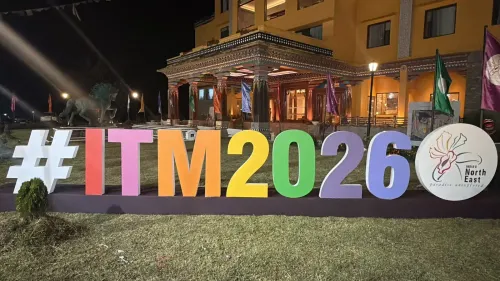
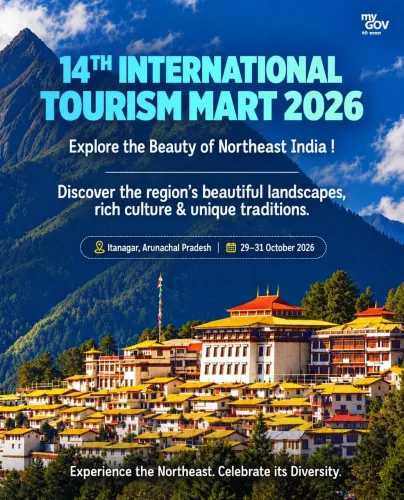
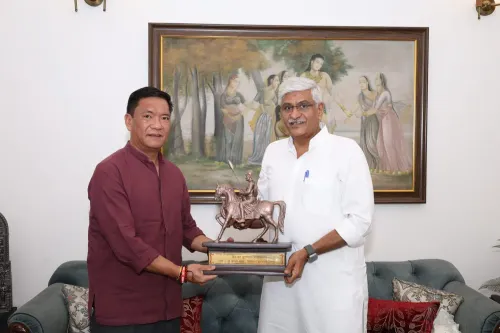
Union Culture and Tourism Minister Gajendra Singh Shekhawat broadcast the International Tourism Mart 2026 live from Tawang, Arunachal Pradesh on 29 October 2026 .
Tawang is home to one of the world's largest Buddhist monasteries and lies near the India-China border , making the venue choice strategically significant.
The International Tourism Mart is the Ministry of Tourism's annual platform connecting international buyers and travel media with Indian regional destinations.
The event aligns with the Centre's Act East Policy and schemes like Swadesh Darshan and PRASAD that have invested in northeastern tourism infrastructure.
Shekhawat livestreamed the mart on X, broadening access beyond the traditional trade-only audience.
From the shadow of the Tawang Monastery, one of the world's largest Buddhist monasteries and a site that sits just kilometres from the India-China border, Union Culture and Tourism Minister Gajendra Singh Shekhawat on Thursday, 29 October 2026 went live with the International Tourism Mart 2026 — bringing global attention to a corner of India that rarely gets it.
Why Tawang, and why now
Tawang, a high-altitude town in Arunachal Pradesh, is no ordinary venue choice. The town's monastery — founded in the 17th century — draws Buddhist pilgrims and adventure tourists alike, yet remains underserved by international tourism infrastructure. Positioning the Ministry of Tourism's flagship international outreach event here is a deliberate signal: the Northeast is open for global business, and its most strategically sensitive frontier is being reframed as a cultural and tourism asset.
International Tourism Mart's track record in the Northeast
The International Tourism Mart (ITM) is the Ministry of Tourism's annual platform that brings together international buyers, travel media, and Indian destination representatives. The format has rotated across northeastern states since at least the mid-2010s, acting as a live showcase for states whose tourism potential has historically been eclipsed by more established circuits. Past editions have served as catalysts for state-level announcements and buyer-seller agreements in the regional hospitality sector.
The 2026 edition in Tawang continues that pattern — but with heightened strategic weight. Arunachal Pradesh's proximity to China means every major development in the state carries geopolitical undertones, and a high-profile international tourism event here reinforces India's administrative and developmental presence in the region.
Act East, Swadesh Darshan, and the policy spine behind the event
The choice of Tawang slots neatly into at least three overlapping policy frameworks. The Centre's Act East Policy has long sought to position India's northeastern frontier as a bridge to Southeast Asia. Central schemes like Swadesh Darshan and PRASAD have funnelled infrastructure investment into connectivity and pilgrimage sites across the region. An international mart in Tawang is, in effect, the demand-generation layer on top of that supply-side investment — an attempt to convert roads and renovated sites into actual tourist arrivals and economic activity for local communities.
What the live stream signals
Minister Shekhawat's decision to broadcast the mart live on X reflects the Ministry's push to democratise access to what has historically been a trade-facing event. Stakeholders from the hospitality and travel industry, local homestay operators, and international buyers can now observe proceedings in real time — a small but meaningful shift in transparency for a sector where deals have traditionally been made in closed-door sessions.
Tourist arrival data for Tawang and Arunachal Pradesh in 2027 will be the real scorecard — measuring whether the spotlight of ITM 2026 translates into bookings, investment, and livelihoods for the communities living at India's northeastern edge.
Point of View
While also delivering on the Act East Policy's promise to integrate the Northeast into global travel circuits. For the BJP government, the optics are layered: cultural soft power, border-area development, and international economic outreach converge in a single event. The real test, however, will come in 2027's arrival figures — whether ministerial attention converts into actual infrastructure investment and tourist footfall for Tawang's local communities.
NationPress
29 Oct 2026
Frequently Asked Questions
What is the International Tourism Mart 2026?
The International Tourism Mart 2026 is the Ministry of Tourism's annual event that connects international travel buyers, media, and Indian regional tourism stakeholders; the 2026 edition is being held in Tawang, Arunachal Pradesh.
Why is the International Tourism Mart being held in Tawang?
Tawang was chosen to spotlight Arunachal Pradesh's Buddhist heritage and adventure tourism potential, while also reinforcing India's developmental presence in the strategically sensitive border region near China.
What is the Tawang Monastery?
The Tawang Monastery is a 17th-century Tibetan Buddhist monastery in Arunachal Pradesh — one of the largest of its kind in the world — and a major draw for pilgrims and cultural tourists.
What is India's Swadesh Darshan scheme?
Swadesh Darshan is a central government scheme that funds the development of thematic tourism circuits across India, including in the northeastern states, to improve infrastructure and visitor experience.
How does the Act East Policy relate to tourism in Arunachal Pradesh?
India's Act East Policy aims to strengthen economic and cultural ties with Southeast Asia; tourism development in Arunachal Pradesh, including events like the International Tourism Mart, supports this by positioning the Northeast as an accessible and attractive international destination.