CM Saini fixes sugarcane price at ₹430, ₹450 per quintal for Haryana farmers

Synopsis
Haryana CM Nayab Singh Saini has fixed the sugarcane State Advised Price at ₹430 per quintal for 2026–27 and ₹450 per quintal for 2027–28, offering cane-belt farmers a rare two-season price certainty aimed at cushioning rising input costs.
Key Takeaways
Haryana CM Nayab Singh Saini announced sugarcane SAP of ₹430 per quintal for the 2026–27 season.
The price rises to ₹450 per quintal for the 2027–28 season — a ₹20 step-up built in upfront.
The announcement covers a two-season forward window, giving farmers in Karnal , Kurukshetra , and Yamunanagar planting-time certainty.
Haryana's SAP operates above the central government's Fair and Remunerative Price (FRP) under the Sugarcane Control Order, 1966 .
Multi-season SAP assurances mirror similar moves by Uttar Pradesh and other major cane-growing states.
Farmer unions will monitor whether sugar mills adhere to the announced rates without payment delays during the upcoming crushing season.
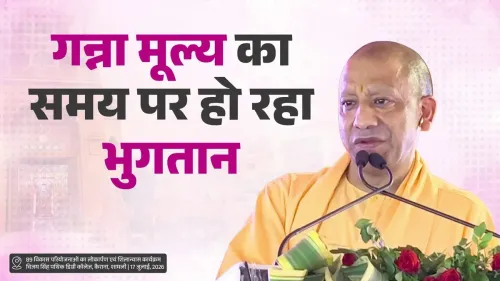
Two years of price certainty — that is what Haryana Chief Minister Nayab Singh Saini handed to the state's sugarcane farmers on Thursday, 29 October 2026, announcing a two-season price schedule that locks in ₹430 per quintal for 2026–27 and ₹450 per quintal for 2027–28.
What ₹430 and ₹450 per quintal actually mean for Haryana's cane belt
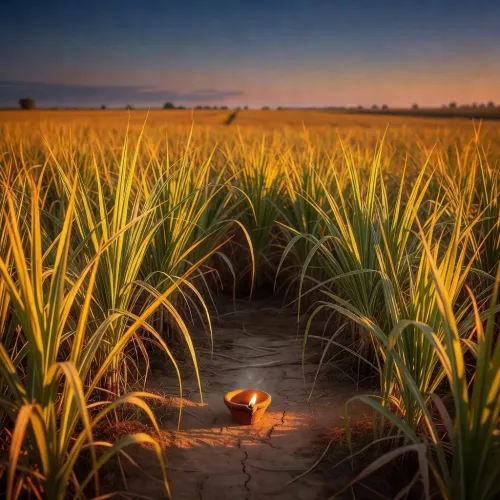
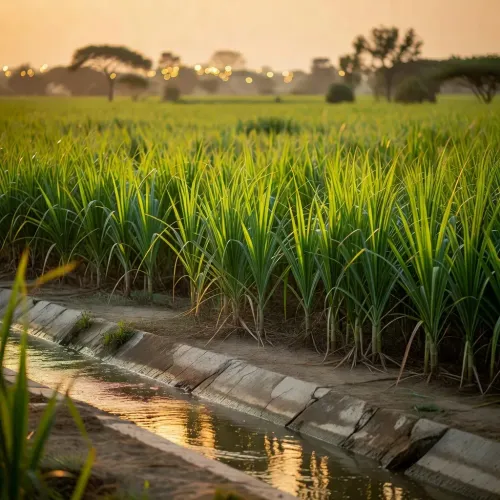
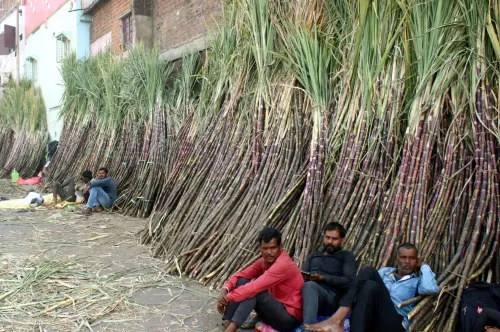
Saini posted in both Hindi and English: 'अन्नदाताओं की खुशहाली के संकल्प के साथ' ('with a commitment to farmers' prosperity'), framing the announcement as a deliberate, forward-looking promise rather than a reactive patch. The pricing applies under Haryana's State Advised Price (SAP) mechanism — the state-level rate that routinely runs above the central government's Fair and Remunerative Price (FRP) fixed under the Sugarcane (Control) Order, 1966. In Haryana, sugarcane is concentrated in districts like Karnal, Kurukshetra, and Yamunanagar, where the crop anchors rural incomes across thousands of smallholder households.
The ₹20-per-quintal step-up from 2026–27 to 2027–28 is designed to absorb anticipated rises in input costs — fertiliser, labour, irrigation — without forcing farmers to renegotiate every season. That graduated structure is notable: it signals an institutional confidence that the mills and state treasury can sustain the commitment across a full two-year arc.
Multi-season pricing: a pattern spreading across cane-growing states
Haryana is not the first to reach for this playbook. Neighbouring Uttar Pradesh — India's largest sugarcane producer — has periodically issued multi-season SAP assurances, and several other cane-growing states have followed suit as farmer unions pressed for longer-horizon visibility. The logic is straightforward: cane is a long-gestation crop, planted and ratoon-harvested over 12–18 months, so a single-year price announcement often lands after a farmer has already committed land and capital. Two-year forward pricing shifts that calculus.
CM Saini, who took office in March 2024 succeeding Manohar Lal Khattar, has consistently positioned agricultural welfare at the centre of the BJP government's Haryana agenda. This announcement extends that posture into the medium term.
The mills question: whether the SAP sticks in practice
The announcement sets the rate; the crushing season will test whether Haryana's sugar mills pay it on time. Across India's cane belt, the gap between a state's declared SAP and actual mill payments to farmers has historically been a friction point — with arrears sometimes running into hundreds of crores. Farmer unions in Haryana will be watching the 2026–27 crushing season closely to see whether the ₹430 floor holds not just on paper but at the weighbridge.
For now, the two-season guarantee gives Haryana's annadata — a term Saini used deliberately, meaning 'giver of food' — something rare in Indian agricultural policy: a reason to plan ahead.
Point of View
Saini is borrowing a page from the Uttar Pradesh agricultural-pricing playbook — and signalling that Haryana's BJP government sees farmer income security as a sustained electoral and governance priority, not a seasonal fix. The ₹430–₹450 ladder also pre-empts the annual confrontation between farmer unions and the state over price revision, reducing a predictable political flash-point. The real test, however, lies downstream: India's cane belt has a long history of mills accepting SAP obligations on paper and then delaying disbursement, meaning the announcement's value will ultimately be judged by payment timelines, not the headline numbers. If arrears accumulate despite the two-year guarantee, the political dividend Saini is seeking could quickly reverse.
NationPress
29 Oct 2026
Frequently Asked Questions
What is the new sugarcane price in Haryana for 2026-27?
Haryana has set the sugarcane State Advised Price at ₹430 per quintal for the 2026–27 season, as announced by Chief Minister Nayab Singh Saini.
What is the sugarcane price in Haryana for 2027-28?
For the 2027–28 season, Haryana's sugarcane SAP has been fixed at ₹450 per quintal — a ₹20 increase over the previous season's rate.
What is the difference between SAP and FRP for sugarcane?
The Fair and Remunerative Price (FRP) is set by the central government under the Sugarcane (Control) Order, 1966, as a minimum floor. The State Advised Price (SAP) is announced by state governments and is typically higher than the FRP, giving farmers a better rate.
Which districts in Haryana grow sugarcane?
Sugarcane in Haryana is grown primarily in Karnal , Kurukshetra , and Yamunanagar districts, which form the heart of the state's cane belt.
Who is Nayab Singh Saini and when did he become Haryana CM?
Nayab Singh Saini is the Chief Minister of Haryana and a BJP leader who assumed office in March 2024 , succeeding Manohar Lal Khattar.