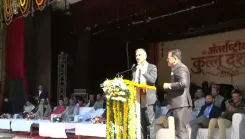
CM Pema Khandu arrives in Tawang for Tourism Mart and Buddha Relics Expo
Synopsis
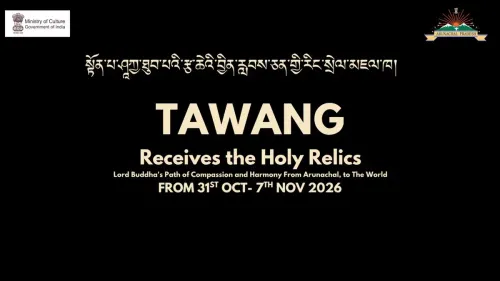
Arunachal Pradesh CM Pema Khandu has arrived in Tawang on October 28 to attend the International Tourism Mart and the Exposition of the Holy Buddha Relics, spotlighting the border state's Buddhist heritage and tourism potential.
Key Takeaways
CM Pema Khandu arrived in Tawang on October 28, 2026 for two marquee events.
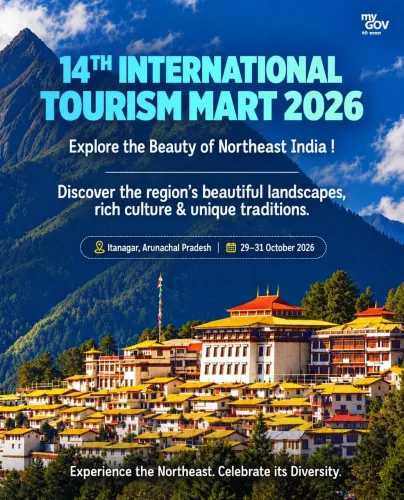
The International Tourism Mart aims to attract investors and tour operators to Arunachal Pradesh .
The Exposition of the Holy Buddha Relics runs alongside the mart, leveraging Tawang's spiritual significance.
The Swadesh Darshan scheme (launched 2014–15 ) had identified Buddhist circuit development in Arunachal Pradesh as a national tourism priority.
Tawang's location near the India-China border ties such tourism initiatives to India's broader Act East Policy .
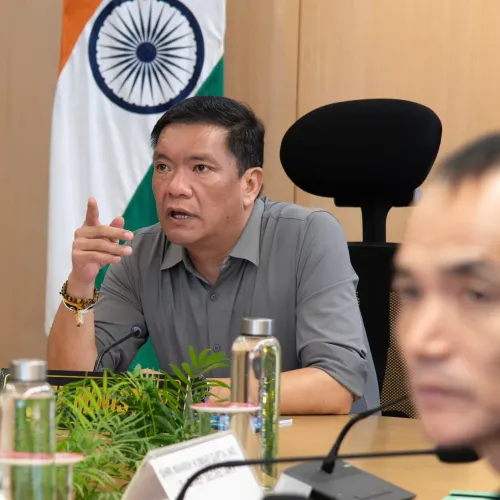
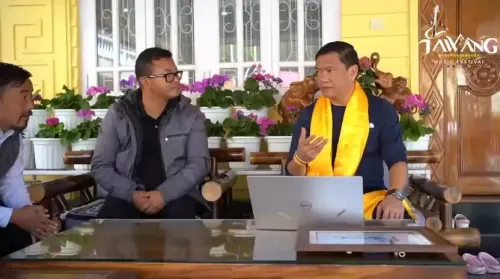
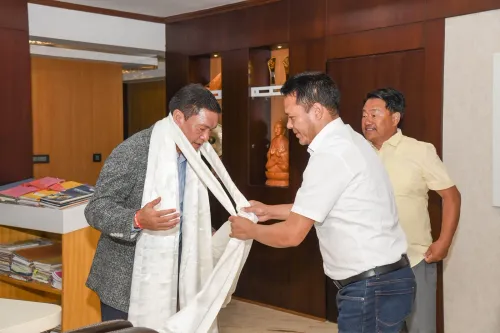
Arunachal Pradesh Chief Minister Pema Khandu is back in Tawang — the high-altitude Himalayan town that holds both a monastery and a frontier — arriving on Wednesday, October 28 to attend two back-to-back events that place Buddhist heritage and border-state tourism squarely in the national spotlight.
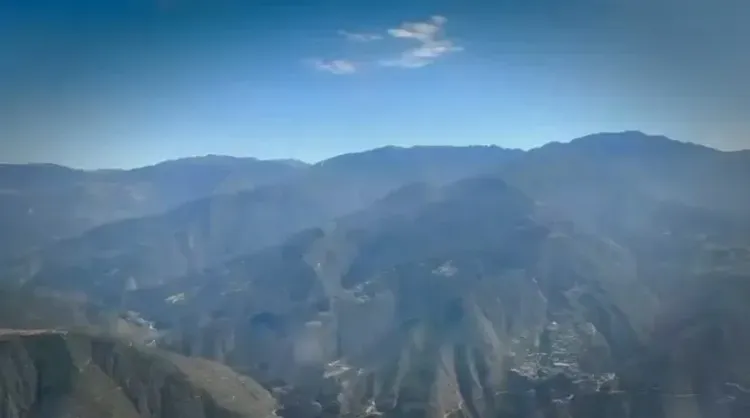
Sharing his arrival on X, Khandu called Tawang 'our very own paradise nestled amidst the majestic Himalayas' and said he was 'looking forward to attending the International Tourism Mart and the Exposition of the Holy Buddha Relics over the next couple of days.'
Two events, one strategic Himalayan town
The International Tourism Mart and the Exposition of the Holy Buddha Relics are running in tandem — a pairing that is anything but accidental. Tawang's famed monastery, one of the largest Buddhist monasteries outside Tibet, draws pilgrims and scholars from across Asia, making the town a natural anchor for religious-tourism programming. The simultaneous mart creates a commercial framework around that spiritual pull: a space for tour operators, state tourism bodies, and hospitality investors to explore routes and deals in one of India's most dramatic landscapes.
Arunachal Pradesh has long pitched itself as an undiscovered jewel of the Northeast, and events like these are part of a deliberate strategy to convert that pitch into arrivals and revenue. The Swadesh Darshan scheme, launched in 2014–15, identified Buddhist circuit development — including sites across Arunachal Pradesh — as a priority for religious tourism infrastructure, laying early groundwork for exactly this kind of convergence.
Tawang's place in India's Act East calculus
There is a larger strategic logic at work here. Tawang sits at the edge of a disputed frontier, and India's Act East Policy has consistently framed connectivity and economic development in Northeast border states as both a growth imperative and a soft-power signal. Tourism is one of the most visible and civilian-facing expressions of that policy — it places people, infrastructure, and investment in regions that matter geopolitically.
For Khandu, whose own constituency is rooted in Arunachal's Buddhist heartland, the visit carries personal resonance as much as political weight. A Chief Minister returning to his state's most iconic district — not for a security briefing, but to welcome tourists and venerate relics — is itself a statement about normalcy, confidence, and aspiration in a region that often makes headlines for other reasons.
The outcomes of the Tourism Mart — new routes announced, investments pledged, pilgrim inflows projected — will be the real measure of whether this gathering translates ambition into momentum.
Point of View
Such events serve a dual purpose: advancing the Act East Policy's connectivity and growth agenda while cementing Khandu's identity as a leader rooted in his state's culture. The deeper question is whether the infrastructure — roads, accommodation, digital connectivity — can scale fast enough to absorb the pilgrim and tourist inflows these events are designed to generate. If the Tourism Mart yields concrete investment commitments, it could mark a shift from aspiration to execution for Northeast India's religious-tourism corridor.
NationPress
28 Oct 2026
Frequently Asked Questions
What is the International Tourism Mart in Tawang?
The International Tourism Mart in Tawang is an event that brings together tourism stakeholders, operators, and investors to explore travel routes and development opportunities in Arunachal Pradesh , with the town's Himalayan and Buddhist heritage as a centrepiece.
Why is Tawang important for Buddhist tourism in India?
Tawang is home to one of the largest Buddhist monasteries outside Tibet and holds deep religious significance for Tibetan Buddhism. It is part of the Buddhist circuit identified under the Swadesh Darshan scheme for tourism infrastructure development.
What is the Exposition of the Holy Buddha Relics?
The Exposition of the Holy Buddha Relics is a religious event in Tawang where sacred Buddhist relics are displayed for veneration, drawing pilgrims from across the region and contributing to religious tourism in Arunachal Pradesh .
What is India's Act East Policy and how does Tawang fit in?
India's Act East Policy focuses on enhancing connectivity, trade, and cultural ties with Southeast Asia through the Northeast. Tawang's development as a tourism destination supports this policy by boosting economic activity in a strategically important border region.
What is the Swadesh Darshan scheme and its link to Arunachal Pradesh?
The Swadesh Darshan scheme , launched in 2014–15 , was designed to develop thematic tourism circuits across India, including a Buddhist circuit covering sites in Arunachal Pradesh , to promote religious tourism and boost local economies.