Stalin Petitions President Over 97 Lakh Missing Voters
Synopsis
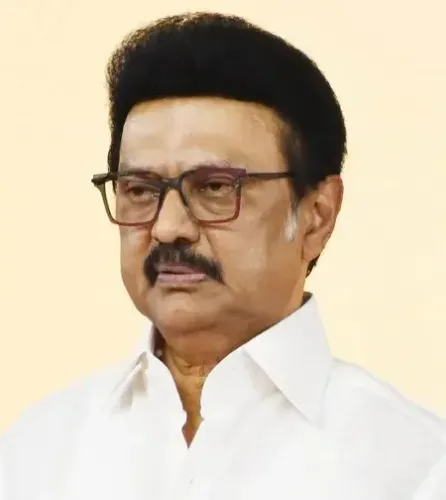
DMK president M. K. Stalin has petitioned the President of India demanding the removal of Election Commissioner Gyanesh Kumar, cancellation of the SIR exercise, and a return to paper ballots, citing allegations that 97 lakh voters were illegally dropped from electoral rolls.
Key Takeaways
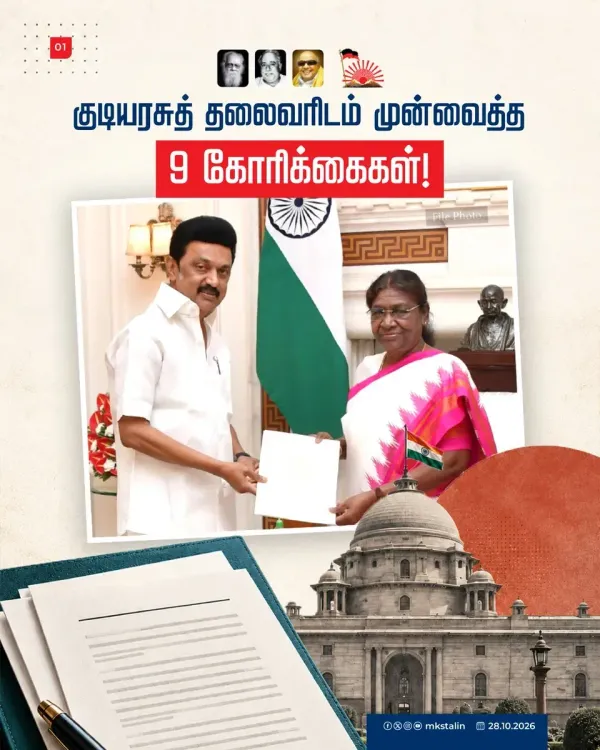
Stalin sent a formal petition to the President of India on 28 October 2026 raising electoral integrity concerns.
The petition demands the removal of Election Commissioner Gyanesh Kumar from office.
Stalin calls for cancellation of the Special Intensive Revision (SIR) voter-verification exercise.
A return to paper-ballot voting , dropping EVMs, is among the stated demands.
Stalin's post alleges 97 lakh (9.7 million) voters have been removed from electoral rolls — a figure NationPress cannot independently verify.
The DMK frames the right to vote as a constitutional right , not a privilege, anchoring the petition in legal rather than purely political language.
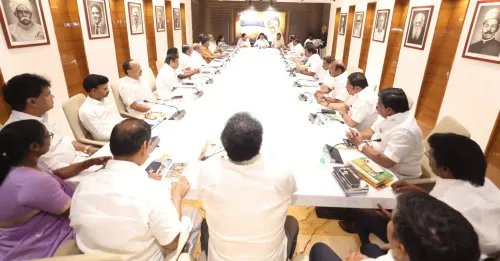
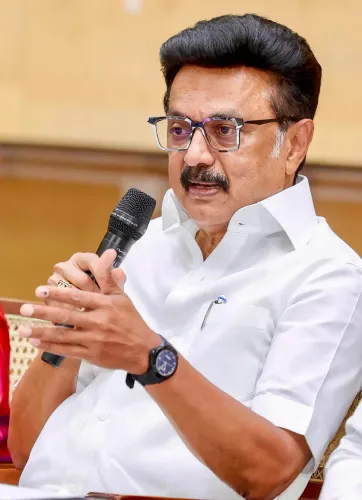
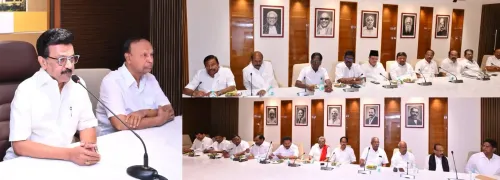
Ninety-seven lakh voters allegedly missing from electoral rolls. A formal demand to remove the Election Commission chief. A call to scrap a voter-verification exercise and restore paper ballots. DMK president M. K. Stalin fired all three at once on Wednesday, 28 October 2026, writing directly to the President of India in what he framed as a constitutional emergency — not a partisan complaint.
The three demands Stalin placed before Rashtrapati Bhavan
Stalin's petition carries three specific asks: the removal of Election Commissioner Gyanesh Kumar from office, the cancellation of the Special Intensive Revision (SIR) exercise, and a return to paper-ballot voting. Each demand maps to a distinct anxiety — about personnel, process, and technology — that opposition parties have raised with escalating urgency over successive election cycles.
The Tamil leader put his questions in stark terms: 'வாக்கு உரிமை என்பது சலுகையல்ல; அரசியலமைப்புச் சட்டம் வழங்கியுள்ள உரிமை!' — 'The right to vote is not a privilege; it is a right granted by the Constitution!' The framing is deliberate: by grounding the petition in constitutional language, Stalin is signalling that this is a legal claim, not merely a political grievance.
The SIR controversy and the voter-deletion charge
At the heart of the petition is the Special Intensive Revision, an Election Commission exercise to verify and update voter lists. Stalin's post claims 97 lakh voters — roughly 9.7 million people — have been dropped from electoral rolls, and poses the pointed question of whether those deletions changed election outcomes. NationPress cannot independently verify the 97-lakh figure from available data, but the allegation mirrors a pattern of complaints DMK and other opposition parties have raised since the 2019 general elections, when discrepancies in Tamil Nadu's voter lists first drew sustained scrutiny.
The DMK has historically argued that SIR-style exercises create conditions for selective deletions, disproportionately affecting marginalised communities who lack documentation. That critique now has a national echo: multiple opposition parties across states have written to the Election Commission on similar grounds, making the Tamil Nadu complaint part of a wider, coordinated pressure campaign.
Why Gyanesh Kumar is in the crosshairs
Gyanesh Kumar has faced sustained criticism from opposition benches since assuming the role of Election Commissioner. Stalin's demand for his removal sharpens a debate over how Election Commissioners are appointed — a question the Supreme Court has also engaged with in rulings that sought to insulate the appointment process from executive influence. Calling for the removal of an Election Commissioner is constitutionally significant: it signals that the opposition views the institution itself as compromised, not just its policies.
The ballot-paper demand and the EVM debate
The demand to restore paper ballots is the oldest of the three, and arguably the most symbolic. Opposition parties have questioned the auditability of Electronic Voting Machines (EVMs) through multiple election cycles, and the call for a return to paper is now a staple of pre-election positioning. The Election Commission has consistently defended EVM integrity, but the absence of a voter-verifiable paper trail that a voter can directly inspect remains a live grievance.
By bundling all three demands into a single presidential petition, Stalin is escalating the issue above the Election Commission — addressing the constitutional head directly and inviting a response that the ECI alone cannot provide. The move puts the spotlight squarely on Rashtrapati Bhavan: whether the President acknowledges, forwards, or sits on the petition will itself become a political signal.
A democracy's credibility is only as strong as its voters' confidence in the count. When nearly ten million names are alleged to have vanished from the rolls, that confidence is on trial — and the petition has ensured the entire country is watching the verdict.
Point of View
He is signalling that the opposition considers the ECI itself a compromised interlocutor, not a neutral referee. The bundling of personnel (Gyanesh Kumar), process (SIR), and technology (EVMs) into a single constitutional petition reflects a strategy to broaden the attack surface ahead of what is expected to be a high-stakes electoral cycle. Historically, such petitions rarely produce immediate institutional change, but they serve a dual purpose — building a public record of dissent and keeping electoral credibility as a live issue in national discourse. The 97-lakh figure, if it gains traction, could become a rallying number for the wider opposition coalition.
NationPress
28 Oct 2026
Frequently Asked Questions
What did M. K. Stalin petition the President of India about?
Stalin petitioned the President on 28 October 2026 with three demands: the removal of Election Commissioner Gyanesh Kumar, cancellation of the Special Intensive Revision (SIR) voter-verification exercise, and restoration of paper-ballot voting, citing allegations that 97 lakh voters had been removed from electoral rolls.
What is the Special Intensive Revision (SIR) that Stalin wants cancelled?
The Special Intensive Revision is an Election Commission exercise to verify and update voter lists. Opposition parties, including DMK, allege it has been used to selectively delete voters from rolls, disproportionately affecting marginalised communities.
Why does Stalin want Gyanesh Kumar removed as Election Commissioner?
Stalin's post frames the removal demand as part of a broader challenge to the Election Commission's credibility, alleging that voter deletions under the current leadership have distorted election outcomes. He has not cited a specific legal provision in the public post.
Are 97 lakh voters actually missing from electoral rolls?
The figure of 97 lakh missing voters is an allegation made by M. K. Stalin in his petition. This specific number has not been independently verified by NationPress from available public data.
Can the President of India act on Stalin's petition to remove an Election Commissioner?
Election Commissioners can be removed by the President on the recommendation of the Supreme Court following an inquiry, under Article 324 of the Constitution. The President receiving a petition does not automatically trigger that process, but it can initiate political and judicial scrutiny.