CM Saini questions Rahul Gandhi's Nov 1 event date, invoking 1984
Synopsis
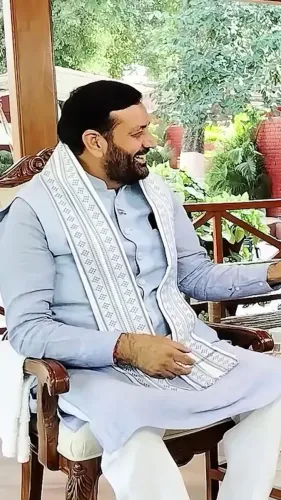
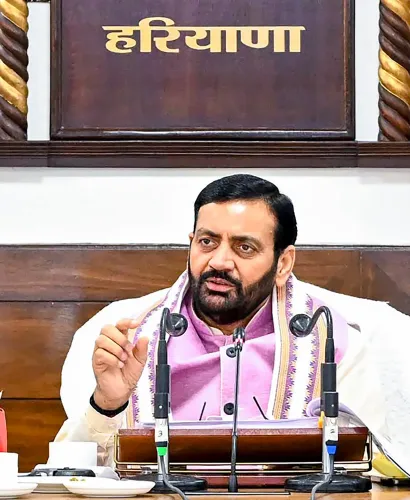
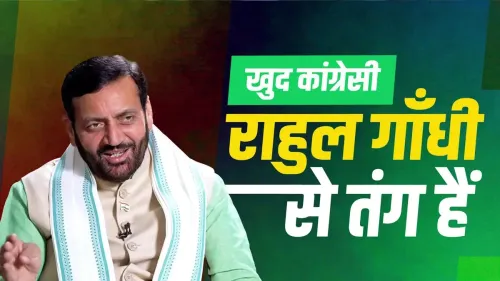
Haryana CM Nayab Singh Saini posted a sharp question at Rahul Gandhi on 24 October 2026, asking why he chose 1 November — the anniversary of the 1984 anti-Sikh violence — for a public event. The post invokes a deeply painful historical date to challenge the Congress leader.
Key Takeaways
Haryana CM Nayab Singh Saini posted on X on 24 October 2026 questioning Rahul Gandhi's choice of 1 November for an event.
He stated that 1 November reminds Sikhs of the 'pain of 1984,' referring to large-scale anti-Sikh violence that erupted after Indira Gandhi's assassination on 31 October 1984 .
The 1984 anti-Sikh riots resulted in thousands of deaths, primarily in Delhi, and remain a source of deep grief for the Sikh community.
The Nanavati Commission was set up in 2000 and submitted its report in 2005 examining the riots and the government's response.
BJP leaders in Haryana and Punjab have historically invoked 1984 to contrast their record with that of the Congress party, particularly during election cycles.
Congress has not publicly clarified the nature or context of the 1 November event referenced in Saini's post.
The date 1 November is not just a date in the Sikh calendar — it is the anniversary of one of independent India's darkest chapters. Haryana Chief Minister Nayab Singh Saini sharpened that edge on Saturday, 24 October 2026, posting a pointed question on X directed at Congress leader Rahul Gandhi: why, of all days, has he chosen 1 November for a high-profile event?
In Hindi, CM Saini wrote: '1 नवंबर का दिन सिखों को 1984 का दर्द याद दिलाता है। राहुल गांधी, 1 नवंबर ही क्यों चुना?' — translated: 'The date of 1 November reminds Sikhs of the pain of 1984. Rahul Gandhi, why did you choose only 1 November?'
What happened on 1 November 1984
The weight behind that question is historical and precise. On 31 October 1984, Prime Minister Indira Gandhi was assassinated by her Sikh bodyguards at her official residence in New Delhi. Within hours, large-scale violence against Sikhs erupted across the country — and it was on 1 November 1984 that the worst of the carnage unfolded, particularly in Delhi, leaving thousands dead. The Nanavati Commission, constituted in 2000 and submitting its findings in 2005, was among the formal inquiries that examined the Congress-era government's role — or absence of restraint — during those days of violence. For the Sikh community, 1 November is not a neutral date. It is a day of mourning, memory, and unresolved grief.BJP's long-running electoral calculus on 1984
Saini's post did not emerge in a vacuum. BJP leaders — particularly those governing states with significant Sikh populations such as Haryana and Punjab — have consistently invoked the 1984 anti-Sikh riots as a political and moral indictment of the Congress party. The messaging tends to intensify during election cycles or when opposition figures schedule visible public events. By framing Rahul Gandhi's date choice as an insult to Sikh memory, Saini is doing two things at once: probing for a reaction and reminding Sikh voters in Haryana and beyond of a wound that Congress has never fully healed. Congress has not publicly clarified the nature of the November 1 event referenced in the post.A question designed to travel
The post is short, but its architecture is deliberate — a statement of historical fact followed immediately by a direct, personal question. No answer is expected. The question itself is the accusation. Sikh organisations and political groups in Punjab and Haryana are likely to respond, and Congress's silence or explanation will determine how long this particular news cycle runs. Forty-two years after the flames of November 1984, the date still has the power to detonate a political moment — and CM Saini just struck the match.Point of View
Or stay silent and allow the framing to solidify. That this surfaces in late October 2026 suggests the political temperature in the region is already rising ahead of any electoral calendar.
NationPress
24 Oct 2026
Frequently Asked Questions
Why is 1 November significant for the Sikh community in India?
1 November 1984 was the day large-scale anti-Sikh violence erupted across India, particularly in Delhi, following Prime Minister Indira Gandhi's assassination on 31 October 1984. Thousands of Sikhs were killed, making the date one of mourning and painful historical memory for the community.
What did Haryana CM Nayab Singh Saini post about Rahul Gandhi and 1984?
CM Nayab Singh Saini posted on X on 24 October 2026, stating that 1 November reminds Sikhs of the pain of 1984 and directly asking Rahul Gandhi why he chose that specific date for an event.
What was the Nanavati Commission and what did it examine?
The Nanavati Commission was constituted in 2000 to inquire into the 1984 anti-Sikh riots. It submitted its report in 2005 and examined the violence that followed Indira Gandhi's assassination, including the government's response during the riots.
How has BJP used the 1984 anti-Sikh riots as a political issue?
BJP leaders, especially in Haryana and Punjab where Sikh populations are significant, have consistently invoked the 1984 riots to highlight historical grievances against the Congress party, often intensifying such messaging during election cycles or around opposition events.
Has Congress responded to CM Saini's question about the November 1 event?
As of the time of this report, Congress has not publicly clarified the nature or context of the 1 November event that Saini referenced in his post.