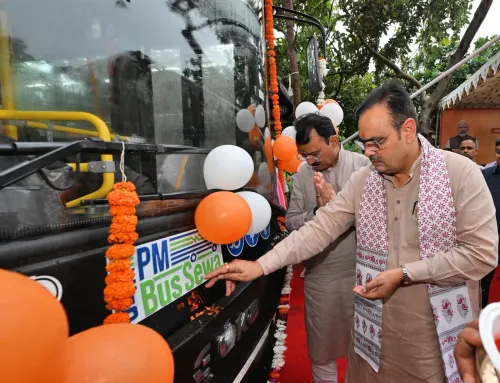
Rajasthan gets 1,150 e-buses under PM e-Bus Sewa across 9 cities
Synopsis
Rajasthan has scaled its PM e-Bus Sewa allocation to 1,150 electric buses across nine cities, with over ₹113 crore in central funding committed for charging and depot infrastructure. With only 58 buses operational so far and 500 more in procurement, the real test is whether the infrastructure build-out can keep pace with the deployment target.
Key Takeaways
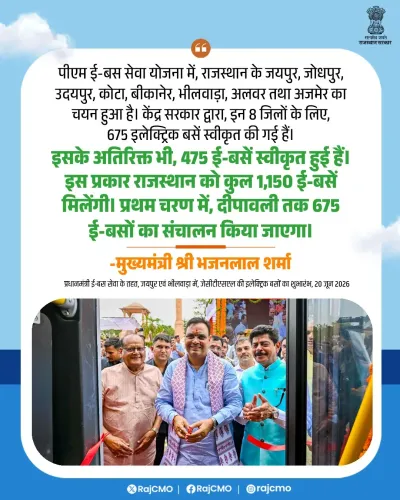
Rajasthan's total PM e-Bus Sewa allocation has been expanded to 1,150 e-buses across nine cities , up from an initial 675 buses across eight cities.
Jaipur receives the largest share with 550 e-buses ; 58 buses are currently operational from the Bagrana depot .
The central government has approved more than ₹60 crore for charging infrastructure and more than ₹53 crore for civil infrastructure at depots.
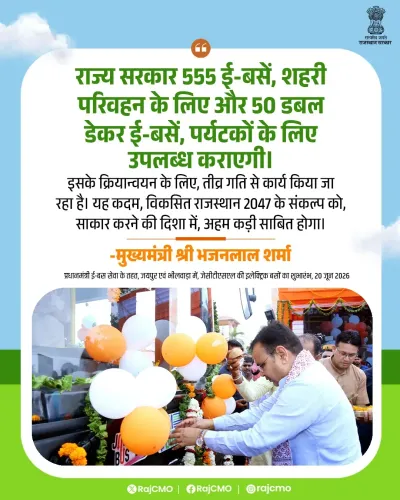
JCTSL is procuring the remaining 450 e-buses and 50 double-decker e-buses in line with the 2025–26 Budget Announcement .
Buses are equipped with CCTV cameras and panic buttons , with accessible design for senior citizens, students, and persons with disabilities.
Rajasthan is rolling out 1,150 electric buses across nine cities under the PM e-Bus Sewa scheme, with the state government accelerating infrastructure development and phased deployment to modernise urban public transport. The expansion, being implemented under Chief Minister Bhajan Lal Sharma, covers cities with populations of 3 lakh and above as per the 2011 Census, aiming to deliver clean, accessible mobility to millions of daily commuters.
City-wise Allocation
The scheme was initially approved for 675 electric buses across eight cities in Rajasthan. Subsequent sanctions expanded the total to 1,150 e-buses across nine cities. The city-wise breakdown is: Jaipur: 550, Jodhpur: 125, Ajmer and Kota: 100 each, Bikaner: 75, and Bhilwara, Alwar, Udaipur, and Sikar: 50 each.
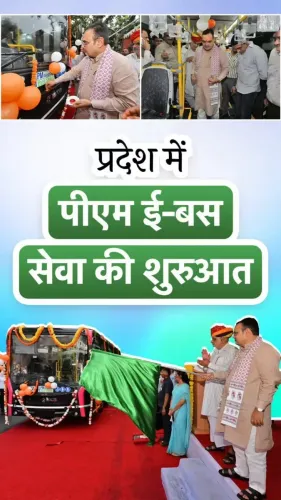
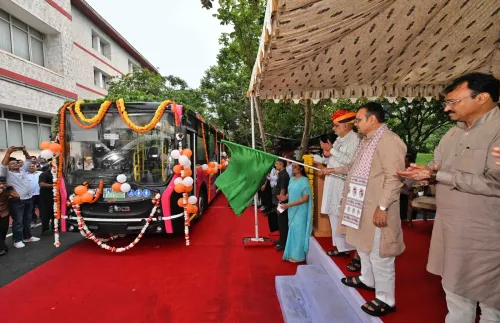
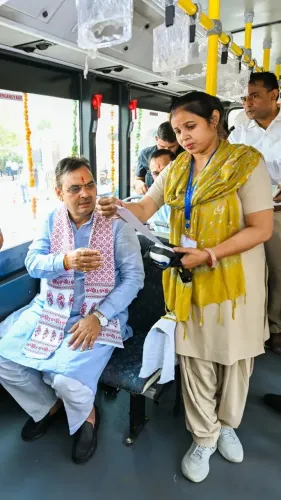
Of the 250 e-buses received by the state so far, 103 have been handed over to Jaipur City Transport Services Limited (JCTSL). Of these, 58 buses are currently operational from the Bagrana depot, while the Todi depot is expected to commence operations shortly.
Passenger Safety and Accessibility Features
The electric buses are equipped with modern safety technology including CCTV cameras, panic buttons, and other on-board safety equipment designed to enhance passenger security — particularly for women. The fleet is also built to serve senior citizens, students, and persons with disabilities, with accessible travel as a core design principle.
Notably, the buses offer affordable and comfortable travel, positioning the service as a genuine alternative to private transport for vulnerable and transit-dependent populations.
Infrastructure Development Underway
In Jaipur, depots have been established at Bagrana, Todi Mor, and Sanganer. Land has additionally been allocated for depots at Ralawata near Goner, Khatwada on Ajmer Road, and Achrol on Delhi Road to support future expansion.
The central government has approved more than ₹60 crore for charging facilities and electrical infrastructure at bus depots, alongside more than ₹53 crore for civil infrastructure development — a combined commitment exceeding ₹113 crore toward depot readiness.
Procurement Pipeline and Next Steps
In line with the Budget Announcement for 2025–26, JCTSL is in the process of procuring the remaining 450 e-buses and 50 double-decker e-buses. The state government's approach goes beyond mere procurement, aiming to build an integrated operational ecosystem that includes charging stations, strengthened depot facilities, and reliable electrical connections for sustained service delivery.
With the phased deployment of electric buses and parallel infrastructure build-out, Rajasthan is positioning itself as a model for sustainable urban mobility in tier-2 and tier-3 Indian cities.
Point of View
But the gap between allocation and operation — 1,150 buses sanctioned, only 58 running — reflects a pattern common to central urban transport schemes where procurement timelines and infrastructure readiness consistently trail headline numbers. The ₹113 crore in central funding for depots and charging is necessary but not sufficient; without a clear commissioning schedule and accountability mechanism for the remaining 1,092 buses, the scheme risks becoming another well-funded announcement that under-delivers on ground-level ridership. The inclusion of double-decker e-buses is an interesting signal for Jaipur's tourism corridors, but the real equity dividend lies in whether the 50-bus allocations to smaller cities like Sikar and Bhilwara actually materialise on time.
NationPress
24 Oct 2026
Frequently Asked Questions
What is the PM e-Bus Sewa scheme in Rajasthan?
PM e-Bus Sewa is a central government scheme to deploy electric buses in cities with populations of 3 lakh and above. In Rajasthan, a total of 1,150 e-buses have been sanctioned across nine cities, with deployment and supporting infrastructure being rolled out in phases under Chief Minister Bhajan Lal Sharma.
Which cities in Rajasthan are getting e-buses and how many?
Nine cities are covered: Jaipur (550), Jodhpur (125), Ajmer (100), Kota (100), Bikaner (75), Bhilwara (50), Alwar (50), Udaipur (50), and Sikar (50). Jaipur has the largest allocation at 550 buses.
How many e-buses are currently operational in Rajasthan?
As of now, 250 e-buses have been received by the state, of which 103 have been handed over to JCTSL in Jaipur. Of these, 58 buses are currently in service from the Bagrana depot; operations from the Todi depot are expected to begin shortly.
How much central funding has been approved for e-bus infrastructure in Rajasthan?
The central government has approved more than ₹60 crore for charging facilities and electrical infrastructure, and more than ₹53 crore for civil infrastructure at bus depots — a combined outlay exceeding ₹113 crore for depot readiness across the state.
What safety features do the new electric buses have?
The e-buses are fitted with CCTV cameras, panic buttons, and other safety equipment to protect passengers, with a particular focus on women's safety. They are also designed to be accessible for senior citizens, students, and persons with disabilities.