Rajasthan CM Bhajanlal to deploy 605 e-buses for urban, tourism use
Synopsis
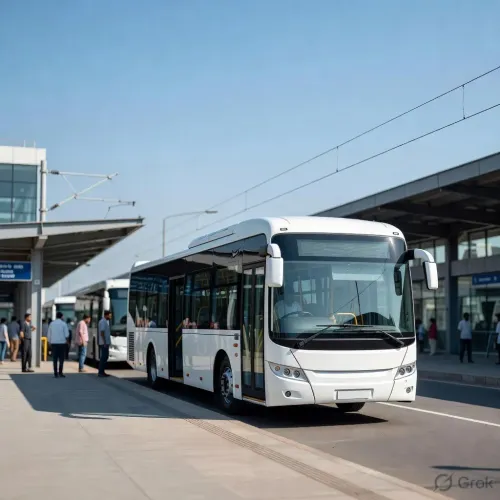
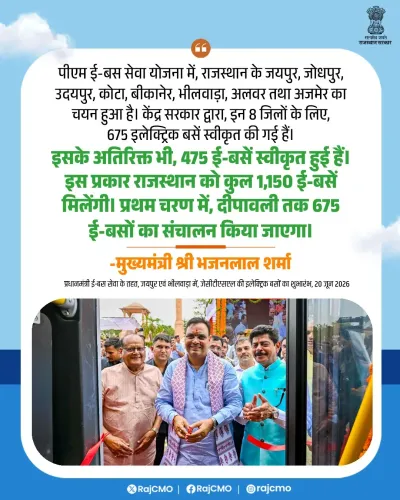
The Rajasthan government under CM Bhajan Lal Sharma has announced 555 electric buses for urban transport and 50 double-decker e-buses for tourists — a combined fleet of 605 electric buses — signalling a major push toward sustainable public mobility in the state.
Key Takeaways
The Rajasthan government will deploy 555 electric buses for urban public transport across the state.
An additional 50 double-decker electric buses will be dedicated exclusively to tourists.
The combined fleet totals 605 electric buses , one of the larger single-state e-bus commitments in recent months.
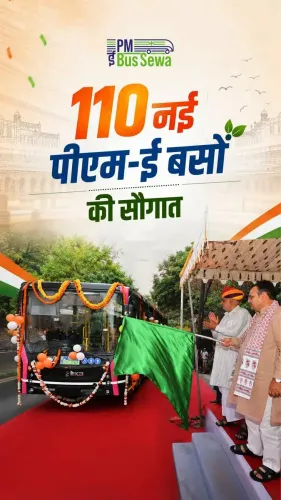
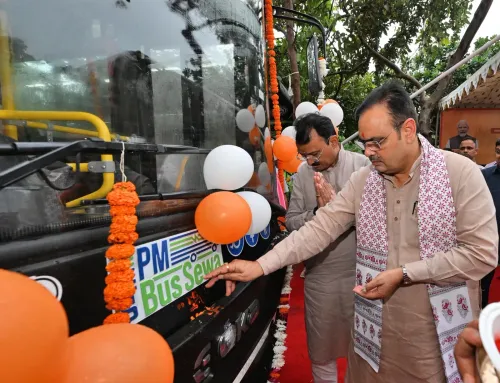
The announcement aligns with the central government's PM e-Bus Sewa scheme, which targets 10,000 e-buses across 169 Indian cities .
Double-decker variants are intended to boost capacity in heritage city circuits without requiring road widening.
Tender publication, route allocation, and funding details are yet to be formally announced.
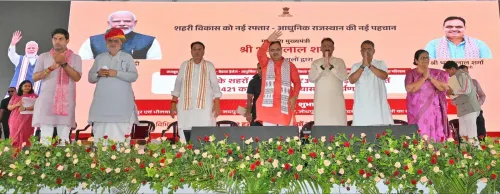
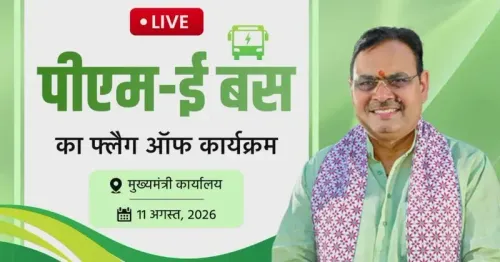
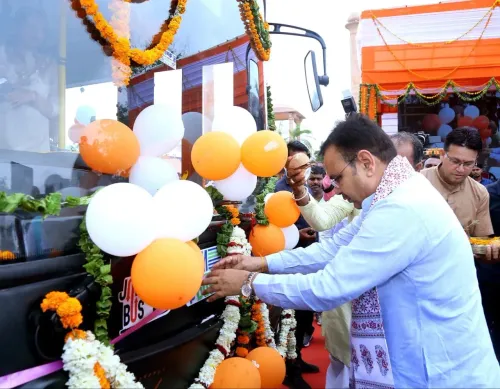
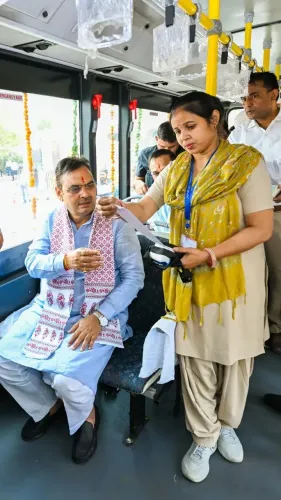
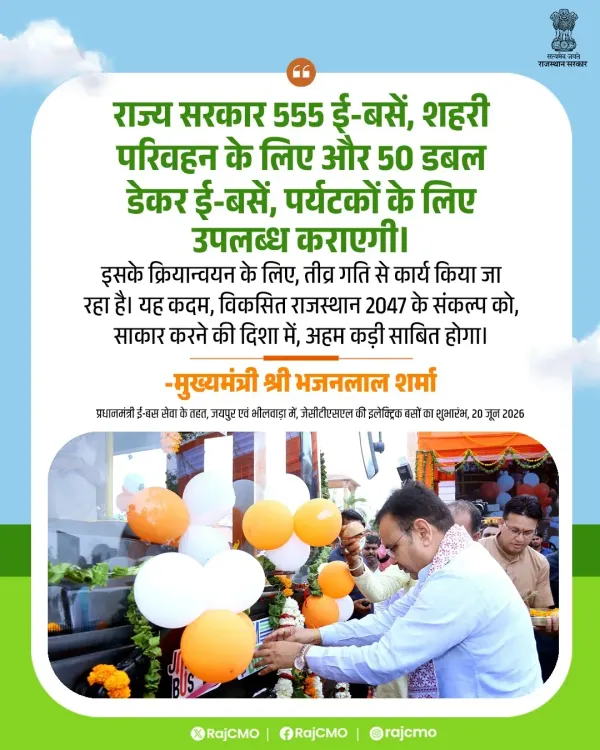
The Chief Minister's Office of Rajasthan announced on Saturday, 20 June 2026 that the state government will procure 555 electric buses for urban public transport and an additional 50 double-decker electric buses dedicated to tourists, marking a significant push to electrify the state's passenger fleet under Chief Minister Bhajan Lal Sharma.
Context
The official post, shared from the Rajasthan Chief Minister's Office handle and attributed to @BhajanlalBjp, stated in Hindi: 'राज्य सरकार 555 ई-बसें, शहरी परिवहन के लिए और 50 डबल डेकर ई-बसें, पर्यटकों के लिए उपलब्ध कराएगी' ('The state government will provide 555 e-buses for urban transport and 50 double-decker e-buses for tourists'). The announcement was made under the hashtag #AapnoAgraniRajasthan (Aapno Agrani Rajasthan — 'Our Leading Rajasthan'), the BJP government's flagship branding campaign. The combined fleet of 605 electric buses represents one of the larger single-state e-bus commitments announced in recent months.Policy Backdrop
The announcement aligns with the PM e-Bus Sewa scheme, approved by the Government of India in August 2023, which targets the deployment of 10,000 electric buses across 169 cities through a public-private partnership model. Under the scheme, the central government funds bus procurement and operations while state agencies manage route integration. Rajasthan, with its dense network of mid-sized cities and high tourist footfall in heritage destinations such as Jaipur, Jodhpur, and Udaipur, is considered a natural fit for both the urban and tourism-oriented components of the national programme. States across India have been supplementing central allocations with their own tenders since 2022, and Rajasthan's move follows this established pattern of layering state procurement over central scheme frameworks.Stakeholders and Impact
Urban commuters in Rajasthan's major cities stand to benefit most directly from the 555-bus urban fleet, which is expected to reduce dependence on ageing diesel vehicles and improve air quality in congested corridors. The 50 double-decker electric buses earmarked for tourists reflect a deliberate strategy to increase passenger capacity in heritage city circuits without widening roads — a constraint common to Rajasthan's walled-city zones. Tourism is a critical revenue driver for the state, and an electrified, visually distinctive double-decker fleet could strengthen Rajasthan's positioning as a premium destination. State transport corporations and city bus operators will be the primary implementing agencies, while private operators may be involved under the PPP structure envisaged by the central scheme.What's Next
Attention will now shift to the publication of tenders, the identification of specific routes for the double-decker fleet, and the timeline for bus delivery and commissioning. Integration with existing city bus networks — particularly in Jaipur, which already operates a bus rapid transit corridor — will be a key operational challenge. Observers will also watch for clarity on the funding split between state and central budgets, and on which manufacturers will supply the 605-bus fleet. The rollout, if executed on schedule, would meaningfully advance Rajasthan's stated goal of becoming a leading state in sustainable urban mobility.Point of View
The Chief Minister's Office is clearly positioning infrastructure delivery as an electoral asset ahead of future cycles. The choice of double-decker electric buses for heritage circuits is also notable: it signals awareness that Rajasthan's walled cities cannot accommodate conventional road-widening, making vertical capacity the practical solution. Whether the state can translate this announcement into commissioned buses on schedule will determine whether it becomes a model for other tourism-heavy states or remains an aspirational headline.
NationPress
19 Sept 2026
Frequently Asked Questions
How many e-buses will Rajasthan get under the new announcement?
The Rajasthan government has announced a total of 605 electric buses — 555 for urban public transport and 50 double-decker electric buses for tourists.
What is the PM e-Bus Sewa scheme?
PM e-Bus Sewa is a central government scheme approved in August 2023 to deploy 10,000 electric buses across 169 Indian cities through a public-private partnership model, with the central government funding procurement and operations.
Who announced the 605 e-buses for Rajasthan?
The announcement was made by the Chief Minister's Office of Rajasthan on 20 June 2026 , attributed to Chief Minister Bhajan Lal Sharma .
What are the double-decker e-buses in Rajasthan for?
The 50 double-decker electric buses are specifically earmarked for tourists, intended to increase passenger capacity in heritage city circuits without requiring road widening in Rajasthan's historic walled cities.
Which cities in Rajasthan will get the new electric buses?
The announcement does not specify exact cities. Observers expect deployment in major urban centres such as Jaipur , Jodhpur , and Udaipur , but formal route allocation is pending tender publication.