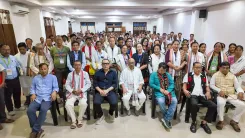
Jaishankar hosts African Heads of Mission, flags multipolar rise
Synopsis
External Affairs Minister Dr. S. Jaishankar hosted African Heads of Mission on 24 October 2026, emphasising South-South solidarity, Africa's multipolar rise, and people-centric cooperation as pillars of the India-Africa partnership.
Key Takeaways
Jaishankar hosted Heads of Mission from Africa on 24 October 2026 in New Delhi.
The minister highlighted South-South solidarity and 'the rise of Africa in a multipolar world' as central themes.
India's Africa engagement is rooted in the ITEC programme and the India-Africa Forum Summit process, with the third summit held in 2015 .
India secured African Union membership in the G20 during its 2023 presidency, strengthening its champion-of-the-Global-South credentials.
The meeting signals continued momentum toward people-centric, capacity-building cooperation rather than debt-driven infrastructure deals.
Africa's 54-nation bloc carries significant weight in multilateral reform efforts that India is actively pursuing.
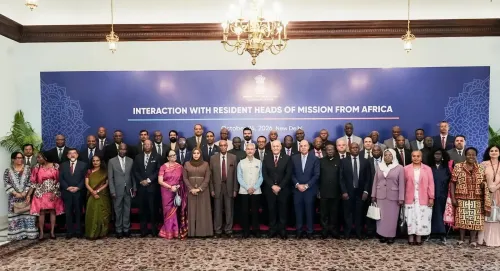
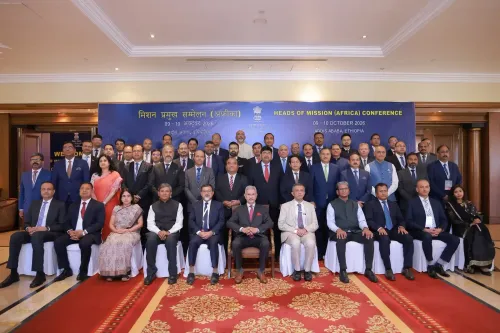
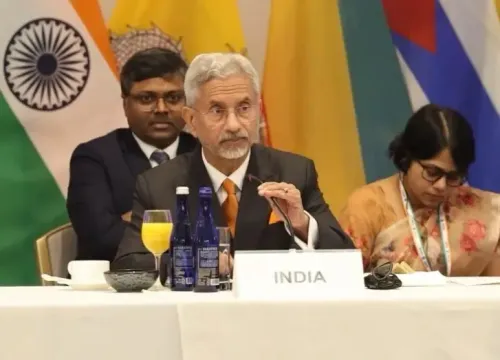
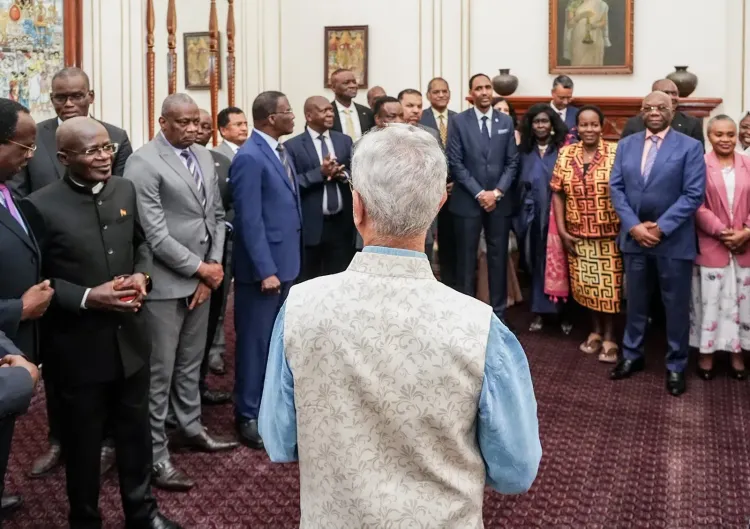
India's diplomatic pivot toward Africa moved into sharper focus on Saturday, 24 October 2026, when Union External Affairs Minister Dr. S. Jaishankar hosted Heads of Mission from across the African continent at what he described as a conversation about shared histories, common aspirations, and the continent's growing weight in a multipolar world.
A room full of ambassadors — and a message about the new world order
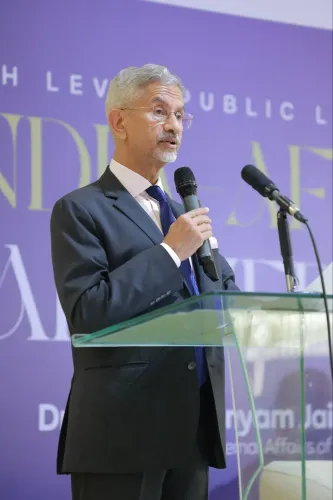
Jaishankar framed the meeting explicitly around South-South solidarity — the long-standing principle that nations of the Global South can build a more equitable international order by pooling resources, knowledge, and political will. The gathering was not ceremonial. The minister said the discussion ranged across 'the rise of Africa in a multipolar world and new possibilities for people-centric cooperation,' signalling that New Delhi sees African nations as consequential partners in reshaping global institutions, not merely recipients of development aid.
The language matters. 'People-centric cooperation' is the formulation India has used to distinguish its engagement model — focused on capacity-building, concessional credit, and skills transfer — from infrastructure-led, debt-heavy frameworks that African governments have increasingly scrutinised.
Decades of engagement, now with higher stakes
India's Africa policy has deep structural roots. New Delhi has run the Indian Technical and Economic Cooperation (ITEC) programme for decades, training thousands of African professionals annually in fields from agriculture to IT. The third India-Africa Forum Summit, held in New Delhi in 2015, was the most ambitious edition — committing lines of credit and capacity-building initiatives across dozens of African nations simultaneously.
Since then, the geopolitical landscape has shifted dramatically. Africa has become a theatre for great-power competition, with multiple external actors vying for influence through infrastructure deals, military partnerships, and trade agreements. India's consistent counter-pitch has been partnership without political conditionality — a message that resonates in capitals wary of dependency relationships.
Why Africa's 'rise' is the core diplomatic thesis right now
With 54 member states, Africa commands significant bloc-voting power in multilateral bodies including the United Nations General Assembly and the World Trade Organization. As India continues to push for reforms at the UN Security Council and broader representation for the Global South, African solidarity is not merely a diplomatic nicety — it is a strategic necessity.
The African Union's elevation to full membership of the G20 — secured during India's G20 presidency in 2023 — was itself a landmark that cemented New Delhi's credentials as a champion of African interests on the global stage. Saturday's meeting of Heads of Mission suggests the ministry is working to translate that diplomatic capital into concrete, people-level outcomes before any future India-Africa summit.
For Africa's ambassadors in New Delhi, the signal from Jaishankar was unambiguous: India is not recalibrating its Africa policy — it is deepening it, on terms both sides have had a hand in writing.
Point of View
Jaishankar is consciously differentiating India's offer from rival frameworks that African capitals have come to view with suspicion. The gathering also carries institutional subtext — with UN Security Council reform and Global South coalitions high on India's diplomatic agenda, maintaining warm and structured relations with 54 African votes is indispensable. The cadence of such ministerial-level engagements suggests the Ministry of External Affairs is laying groundwork for a larger India-Africa summit moment, when it comes.
NationPress
24 Oct 2026
Frequently Asked Questions
Why did Jaishankar meet African ambassadors in October 2026?
EAM Dr. S. Jaishankar hosted African Heads of Mission to discuss South-South solidarity, Africa's growing role in a multipolar world, and new avenues for people-centric India-Africa cooperation.
What is India's South-South cooperation with Africa?
India's South-South cooperation with Africa includes concessional lines of credit, technical training under the ITEC programme, and capacity-building in agriculture, IT, and healthcare — positioning India as a development partner rather than a donor.
When was the last India-Africa Forum Summit?
The third India-Africa Forum Summit was held in New Delhi in 2015, where India committed significant lines of credit and capacity-building programmes to African partner nations.
How did India support Africa's entry into the G20?
India secured the African Union's elevation to full G20 membership during its G20 presidency in 2023, a landmark that strengthened New Delhi's standing as a champion of Global South interests.
What does 'people-centric cooperation' mean in India-Africa relations?
'People-centric cooperation' refers to India's model of engagement focused on skills transfer, training, health, and education rather than large debt-generating infrastructure deals — a framework African governments have found more sustainable.