Jaishankar hosts African Heads of Mission, flags Africa's rise in multipolar world
Synopsis
Jaishankar's back-to-back Africa diplomacy — first in Addis Ababa, now hosting African envoys in New Delhi — is more than outreach: it is India systematically building a Southern coalition as global power shifts. The call for African seats at the UN Security Council, backed by India's G20 advocacy for the African Union, signals New Delhi is converting diplomatic capital into institutional agenda-setting.
Key Takeaways
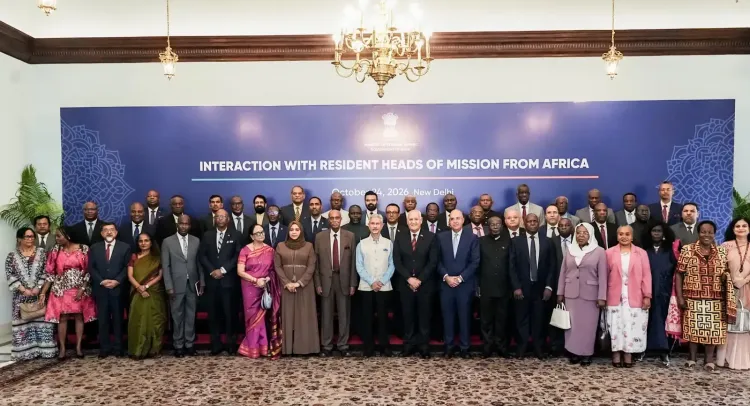
EAM S Jaishankar hosted Heads of Mission from African countries in New Delhi on 24 October 2026 .
Talks covered trade, investments, connectivity, development partnerships , and capacity building.
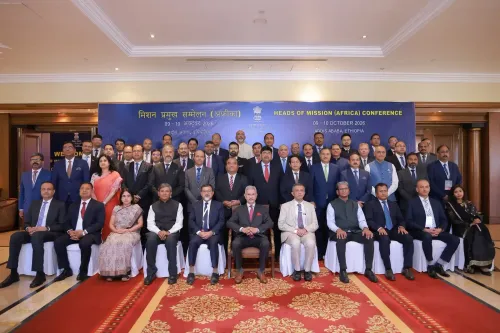
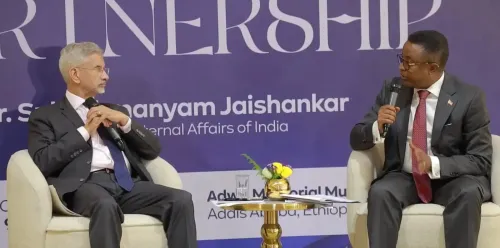
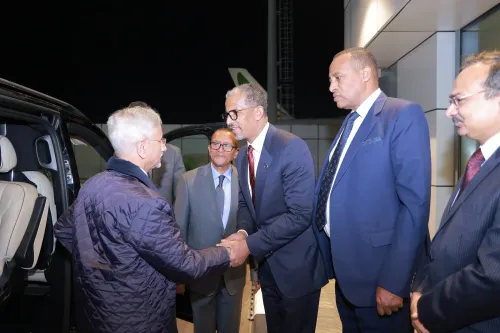
Jaishankar earlier this month chaired a conference of India's Heads of Mission in Africa in Addis Ababa , calling for partnerships that build capabilities rather than create dependencies.
India has called for a reformed UN Security Council with fair African representation, drawing on its advocacy for African Union permanent membership at the G20 in 2023 .
India positions its Africa engagement as non-prescriptive and rooted in South-South solidarity and mutual prosperity.
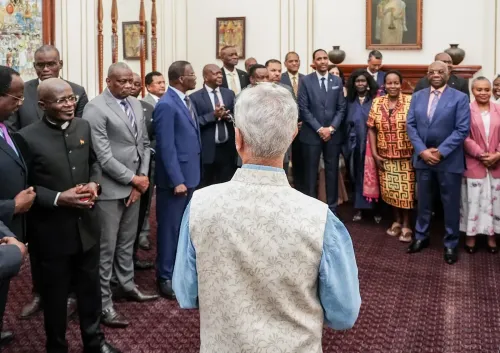
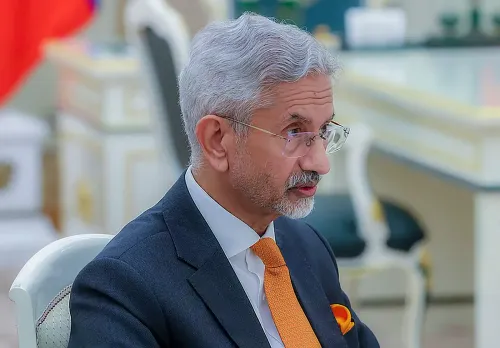
External Affairs Minister S Jaishankar on Saturday, 24 October 2026, hosted Heads of Mission from African countries in New Delhi, with discussions centring on the India-Africa partnership, the rise of Africa in a multipolar world, and new possibilities for people-centric cooperation. The meeting signals a deepening of diplomatic engagement between India and the African continent at a time of shifting global power equations.
What Was Discussed
Jaishankar described the India-Africa partnership as one rooted in 'shared histories, common aspirations and Deep South-South solidarity.' The talks covered multiple dimensions of bilateral engagement, including trade, investments, connectivity, development partnerships, and capacity building. The minister emphasised that the relationship must evolve beyond historical solidarity into one of mutual capability-building.
The Addis Ababa Conference: Setting the Stage
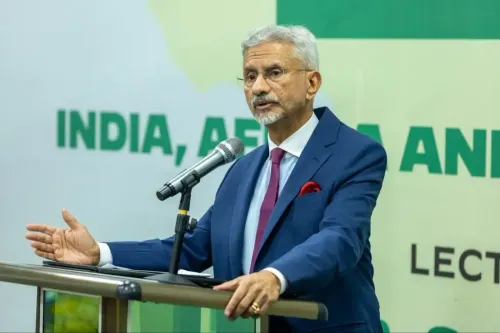
The New Delhi meeting follows a conference of India's Heads of Mission in Africa that Jaishankar chaired earlier this month in Addis Ababa, Ethiopia. In his address in the Ethiopian capital, the minister called for partnerships that 'help create capabilities, not promote dependencies' — a pointed articulation of India's development philosophy vis-à-vis Africa, distinct from the conditionality often associated with Western aid frameworks.
'They need not be prescriptive, condescending or conditional. They can be based on respect and equality, shared capabilities, and most of all, shared prosperity,' Jaishankar said in Addis Ababa.
UN Security Council Reform and Global Governance
A significant strand of discussions touched on global governance reform. Jaishankar reiterated India's push for a reformed UN Security Council with fair representation for Africa, drawing a parallel with India's efforts during its G20 Presidency in 2023 to secure permanent membership for the African Union. 'The same logic now applies to the reform process of the UN Security Council,' he said, signalling that India views African representation in global bodies as a strategic and principled priority.
Why This Matters
India's intensified outreach to Africa comes amid growing competition from China, whose Belt and Road Initiative has extended deep into the continent, and from Gulf states and Western powers also vying for economic and diplomatic influence. New Delhi's pitch — rooted in South-South solidarity, non-conditionality, and shared multipolarity — is being positioned as a credible alternative model. Notably, this is the second high-profile India-Africa diplomatic engagement within the same month, underlining the pace at which New Delhi is operationalising its Africa strategy. With the African Union now a permanent G20 member partly due to India's advocacy, the relationship has moved from rhetoric to institutional weight.
What Comes Next
Follow-on engagements on trade and investment corridors, as well as capacity-building initiatives, are expected in the months ahead. India's development partnership frameworks with African nations are likely to be formalised further, with an emphasis on technology transfer, digital infrastructure, and healthcare cooperation.
Point of View
Riyadh, and Brussels all compete for the continent's partnership. Jaishankar's framing — capabilities over dependencies, respect over conditionality — is a direct counter-narrative to Chinese debt diplomacy and Western aid conditionality. The harder question is whether India can match the rhetoric with execution: its development finance commitments to Africa have historically lagged China's by a wide margin. The UN Security Council push, while principled, also serves India's own permanent-membership aspirations — a convergence of interests that African partners will weigh carefully.
NationPress
24 Oct 2026
Frequently Asked Questions
What did EAM Jaishankar discuss with African Heads of Mission on 24 October?
Jaishankar hosted African Heads of Mission in New Delhi on 24 October 2026, discussing the India-Africa partnership, the rise of Africa in a multipolar world, and new possibilities for people-centric cooperation. Topics included trade, investments, connectivity, development partnerships, and capacity building.
What was the Addis Ababa conference Jaishankar chaired earlier in October?
Jaishankar chaired a conference of India's Heads of Mission in Africa in Addis Ababa earlier in October 2026, where he laid out India's vision for the partnership — emphasising that future ties must build capabilities rather than promote dependencies. He also addressed the African Union on global governance and development cooperation.
What is India's position on UN Security Council reform for Africa?
India has called for a reformed UN Security Council with fair representation for Africa, with Jaishankar arguing that the same logic which led India to advocate for permanent African Union membership in the G20 in 2023 now applies to Security Council reform.
Why is India intensifying its diplomatic engagement with Africa?
India is deepening Africa outreach amid growing competition from China, Gulf states, and Western powers for influence on the continent. New Delhi is positioning itself as a development partner rooted in South-South solidarity, non-conditionality, and multipolarity — distinct from what it characterises as prescriptive Western aid and dependency-creating Chinese financing.
What comes next in the India-Africa partnership?
Follow-on engagements on trade, investment corridors, technology transfer, digital infrastructure, and healthcare cooperation are expected in the coming months, building on the frameworks discussed both in Addis Ababa and New Delhi.