Jaishankar at Adwa Museum: India-Africa Partnership Address
Synopsis
EAM Dr. S. Jaishankar addressed the Adwa Memorial Museum in Addis Ababa, detailing India's Africa partnership across development, digital governance, health, security, and reformed multilateralism — framing it as a relationship built on shared sovereignty, not dependency.
Key Takeaways
EAM Jaishankar spoke at the Adwa Memorial Museum, Addis Ababa on October 9, 2026 , outlining the India-Africa Partnership.
India has supported more than 220 development projects in Africa spanning power, water, agriculture, railways, health, and infrastructure.
Over 70,000 African students and professionals have received Indian capacity-building support in the last decade.
Jaishankar linked India's 'Viksit Bharat by 2047' and Africa's 'Agenda 2063' as parallel visions centred on industrialisation, warning against market-flooding by cheap imports.
New cooperation frontiers identified include India Stack, space, drones, and AI ; health cooperation includes Bhabatron cancer machine gifts and pharmaceutical investment.
The African Union's inclusion in the G20 under India's presidency was cited as a concrete step toward reformed multilateralism.
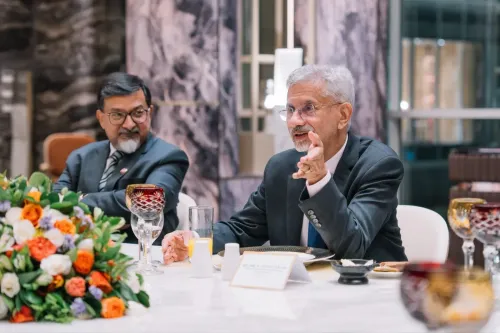
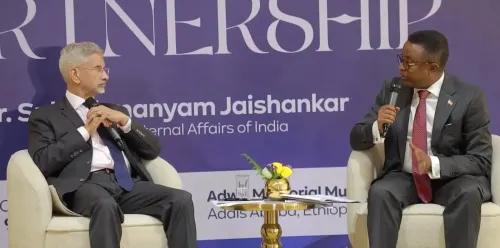
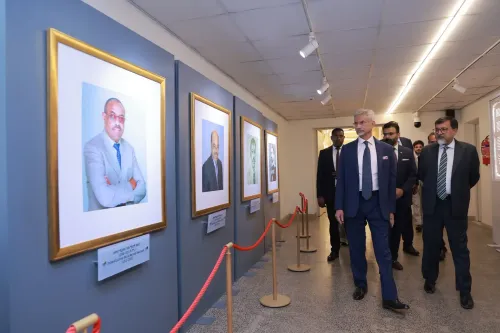
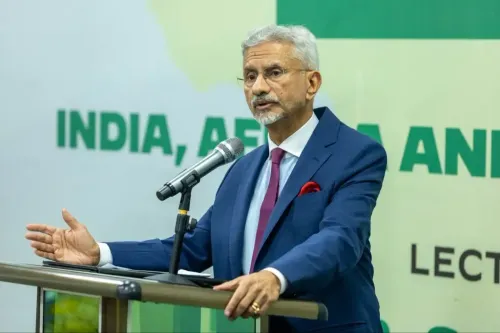
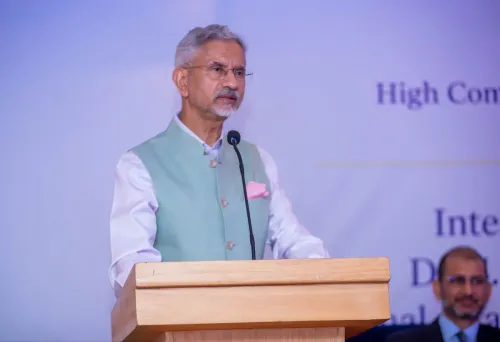
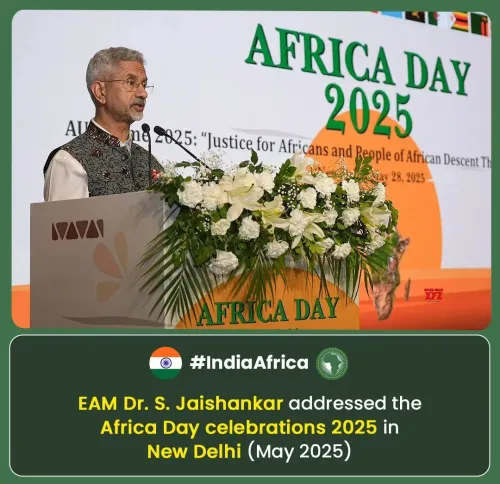
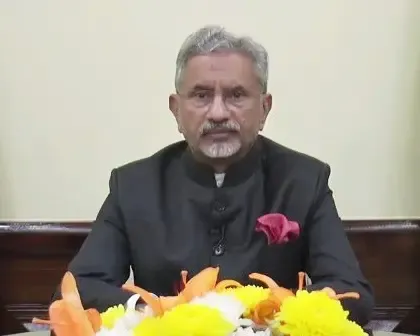
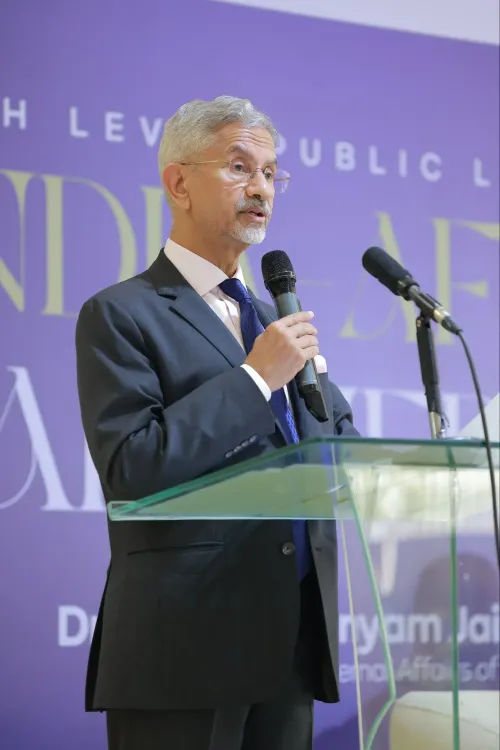
At the foot of one of Africa's most potent symbols of resistance, Union External Affairs Minister Dr. S. Jaishankar delivered a sweeping address on India-Africa ties at the Adwa Memorial Museum in Addis Ababa on October 9, 2026 — framing a partnership rooted not in charity or convenience, but in shared sovereignty and a mutual refusal to be left behind.
Speaking to a distinguished gathering, Jaishankar drew a direct line between India's 'Viksit Bharat by 2047' vision and Africa's own 'Agenda 2063' blueprint — two civilisational ambitions that both place industrialisation at their core. The message cut sharp: that ambition must not be undermined by 'flooding our markets with cheap goods or by restricting our market access.' No country was named. None needed to be.
220 Projects and 70,000 Students: The Scale of India's Africa Footprint
Jaishankar put numbers to the relationship that are rarely aggregated in a single address. India has supported more than 220 development projects across the continent — spanning power generation, electricity transmission, water, agriculture, railways, health, manufacturing, and public infrastructure. Over the past decade, more than 70,000 African students and professionals have received support from India for capacity building.
The trade and investment relationship spans manufacturing, telecommunications, pharmaceuticals, energy, mining, agriculture, infrastructure, financial services, and information technology. Jaishankar described self-reliance as 'a viable basis for the future of our enduring partnership' — a framing that positions India not as a donor, but as a co-architect of African agency.
Digital Stack, Space, Drones, and AI: The New Frontier of Cooperation
The Minister highlighted the transformative impact of digital governance and the growing adoption of India Stack across African nations — the same interoperable digital infrastructure that powered India's own financial inclusion leap. He identified space, drones, and artificial intelligence as the next wave of India-Africa technology cooperation, signalling that the partnership is moving from roads and power lines to data and orbital infrastructure.
On health security, Jaishankar pointed to vaccine support, pharmaceutical investments, and the gifting of Bhabatron cancer machines — a detail that underscores India's ambition to be a 'pharmacy of the world' for the Global South, not just a commercial supplier.
Security, Maritime Cooperation, and the Push for Reformed Multilateralism
Jaishankar also addressed India's deepening security and maritime cooperation with Africa, and acknowledged India's contribution to UN peacekeeping operations on the continent. On the multilateral front, he pointed to the inclusion of the African Union in the G20 during India's presidency as a concrete 'step-forward' — a hard-won shift in global governance architecture that India championed.
The Minister closed on an aspirational note, reiterating that Prime Minister Narendra Modi had articulated Africa's place as among India's highest priorities during his address in Kampala. 'Partnerships of the future must help create capabilities, not dependencies,' Jaishankar said — a line that doubles as India's counter-narrative to every other major power's Africa strategy.
Point of View
Symbol of Africa's first defeat of European colonialism, was not accidental. By aligning 'Viksit Bharat' with 'Agenda 2063', India is explicitly competing for narrative and economic space in Africa against both Western conditionality-based aid and the infrastructure-for-resources model associated with China. The aggregation of 220 projects and 70,000 scholarships in one speech signals India is ready to benchmark its Africa engagement against any rival. The emphasis on 'capabilities, not dependencies' is India's sharpest geopolitical brand statement in the Global South — and one that resonates deeply on a continent historically wary of asymmetric partnerships.
NationPress
10 Oct 2026
Frequently Asked Questions
What did Jaishankar say at the Adwa Memorial Museum in Addis Ababa?
EAM Dr. S. Jaishankar addressed a gathering at the Adwa Memorial Museum in Addis Ababa on October 9, 2026, outlining India's partnership with Africa across development projects, digital cooperation, health security, and reformed multilateralism, framing the relationship as one built on shared sovereignty and mutual self-reliance.
How many development projects has India supported in Africa?
According to Jaishankar's address, India has supported more than 220 development projects in Africa spanning power generation, electricity transmission, water, agriculture, railways, health, manufacturing, and public infrastructure.
What is the India Stack cooperation with Africa?
India Stack refers to India's interoperable digital public infrastructure — covering identity, payments, and data systems — and Jaishankar highlighted its growing adoption across African nations as a key frontier of India-Africa digital cooperation, alongside space, drones, and artificial intelligence.
What did Jaishankar say about 'Viksit Bharat' and Africa's 'Agenda 2063'?
Jaishankar drew a parallel between India's 'Viksit Bharat by 2047' development vision and Africa's 'Agenda 2063' blueprint, noting that both emphasise industrialisation and warning that this ambition must not be undermined by flooding markets with cheap goods or restricting market access.
What is the African Union's link to India's G20 presidency?
Jaishankar cited the inclusion of the African Union as a full G20 member during India's presidency as a concrete step toward reformed multilateralism that better reflects contemporary global realities.