Jaishankar in Addis Ababa: Partnerships must build capabilities, not dependencies
Synopsis
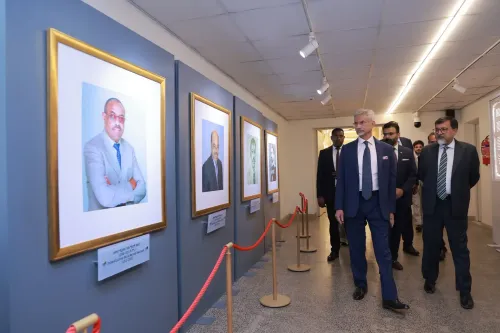
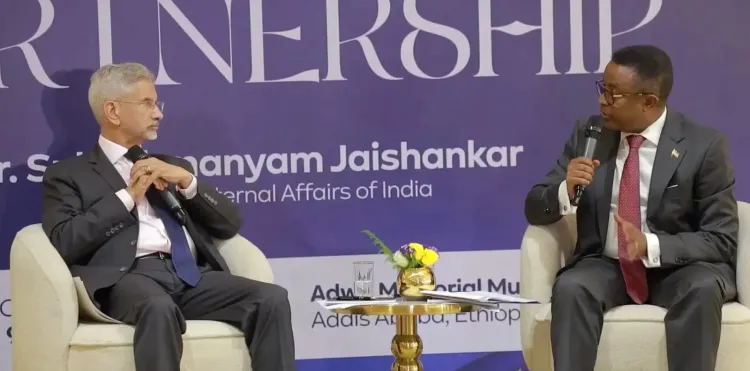
Speaking at the historic Adwa Memorial Museum in Addis Ababa, EAM Jaishankar drew a direct line from Ethiopia's anti-colonial victory to today's Global South push for equitable partnerships — and made the case that UN Security Council reform, African Union membership at the G20, and dependency-free development are all part of the same unfinished agenda India and Africa share.
Key Takeaways
Jaishankar spoke at the Adwa Memorial Museum in Addis Ababa on 9 October 2026 on the India-Africa partnership.
He declared that future partnerships must 'help create capabilities, not promote dependencies.' Jaishankar called for UN Security Council reform with fair African representation in both permanent and non-permanent categories, in line with the Ezulwini Consensus and the Sirte Declaration .
He cited India's successful push for African Union permanent membership during the G20 Presidency in 2023 as a model for Security Council reform.
Bilateral India-Ethiopia ties were elevated to a strategic partnership during PM Modi's visit to Ethiopia last year.
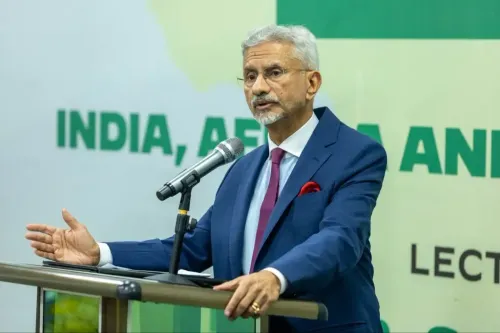
External Affairs Minister S. Jaishankar on Friday, 9 October 2026, delivered a pointed address on the India-Africa partnership at the Adwa Memorial Museum in Addis Ababa, asserting that partnerships of the future must 'help create capabilities, not promote dependencies.' He also called for a reformed UN Security Council with fair and adequate representation for Africa, framing both positions as part of a broader push for Global South equity.
The Adwa Spirit and the Global South
Jaishankar opened by invoking the historic significance of the Battle of Adwa, saying it belonged not just to Ethiopia but to all of Africa and, in many ways, to the wider history of the Global South. 'It inspired those struggling against colonialism and racial domination in Africa and beyond. It strengthened the belief that all subjugated people had the right and the capacity to determine their own destiny,' he said.
He argued that while vocabulary and challenges had evolved, the essential question — 'who gets to decide our future' — remained unchanged, and that this shared question continued to bind India and Africa together.
Historical Solidarity to Strategic Equality
Recalling a shared colonial past, Jaishankar invoked Nelson Mandela's memorable words: 'You gave us Mohandas Gandhi, we gave you Mahatma Gandhi.' He stressed that India had consistently opposed colonialism and apartheid, describing African freedom as 'not some distant geopolitical question' but 'part of the unfinished business of our own freedom.'
Crucially, the minister signalled that historical solidarity alone was no longer sufficient to define the relationship. 'History has given us trust,' he said, adding that development partnerships 'need not be prescriptive, condescending or conditional. They can be based on respect and equality, shared capabilities, and most of all, shared prosperity.'
UN Security Council Reform and African Representation
On global governance, Jaishankar pointed to India's efforts during its G20 Presidency in 2023 to secure permanent membership for the African Union, and argued the same logic must now drive reform of the UN Security Council. 'Reform is not merely to add more seats around an old table. It is to make global governance more democratic, more responsive, and more representative,' he said.
He specifically called for Africa to be represented fairly in both permanent and non-permanent categories of Council membership, in line with the Ezulwini Consensus and the Sirte Declaration — the African Union's own framework for Security Council reform. This positions India and Africa as aligned voices in a push that has long stalled in New York.
India-Ethiopia Ties and PM Modi's Strategic Visit
Turning to the bilateral relationship, Jaishankar recalled the participation of Indian soldiers in Ethiopia's liberation from Italian occupation and the generations of Indian teachers who served in Ethiopian schools and universities. He noted that bilateral relations were elevated to a strategic partnership during Prime Minister Narendra Modi's visit to Ethiopia last year — a marker of deepening engagement beyond historical goodwill.
The EAM concluded with a forward-looking commitment: 'We seek fairness, we seek representation, we seek opportunity. And above all, we seek the freedom to shape our own future,' adding that India would walk this path with Africa 'as a friend and partner.'
Point of View
Both of which Africa has grown increasingly wary of. By invoking the Adwa spirit and Mandela's Gandhi quote in the same breath as UN reform and capability-building, India is packaging its Global South identity as a geopolitical differentiator. The Ezulwini and Sirte references are telling: they signal that India is willing to support Africa's own terms for reform, not a diluted compromise designed in New York. The real test, however, is whether India's development partnerships in Africa translate into the 'shared capabilities' Jaishankar promises, rather than replicating the infrastructure-for-influence dependency model it is critiquing.
NationPress
10 Oct 2026
Frequently Asked Questions
What did EAM Jaishankar say about India-Africa partnerships in Addis Ababa?
Jaishankar said future partnerships must 'help create capabilities, not promote dependencies,' calling for development ties based on mutual respect, equality, and shared prosperity rather than condescending or conditional frameworks. He spoke at the Adwa Memorial Museum in Addis Ababa on 9 October 2026.
What did Jaishankar say about UN Security Council reform for Africa?
He called for Africa to be fairly represented in both permanent and non-permanent categories of the UN Security Council, consistent with the Ezulwini Consensus and the Sirte Declaration. He drew a direct parallel to India's successful push for African Union permanent membership at the G20 in 2023.
Why did Jaishankar invoke the Battle of Adwa in his speech?
Jaishankar cited Adwa as a symbol belonging not just to Ethiopia but to the entire Global South, arguing that Ethiopia's victory over colonialism in 1896 inspired subjugated peoples worldwide. He used it to frame a shared historical identity that still informs India-Africa solidarity today.
How has the India-Ethiopia relationship recently deepened?
Bilateral India-Ethiopia ties were elevated to a strategic partnership during Prime Minister Narendra Modi's visit to Ethiopia last year. Jaishankar also recalled Indian soldiers' role in Ethiopia's liberation from Italian occupation and Indian educators who served in Ethiopian institutions.
What is the Ezulwini Consensus and why did Jaishankar reference it?
The Ezulwini Consensus is the African Union's common position on UN reform, which calls for at least two permanent seats and five non-permanent seats for Africa on a reformed Security Council. Jaishankar's explicit endorsement signals India's alignment with Africa's own terms for multilateral reform, rather than incremental compromise.