Jaishankar at UNGA: Global South's voice must endure amid world fragmentation
Synopsis
At UNGA 81, India's External Affairs Minister Jaishankar made a pointed case for Global South agency in a fracturing world — while the IBSA trilateral with South Africa and Brazil delivered a joint condemnation of the Pahalgam attack and a unified call for UNSC reform. Two forums, one message: the Global South is done being a bystander.
Key Takeaways
Jaishankar stated at UNGA 81 on 25 September 2026 that the Global South's voice will continue to matter amid geopolitical fragmentation and global uncertainty.
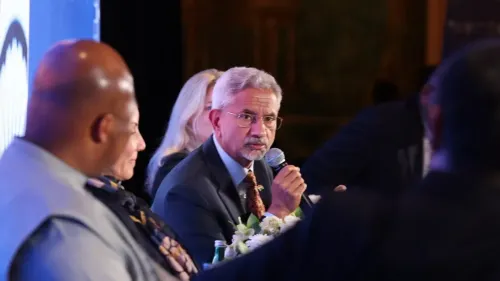
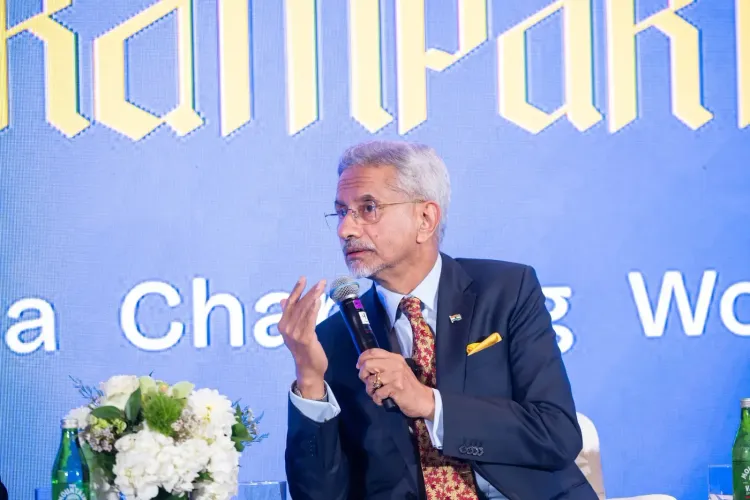
He participated in the panel discussion 'Ruptures and Ramparts: Building Bridges for a Changing World' alongside foreign ministers of Jamaica , Ghana , and Suriname .
The IBSA Dialogue Forum — India, Brazil, South Africa — jointly condemned the Pahalgam terrorist attack and reaffirmed zero tolerance for terrorism.
IBSA called for comprehensive UNSC reform to make the Security Council more democratic, representative, and reflective of contemporary realities.
Ministers endorsed tripling renewable energy capacity in the Global South and recognised AI's potential for economic growth and sustainable development.
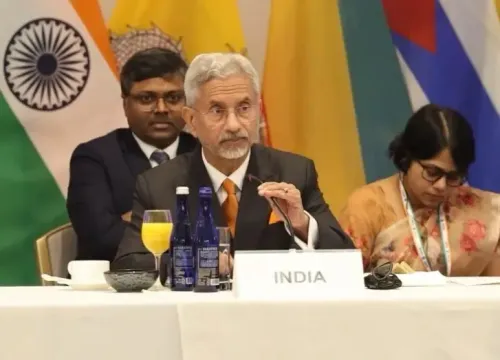
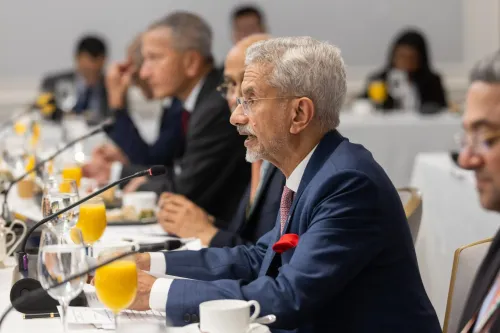
External Affairs Minister S. Jaishankar on Friday, 25 September 2026, asserted that the voice of the Global South will continue to matter in the face of geopolitical fragmentation, armed conflicts, climate change, economic uncertainty, and technological disruption — remarks made during his participation in a high-level discussion on the sidelines of the 81st Session of the United Nations General Assembly (UNGA) in New York.
What Jaishankar Said at the Forum
Speaking at a panel titled 'Ruptures and Ramparts: Building Bridges for a Changing World', Jaishankar was joined by Jamaica's Foreign Minister Kamina J Smith, Ghana's Foreign Minister Sam Okudzeto Ablakwa, Suriname's Foreign Minister Melvin Bouva, and EastWest Center President Celeste Connors. In a post on X following the discussion, Jaishankar said: 'We agreed that the UN remains indispensable, while recognising the need for reform to reflect the aspirations and realities of the Global South. The world will not be defined by binary choices. Countries will continue to make their choices based on interests, values and trust.' He expressed gratitude to Samir Saran and the ORF America team for convening what he described as a timely conversation.
IBSA Trilateral: Condemning Terror, Pushing UNSC Reform
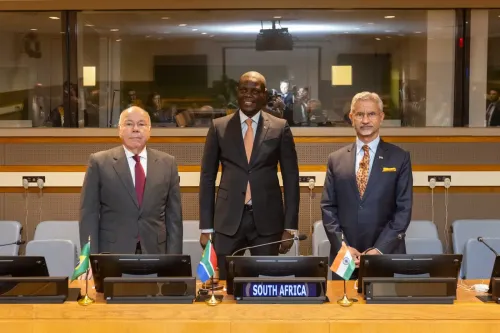
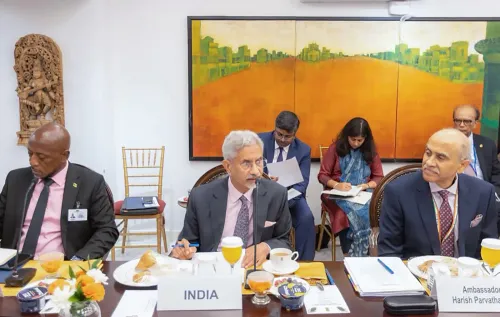
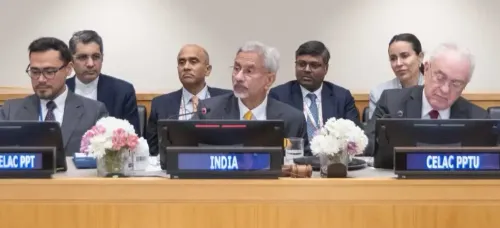
On the previous day, Thursday, Jaishankar chaired the IBSA Dialogue Forum Foreign Ministers' Meeting alongside South Africa's Foreign Minister Ronald Lamola and Brazil's Foreign Minister Mauro Vieira. The three ministers jointly condemned the Pahalgam terrorist attack and reaffirmed their countries' commitment to zero tolerance for terrorism. In a joint media statement, they called for comprehensive reform of the United Nations Security Council (UNSC) to make it 'more democratic, representative, legitimate and reflective of contemporary realities.' The IBSA grouping — comprising India, Brazil, and South Africa — represents major emerging democracies across three continents of the Global South.
Economic Governance, Climate and Technology Priorities
The joint statement from the IBSA meeting also called for more effective, equitable, and representative participation of developing and emerging economies in global economic governance. On climate, the ministers emphasised the urgency of addressing increasingly frequent and intense disasters, expressing support for tripling renewable energy capacity in the Global South, doubling the global average rate of energy-efficiency improvements, and expanding sustainable fuels including biofuels, biogases, and low-emission hydrogen. They committed to universal, meaningful digital connectivity and greater deployment of digital infrastructure, and recognised the immense potential of artificial intelligence to drive economic growth and sustainable development.
Broader Context: India's Push at UNGA 81
This comes amid a broader Indian diplomatic offensive at UNGA 81, where New Delhi has consistently sought to position itself as a leading voice for the Global South. India's advocacy for UNSC reform is longstanding, and the IBSA trilateral gives it trilateral cover from major nations in Africa and Latin America. Notably, the joint condemnation of the Pahalgam attack by South Africa and Brazil — countries that have historically maintained carefully balanced positions on South Asian security matters — represents a diplomatic win for India. The ministers also underscored commitment to empowering women and girls and removing social and economic barriers, signalling a shared social governance agenda alongside geopolitical messaging.
What Comes Next
Jaishankar is expected to continue bilateral and multilateral engagements through the remainder of the UNGA 81 session. The convergence of the IBSA platform and Global South messaging signals that India intends to sustain coalition-building pressure on multilateral reform ahead of upcoming G20 and UN processes.
Point of View
Two nations that have long hedged on South Asian security, is quietly significant and largely under-reported. The UNSC reform push, however, remains the movement's most durable frustration: every UNGA session renews the call, but the P5 veto remains untouched. Until that structural barrier moves, the Global South's voice may continue to matter rhetorically while the Security Council continues to act — or stall — on its own terms.
NationPress
25 Sept 2026
Frequently Asked Questions
What did EAM Jaishankar say about the Global South at UNGA 81?
Jaishankar said at UNGA 81 on 25 September 2026 that the voice of the Global South will continue to matter amid geopolitical fragmentation, conflicts, climate change, economic uncertainty, and technological disruption. He also stated that the world will not be defined by binary choices, and countries will make decisions based on interests, values, and trust.
What is the IBSA Dialogue Forum and what did it agree at UNGA 81?
The IBSA Dialogue Forum is a trilateral grouping of India, Brazil, and South Africa — major emerging democracies across three continents. At their UNGA 81 meeting, the three foreign ministers jointly condemned the Pahalgam terrorist attack, called for comprehensive UNSC reform, and stressed equitable global economic governance and climate action.
Why did the IBSA joint statement condemn the Pahalgam attack?
India, Brazil, and South Africa reaffirmed their zero-tolerance stance on terrorism at their UNGA 81 trilateral meeting, issuing a joint condemnation of the Pahalgam terrorist attack. This reflects a shared commitment under the IBSA framework to uphold international law and multilateral cooperation on counter-terrorism.
What UNSC reform did India and IBSA partners call for?
The IBSA ministers called for comprehensive reform of the United Nations Security Council to make it more democratic, representative, legitimate, and reflective of contemporary realities. This is consistent with India's longstanding position that the current UNSC structure does not adequately represent the Global South.
What were the climate and technology commitments made at the IBSA meeting?
The IBSA ministers supported tripling renewable energy capacity in the Global South, doubling the global average rate of energy-efficiency improvements, and expanding sustainable fuels. On technology, they committed to universal digital connectivity and recognised artificial intelligence as a driver of economic growth and sustainable development.