Guterres expresses 'deep appreciation' for India's role at UN General Assembly
Synopsis
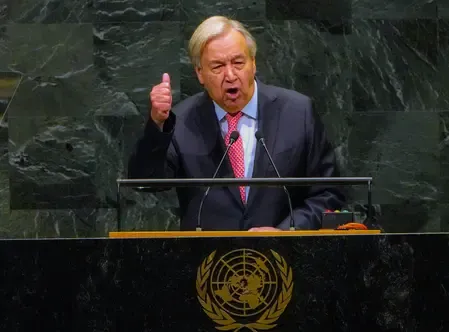
UN Secretary-General Antonio Guterres personally praised India's cooperation with the UN during a bilateral meeting with External Affairs Minister S. Jaishankar on the sidelines of the 81st General Assembly — a signal of diplomatic warmth as Guterres nears the end of his decade-long tenure and India pushes harder than ever for Security Council reform and a larger Global South voice.
Key Takeaways
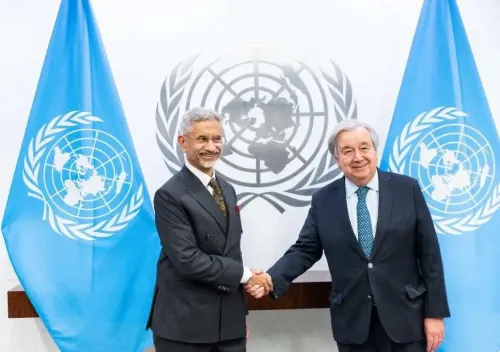
UN Secretary-General Antonio Guterres expressed 'deep appreciation' for India's cooperation with the UN during a meeting with EAM S.
Jaishankar on 29 September 2026 .
Talks covered multilateralism, India-UN cooperation , and geopolitical developments including the wars in Ukraine and the Middle East .
Jaishankar told the General Assembly that India values Guterres' contributions, especially his support for Mission LiFE , Prime Minister Narendra Modi's environmental habits campaign.
India reiterated its push for UN Security Council reform and greater representation for developing countries in global governance.
India is one of the largest troop contributors to UN peacekeeping missions and advocates for dialogue and diplomacy in resolving ongoing conflicts.
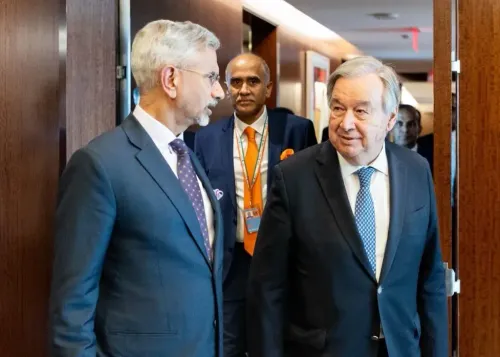
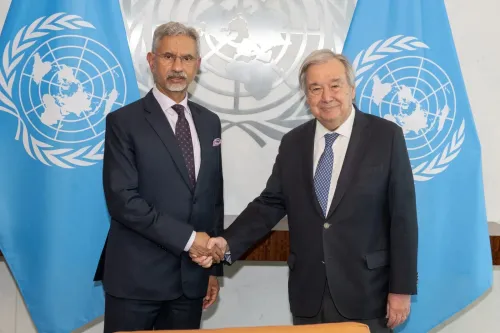
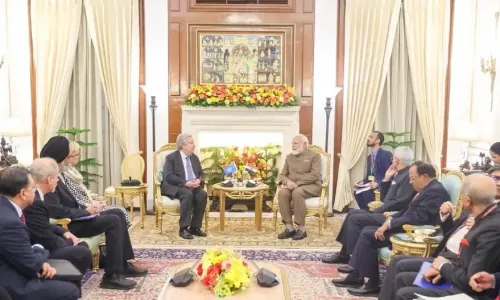
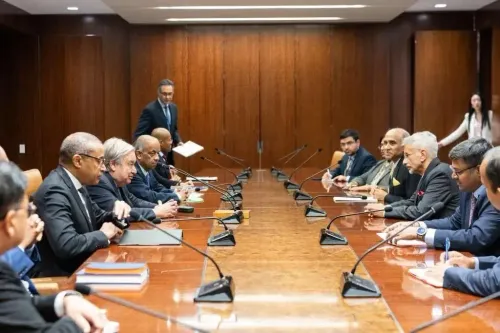
United Nations Secretary-General Antonio Guterres on Tuesday, 29 September 2026, expressed his 'deep appreciation' for India's cooperation with the United Nations during a meeting with External Affairs Minister S. Jaishankar on the sidelines of the 81st UN General Assembly high-level segment in New York. The meeting covered a wide agenda — from multilateralism and India-UN cooperation to the ongoing wars in Ukraine and the Middle East.
What Was Discussed
According to Guterres' Spokesperson Stephane Dujarric, the two leaders 'discussed multilateralism, India-UN cooperation, and geopolitical developments, including the war in Ukraine and the situation in the Middle East.' Jaishankar confirmed on X that 'our discussions focused on ongoing conflicts and the need to mitigate their impact, especially on the Global South.'
The breadth of the agenda reflects India's dual role at the UN — as a major troop contributor to peacekeeping missions and as the leading voice for developing nations navigating the fallout of conflicts they did not start.
Jaishankar's Tribute to Guterres at the General Assembly
Days earlier, on Saturday, Jaishankar addressed the General Assembly and paid tribute to Guterres, who is nearing the end of his decade-long tenure. 'After a decade of service and dedication to the cause of multilateralism, we will soon bid farewell to Secretary-General Antonio Guterres. India deeply values his many contributions, in particular, his personal support for Mission LiFE,' Jaishankar said.
Mission LiFE — Lifestyle for Environment — is a global campaign launched by Prime Minister Narendra Modi to encourage individuals and institutions to adopt environment-protecting daily habits. Guterres' personal backing of the initiative has been noted as a meaningful endorsement by New Delhi.
India's Push for Multilateral Reform
The meeting also underscored India's longstanding demand for structural reforms at the UN, particularly on the UN Security Council. New Delhi has consistently argued that the current global governance architecture must reflect contemporary realities and afford greater representation to developing countries.
During his General Assembly address, Jaishankar reiterated India's commitment to a rules-based international order and flagged the disproportionate impact of ongoing armed conflicts on developing nations. This is a position he has articulated repeatedly at multilateral forums in recent years — framing India not merely as a rising power but as the de facto spokesperson for the Global South.
India's Standing at the UN
India remains one of the largest contributors of troops to UN peacekeeping missions globally, which lends considerable operational credibility to its diplomatic advocacy. The Guterres-Jaishankar meeting allowed both sides to review cooperation across peacekeeping, sustainable development, climate action, and humanitarian assistance, according to officials.
This comes amid a broader global conversation about the relevance and reform of multilateral institutions, a debate that has only intensified as the UN's ability to broker ceasefires in Ukraine and Gaza has been repeatedly questioned. India's consistent call for 'dialogue and diplomacy' as the only viable path to conflict resolution puts it in a distinct diplomatic lane — neither fully aligned with Western positions nor with those of Russia and China.
Looking Ahead
With Guterres' term winding down, the question of UN leadership succession will gather momentum in the months ahead. India's active engagement at the 81st General Assembly session — from Security Council reform advocacy to climate financing and the Global South agenda — signals that New Delhi intends to remain central to shaping the post-Guterres multilateral landscape.
Point of View
But the harder question is whether goodwill at the Secretary-General level translates into concrete progress on Security Council reform — a goal that has eluded New Delhi for three decades. India's 'Global South spokesperson' framing is increasingly sophisticated, yet the P5's structural resistance to expanding permanent membership remains the immovable object. Jaishankar's tribute to Guterres on the Assembly floor also carries a subtle signal: as the UN prepares for post-Guterres leadership, India is positioning itself to influence who comes next and on what terms.
NationPress
30 Sept 2026
Frequently Asked Questions
What did UN Secretary-General Guterres say about India at the UN General Assembly?
Guterres expressed 'deep appreciation' for India's cooperation with the UN during his bilateral meeting with External Affairs Minister S. Jaishankar on 29 September 2026, on the sidelines of the 81st UN General Assembly high-level segment. The two discussed multilateralism, ongoing conflicts in Ukraine and the Middle East, and India-UN cooperation.
What issues did Jaishankar raise at the 81st UN General Assembly?
Jaishankar focused on the disproportionate impact of ongoing armed conflicts on developing nations, the need for UN Security Council reform, and India's advocacy for a greater voice for the Global South in international decision-making. He also reiterated India's support for dialogue and diplomacy as the path to resolving conflicts.
What is Mission LiFE and why did it come up at the UN?
Mission LiFE — Lifestyle for Environment — is a campaign launched by Prime Minister Narendra Modi to promote environment-protecting daily habits among individuals and institutions. Jaishankar highlighted it in his General Assembly address to acknowledge Guterres' personal support for the initiative.
Why is India pushing for UN Security Council reform?
India argues that the current UN governance architecture no longer reflects global realities, and that developing countries — particularly those in the Global South — deserve greater representation in key decision-making bodies, including permanent membership on the Security Council. India has made this a consistent diplomatic priority across multilateral forums.
How significant is India's role in UN peacekeeping?
India is one of the largest contributors of troops to UN peacekeeping missions globally, giving it both operational credibility and diplomatic leverage at the world body. This contribution underpins India's active advocacy on issues ranging from conflict resolution to climate action and humanitarian assistance.