Jaishankar meets UN chief Guterres, raises West Asia, Ukraine, Sudan
Synopsis
Jaishankar's New York stop was two things at once: a diplomatic check-in with the UN chief on the world's worst crises, and a campaign launch for India's Security Council seat. The SHANTI manifesto and the Global South pitch signal how India intends to sell its candidacy — as a bridge-builder, not a bloc member.
Key Takeaways
Jaishankar met UN Secretary-General António Guterres in New York on 14 July , discussing West Asia , Ukraine , and Sudan .
India formally launched its candidacy for the Asia-Pacific non-permanent seat on the UN Security Council for the 2028–2029 term.
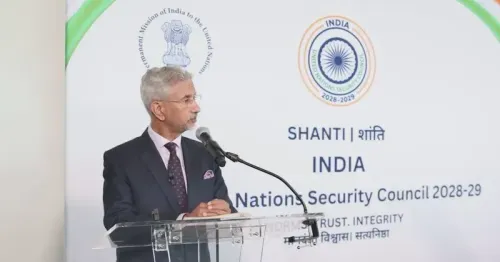
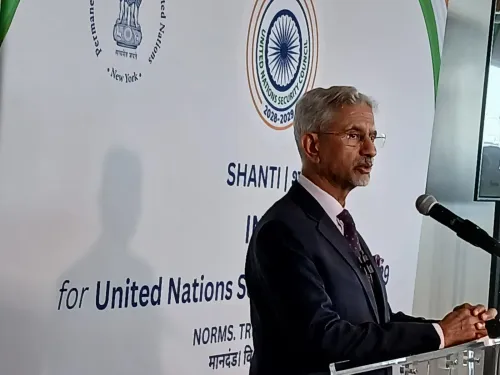
Jaishankar presented a six-point SHANTI manifesto — 'Securing Holistic Advancement through Norms, Trust and Integrity' — as India's Council agenda.
If elected, it will be India's ninth term as an elected member of the 15-member Security Council .
India's energy dependence on the Strait of Hormuz makes the US-Iran confrontation in West Asia a direct national concern.
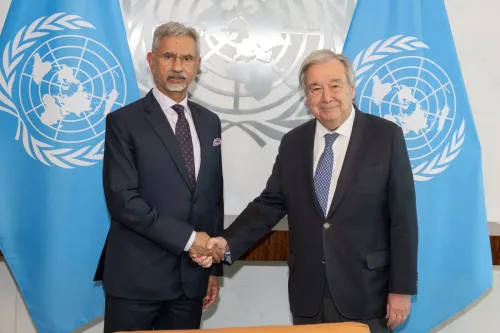
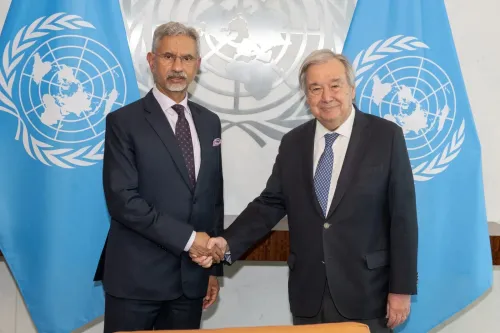
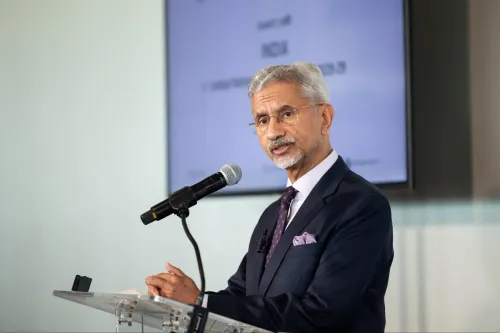
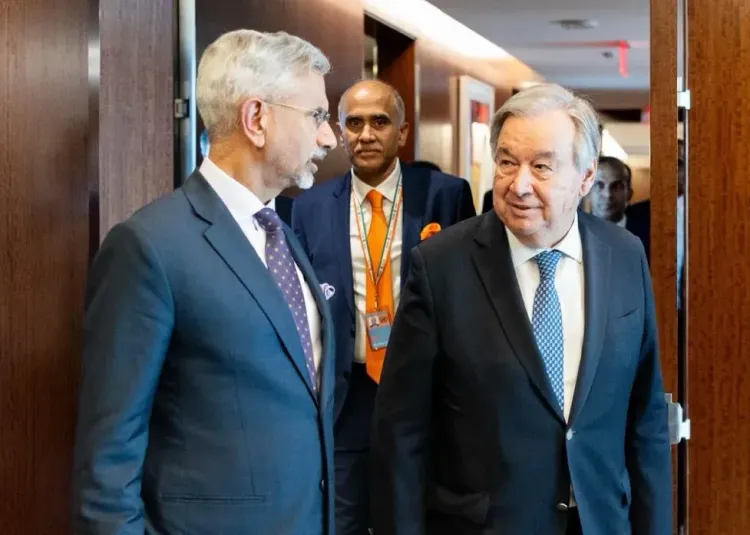
External Affairs Minister S. Jaishankar met United Nations Secretary-General António Guterres in New York on Monday, 14 July, discussing a range of global flashpoints including West Asia, Ukraine, and Sudan, as well as the continued strength of India-UN cooperation. The meeting came on the sidelines of Jaishankar's visit to formally launch India's bid for a non-permanent seat on the UN Security Council for the 2028–2029 term.
Key Discussions with Guterres
Jaishankar confirmed the agenda of the meeting in a post on X, noting that the two leaders 'discussed global developments, including of West Asia, Ukraine and Sudan.' He added that they 'also recognised the strength of India-UN cooperation.' No further details of the bilateral exchange were made public.
West Asia at the Centre of India's Concerns
The situation in West Asia carries particular weight for New Delhi. India is heavily dependent on energy supplies transiting the Strait of Hormuz, and the reignited confrontation between the United States and Iran has disrupted those flows. Analysts note that any prolonged escalation in the region directly threatens India's energy security and import costs.
India's Security Council Candidacy
Jaishankar's New York visit was primarily aimed at canvassing support for India's candidature for the Asia-Pacific non-permanent seat on the UN Security Council for the term beginning in 2028. Addressing delegates and diplomats who will vote in next year's UN General Assembly election, the minister said, 'In a world with too many conflicts and tensions, India has consistently espoused dialogue and diplomacy. We have sought to bridge differences.'
He also outlined India's priorities for the Council, framing them around a six-point manifesto anchored in the acronym SHANTI — standing for 'Securing Holistic Advancement through Norms, Trust and Integrity.' The minister emphasised India's focus on 'mitigating the impact of these developments for the Global South.'
What Election to the Council Would Mean
If elected, it would mark India's ninth term as an elected member of the 15-member Security Council — a milestone that the government has highlighted as a testament to India's standing in multilateral diplomacy. India last served on the Council for the 2021–2022 term.
What Comes Next
The election for the Asia-Pacific seat will be held at the UN General Assembly next year. India's campaign is expected to intensify through bilateral outreach to member states across Africa, the Pacific, and Latin America — regions where New Delhi has been deepening diplomatic and development ties. The outcome will be watched closely as a barometer of India's global influence at a time of heightened geopolitical turbulence.
Point of View
Pacific, and Latin American votes against rival claimants from the Asia-Pacific group. The West Asia and Ukraine discussions with Guterres are not incidental; they signal that India wants to be seen as a serious crisis interlocutor, not merely a procedural member. Whether that credibility translates into votes depends on how consistently India's positions at the Council align with the interests it is now invoking.
NationPress
12 Oct 2026
Frequently Asked Questions
Why did Jaishankar meet UN Secretary-General Guterres on 14 July?
Jaishankar met Guterres in New York on 14 July to discuss global flashpoints including West Asia, Ukraine, and Sudan, and to reaffirm India-UN cooperation. The meeting was held on the sidelines of India's formal launch of its UN Security Council candidacy for the 2028–2029 term.
What is India's candidacy for the UN Security Council about?
India is seeking election to the Asia-Pacific non-permanent seat on the UN Security Council for the term beginning in 2028, with the vote to be held at the UN General Assembly next year. If elected, it would be India's ninth term as an elected member of the 15-member body.
What is the SHANTI manifesto Jaishankar presented at the UN?
SHANTI is a six-point framework Jaishankar outlined as India's agenda for the Security Council, standing for 'Securing Holistic Advancement through Norms, Trust and Integrity.' It reflects India's stated focus on dialogue, diplomacy, and protecting the interests of the Global South.
Why is the West Asia situation a concern for India?
India is heavily dependent on energy supplies that transit the Strait of Hormuz. The reignited US-Iran confrontation in the region has disrupted those flows, creating direct implications for India's energy security and import costs.
How did Jaishankar communicate the outcome of the Guterres meeting?
Jaishankar shared the details of the meeting in a post on X, stating that they discussed global developments including West Asia, Ukraine, and Sudan, and that both sides recognised the strength of India-UN cooperation.