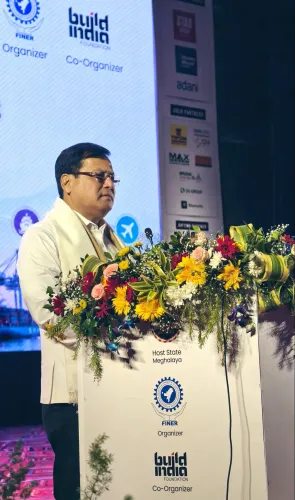
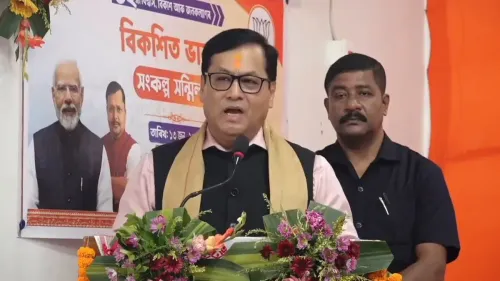
Sonowal Marks 12 Years of Northeast Waterways Growth
Synopsis
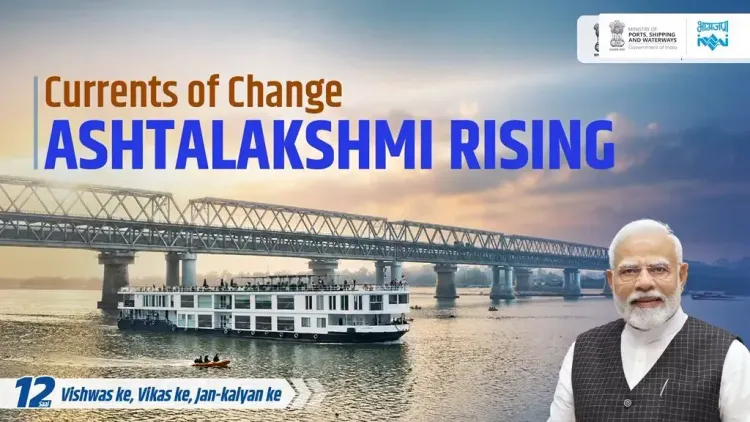
Union Minister Sarbananda Sonowal has marked twelve years of inland waterways development in Northeast India, highlighting PM Modi's vision to transform the Ashtalakshmi states' rivers into freight and trade corridors linking India to Southeast Asia under the Act East Policy.
Key Takeaways
Sarbananda Sonowal on 14 July 2026 posted a milestone tribute to 12 years of Northeast inland waterways development under PM Modi.
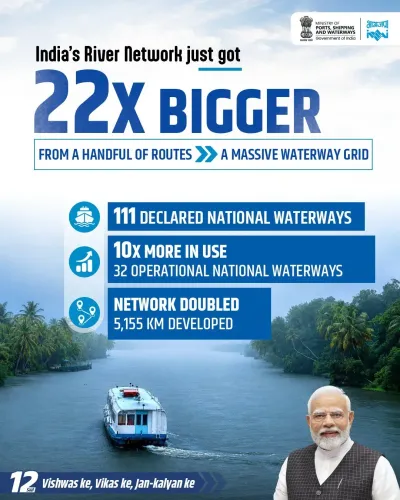
The National Waterways Act, 2016 declared 111 national waterways , including NW-2 (Brahmaputra) and NW-16 (Barak) in the Northeast.
The Jal Marg Vikas Project , launched in 2014-15 , has driven terminal and fairway upgrades across Northeast river stretches.
The India-Bangladesh Protocol on Inland Water Transit and Trade , active since 1972 , enables cross-border cargo movement via Assam's rivers.
The Northeast waterways push is a core element of India's Act East Policy , targeting trade connectivity with ASEAN nations.
The eight Ashtalakshmi states are positioned as India's strategic river gateway to Southeast Asia .
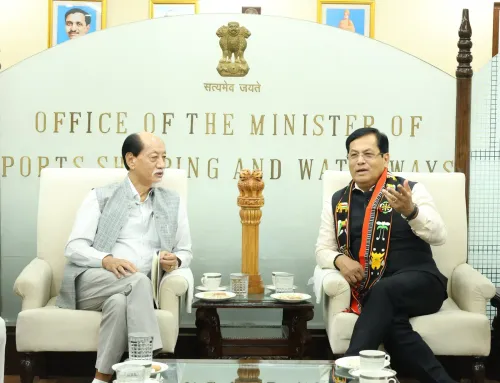
Union Minister of Ports, Shipping and Waterways Sarbananda Sonowal on Tuesday, 14 July 2026 highlighted twelve years of inland waterways development in Northeast India, crediting Prime Minister Narendra Modi's vision for transforming the region's rivers into economic and strategic corridors linking India to Southeast Asia.
Context
Sonowal's post, tagged #12YearsOfJalmargSeVikas (12 years of progress through waterways), frames the Northeast's river network as one of the defining infrastructure success stories of the Modi government since 2014. He invoked the term 'Ashtalakshmi' — the collective reference to the eight Northeastern states of Arunachal Pradesh, Assam, Manipur, Meghalaya, Mizoram, Nagaland, Sikkim and Tripura — describing the region as India's 'gateway to Southeast Asia.' The minister attached a video to the post, underlining the government's communication push around the waterways milestone.
Policy Backdrop
The inland waterways push in the Northeast has its legislative anchor in the National Waterways Act, 2016, which declared 111 waterways as national waterways, including National Waterway 2 on the Brahmaputra and National Waterway 16 on the Barak river. The Jal Marg Vikas Project, launched in 2014-15, has driven upgrades to fairways, terminals and navigation aids on major rivers, with its scope later extended to Northeast stretches. The Inland Waterways Authority of India (IWAI), the statutory body under Sonowal's ministry, has been the implementing arm for these projects since its establishment in 1986.
Underpinning the cross-border dimension is the India-Bangladesh Protocol on Inland Water Transit and Trade, renewed periodically since 1972, which enables cargo movement via Assam's rivers into Bangladesh. This protocol is central to the government's ambition of using Northeast waterways as cost-effective freight corridors to Bangladesh, Myanmar and ASEAN markets.
Stakeholders and Impact
The primary beneficiaries of the Northeast waterways expansion include Northeast exporters, inland shipping operators and border traders who stand to gain from lower logistics costs compared to congested road and rail routes. The waterways strategy is also a pillar of India's Act East Policy — the strategic framework launched in 2014 to deepen trade, connectivity and security ties with ASEAN nations through the Northeast as a land-and-river bridge. Reduced freight costs on river corridors are expected to make goods from the region more competitive in international markets.
The development of multimodal terminals along the Brahmaputra and Barak rivers also aims to ease pressure on road infrastructure in a region where terrain makes surface connectivity expensive to build and maintain. For local communities, improved river connectivity opens access to markets and public services across remote stretches of the eight states.
What's Next
Attention will now turn to progress on new multimodal terminals along the Brahmaputra and Barak river systems and any updates to India-Bangladesh-Myanmar river transit protocols expected in upcoming bilateral meetings. The government's messaging around the #12YearsOfJalmargSeVikas campaign suggests further announcements on waterways milestones are likely in the near term. How quickly expanded terminal capacity translates into measurable freight volume on Northeast national waterways will be the key indicator to watch.
Point of View
Using the emotive 'Ashtalakshmi' framing to reinforce the BJP's Northeast narrative ahead of any electoral cycle in the region. By anchoring the waterways story to the Act East Policy, the ministry is signalling that river infrastructure is not merely a domestic logistics project but a foreign-policy asset — a framing that elevates its strategic weight in budget and bilateral discussions. The hashtag campaign suggests a coordinated government messaging effort, likely accompanied by data releases or project inaugurations. Whether the political messaging translates into independently verifiable freight and trade gains on Northeast waterways will determine the durability of this narrative.
NationPress
12 Oct 2026
Frequently Asked Questions
What is the Jal Marg Vikas Project in Northeast India?
The Jal Marg Vikas Project, launched in 2014-15, is a government scheme to upgrade fairways, terminals and navigation aids on India's major rivers, including Northeast stretches such as the Brahmaputra (NW-2) and Barak (NW-16), implemented by the Inland Waterways Authority of India.
What are the Ashtalakshmi states?
'Ashtalakshmi' is a collective term used by the Indian government for the eight Northeastern states — Arunachal Pradesh, Assam, Manipur, Meghalaya, Mizoram, Nagaland, Sikkim and Tripura — highlighting their economic potential and strategic location.
How does Northeast waterways development connect to the Act East Policy?
India's Act East Policy, launched in 2014, aims to expand trade and connectivity with ASEAN nations. Northeast waterways, especially the Brahmaputra corridor, serve as cost-effective freight routes to Bangladesh, Myanmar and beyond, making them central to this policy.
What is National Waterway 2 (NW-2)?
National Waterway 2 is the Brahmaputra river in Assam, declared a national waterway and a key focus of modernisation efforts for cargo and passenger movement, including cross-border trade with Bangladesh under the India-Bangladesh Inland Water Transit Protocol.
What is the India-Bangladesh Protocol on Inland Water Transit and Trade?
This is a bilateral agreement, active since 1972 and renewed periodically, that allows cargo to move across the India-Bangladesh border via Assam's rivers, forming a crucial plank of Northeast waterways-based trade connectivity.